 |
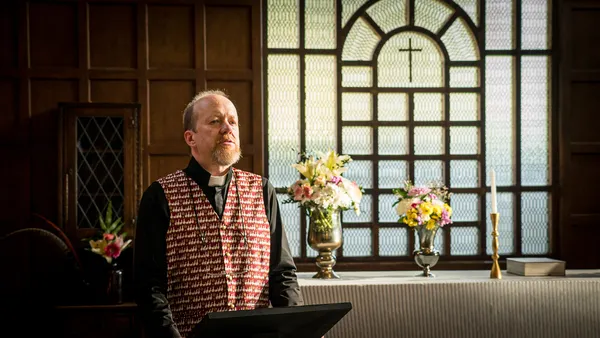
| Steve Oram in Crushed |
I loved Steve Oram’s latest film, Crushed, I tell him when we meet up to talk about it. I have a particular allergy to films about girls or women being kidnapped and men pursuing violent revenge, but I had faith that he wouldn’t actually choose that kind of film, despite what it looks like on the surface.
“That's the brilliant thing about it, actually,” he says. “It doesn't go where you think it's going to go. It's a very sensitive, very thoughtful film, isn't it?”
To me, I say, it feels like antidote to that kind of thing.
“Yeah, yeah, it is. It's a very truthful message as well, isn't it?” He references the film’s ending, and the one figure who evades any kind of justice. ”Horrible.”
It is very much a film about justice, and the different ways in which we might imagine it, and how those ideas can lead us unexpectedly into very dark places, even without angry men waving machine guns around. But did he choose it because of those unexpected qualities?
“That's absolutely it. I was actually approached by Simon [Rumley, the writer/director] and he talked to me about it and I read the script and it just seemed to me to have such a – it knew exactly what it was doing, knew exactly why it was there and the messaging was really good. The characters were all slightly ambiguous. You didn't quite know where they were going to go at the beginning of the film. So you're reading it and then you realise, yeah, this is a very thoughtful film. I did it because it was a very interesting character to play, because he's a very warm, very mild mannered guy, very gentle, from the UK.
“I don't think he's a privileged person. He's a probably a very ordinary guy, but obviously has his privileges being white and Western and male. And then he's in this sort of badlands, wild place which Thailand is, and he's a fish out of water. A man who is thinking about what humanity is and morality is, as the film discusses. It's so interesting. It wasn't an over the top character. He wasn't crying in every scene, he didn't do any of that emoting that sometimes people do too much in certain films. He was a man caught between lots of things, but the overriding thing is this horrible thing that happened to him with the daughter and to the family.”
When Steve and I spoke back in 2022, about Cerebrum, he sent me a link for another of his films, Mind-Set. I note that this reminded me a little bit of his work in that. It's very different from what people expect of him.
“Yes. That, again, is a very delicate film, isn't it? I mean, obviously, mental health is the main theme with that, but what you're doing is mapping the internal mind, which is a very difficult thing as an actor because you need to express it somehow. So that was using sort of funny, crap humour and just brilliantly drawn characters. I think both of these films are very interesting because they're both unmediated, they’re both passion pieces by the writer/director, and they've been given free rein to follow their ideas through without interference, without a studio saying ‘You can't do that. You can't have this ending where it's so bleak,’ or whatever. That sort of thing really appeals to me.”
It must be tricky for him to get parts where he’s able to play such quiet, introspective characters, because people do expect a certain thing from him at this stage in his career.
“Yeah, well, that's what they expect from all actors, really. You turn up and you expect to see them doing their thing, whatever that thing is. Mine's probably hitting them over the head with a stick and shouting, so it's lovely to do something gentle. I've never played a vicar before, and I loved doing it.
“I love doing the music as well. I learned all the songs on my guitar. That was quite an interesting way into the character and thinking about the words that he's got going around in his head all the time. I loved doing the sermons, which were just standing up in front of people. It's very much like being an actor. You're presenting yourself to this audience and you're a solid person. You're guiding people. And yet within you, you might have doubts. It's brilliant. It's a rare thing.”
Did he do much research for that?
“Yeah, I did, yeah. I'd never been to Thailand and I had one day off before we started filming when I arrived, so it wasn't able to get into the scene, but I watched loads of videos, read several books written by expats – one brilliant expat religious priest who'd written a book about slums in Thailand, which I thought was really fascinating. And, yeah, I did a lot of research about the community and how small it was, actually a very small community, the ex-pat community. So you're a little kind of island within Bangkok, [which] is an utterly chaotic place with extremes of poverty and not really the rule of law.
“You feel a bit nervous and sort of odd. There are very odd European men walking around looking rather suspicious. You don't want to ask what they're up to. It's a very odd place. And it's this little oasis with the church, it's just like a little piece of the UK. I really enjoyed finding out about that. And then researching the character was just, you know, basing it on people I know and things like that. So piecing it all together and working with Simon. We just talked all the time. We didn't really rehearse. We talked a lot about what the character should be, and he was very open. He likes actors, so it was nice.”
A lot of people viewing that kind of film probably find it easier in some ways to connect to the more aggressive characters. Characters like this one – particularly vicars who sing – are sometimes looked down on and mocked. How did he set about winning viewers over?
“Well, he's very unpretentious. He's an egoless man and he practices what he preaches. He's a very loving family man who is gentle in his soul. And there's none of...” He pauses for a moment. It’s clear that he’s thinking about the revenge films I mentioned at the start. “You know, he's the opposite end of that, isn't he? He really feels it, really believes it. He really feels he's making a difference to these people. His congregation are mainly expats, but there are some Thais in there? So he feels like he's doing something, but just how far off he is to actual reality is just utterly fascinating when you actually think about what's happening and what the place is like and just the depths of Hell.”
I suggest that that makes the vicar’s relationship with May (Nattapohn Rawddon), his wife, interesting, because she obviously understands that side of things and she understands why he's not connecting, but there's still a very affectionate relationship between the two of them.
“Yes, this is it. We wanted them to be on an equal footing. He's not someone who's come in and he's loaded – it's actually probably the opposite. You know, he's probably living in her house. He's got a small stipend from the church, probably, so he's a quite poor guy, but he's probably living with her. We wanted them to be quite equal in terms of their statuses and basically a good match with her providing this nice home. But yes, she has a very different experience of life. Even though probably they have similar social backgrounds within their context, she has a different take on reality. It's very interesting. I mean, that's the truth of a lot of couples, isn't it? But this is really an extreme version of it, I think.”
Because of his last minute arrival, he says, that had no opportunity to rehearse together.
“I met her the day before we started filming. She's from Bangkok, and in fact, I was the only person from the UK who was working on the film. All the crew, all the cast were expats or living in Bangkok. The crew was mainly Thai and, you know, an Australian DoP.”
And then there’s the film’s child star, Margaux Dietrich.
“Yeah, she's ten-years-old. I cannot believe how poised she was. It was brilliant. She had. She had her dad with her. I think he had worked as an actor or something himself. Anyway, he was very good coaching her and she was just so calm. She was calmer than me. I felt really lucky because I've worked with kids that haven't been very good at times. It does happen. But there was never like any moodiness. She just did it. I think she saw it like a job, which it was.”
That was all the more important given the hectic shoot.
“It was, I think, three and a half weeks. It was very fast and we were popping around Bangkok quite a bit in the heat and the chaotic roads and everything. It was quite an interesting experience.”
He’s excited about the upcoming digital release of the film.
“I really hope more people see it. It's a very serious film, it's not a throwaway film. It's something that has an intellectual merit to it and I hope that people watch it and that journalists pick up on it.
“When these thing come up, they're just like little gems that happen, and I hope they just continue to come up. It's one of those things. I put myself out there as the kind of person that wants to do them, so maybe that will happen again. I’d absolutely love it to. In the meantime, we'll just carry on. I see myself as a jobbing actor. I'm doing Down Cemetery Road, and there's also the comedy horror film The Scurry, which is coming up, which we don't have a release date for yet. It's about murdering squirrels. It's really funny and really dark.
“I'm writing another project at the moment. Again, it's persuading people to give me money to make things is very difficult, and we're in a difficult time with our industry. I think you've probably got to make it yourself, like I did with Aaaaaaaah!. You know, just self fund, with literally no money. It's the only way to do things I think. It's tough times at the moment.”
With Crushed, at least, he has picked a film which seems destined to do well.