





|
|
Pete Muller: 'Historically, so much of what constituted so-
called masculine identity involved hiding things away and not necessarily being clear about how you
felt'
Photo: Pete Muller
|
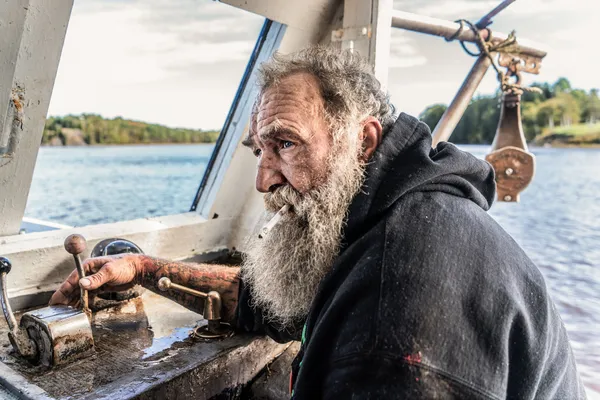
At the eastern edge of the United States, Bucks Harbor, Maine, is shaped by cold, tides and the lobster industry that sustains its economy. In Bucks Harbor, Pete Muller uses its harsh winters and precarious livelihoods as the setting for a study of masculinity, vulnerability and the lessons passed between generations. He notes he wanted to “find something that would feel humane, illuminating, constructive and entertaining”.
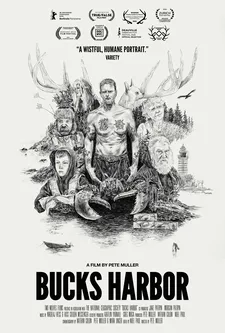
Muller follows Dave, a fisherman who becomes harbormaster; Wayne, rebuilding his life after alcoholism; Mark, whose drag performances and TikTok presence challenge local conventions; and Mike Murphy, a family man, alongside his wife Kirby and their sons Ryan and Carter. The documentary premiered in the Berlinale’s Panorama Dokumente and recently won the documentary feature prize at the Zurich Film Festival. It screens at DOC NYC on November 15 and 18 as well as the festival's online section and will have a theatrical release in the US later this year.
The project grew out of Muller’s work in conflict zones, particularly in Eastern and Central Africa. He explains: “I worked as a news photographer for newspapers and magazines, and I was embedded in that region for over 10 years, trying to understand the deeper motivating factors behind armed conflicts.”
He adds: “I started to ask questions relating to masculinity, and how men, in those environments, were learning about what the so-called masculine role was, and what effect that had on their decisions as to whether or not to participate in violence.
“That grew into inquiries about boyhood and how boys were being raised, the elementary, foundational aspects of how so-called masculine gender is passed on to the next generation. I wanted to keep working on those questions, but I wanted to be back home in the United States.”
He returned to New England and met Maine-based cinematographer and producer Nathan Golon. Through Golon’s friend Jake, a local fisherman, they were introduced to people around Bucks Harbor. They initially considered making an episode there before expanding the project elsewhere. “But we just found we got along with people quite easily. We knew the area and the culture pretty well, and so we just stayed.”
|
|
Pete Muller: 'You have to have a lot of patience'
Photo: Courtesy of Deauville Film Festival
|
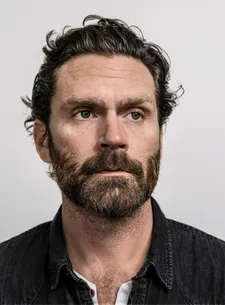
Trust, Muller says, came down to time. He and Golon spent time getting to know people before filming, sharing their experiences and explaining what they hoped the project might become. He says: “We introduced ourselves to many people and met people very easily. It's a small place, and both Nathan and I like talking to people. We'd approach someone and say, 'If you're interested in talking with us or participating in whichever way you feel comfortable, we'd love to do that.' There was quite a lot of enthusiasm to participate. People who weren't interested, for whatever reason, we didn't pressure. There was nothing coercive."
Patience also meant standing up to the elements. “We just kept staying there. The weather would change, and we would do the best we could to film things without slipping off the boat or freezing out in the cold.“
That patience also made room for the documentary’s unexpected humour. A man recounting his resistance to arrest and the flashlight a police officer struck him with decades earlier is interrupted by his phone announcing that his ex-wife is calling. “You just don’t know what’s going to happen,” Muller says. “You have to have a lot of patience because you have no idea when those moments are going to arise.”
The recurring underwater sequences of lobsters began with the animal’s importance to the local economy. Their molting affects fishermen’s work and income, but the process took on a wider meaning for Muller. “It ultimately felt like an interesting metaphor for this inquiry into a very tough world,” he says, “where people are dealing with a tremendous amount of difficulty and hardship, but the tenderness that exists underneath that protective armor.”
The film’s visual restraint owes much to Golon, whose visual and emotional instincts helped Muller learn when to stay with an emotional moment rather than pursue a striking image. He cites, among his influences Bombay Beach, by Alma Har'el and Hale County This Morning, This Evening, by RaMell Ross,
|
|
Bucks Harbor poster
|
Muller was also intent on making space for women’s perspectives. “We always knew and understood that the central lens of discussion would be males, boys and men, having an opportunity to reflect on what their experiences had been and how they felt, and perhaps talk in a way that isn't unusual for men to talk with each other about these things.
“But there is no way to extricate the sexes. Women are so important in the ways that men see and understand themselves, both as people who acknowledge and potentially reward certain forms of masculinity, and who, I think, in an important way, embody certain hallmarks of that themselves.” he says.
Their resourcefulness recalls his own childhood. He explains: “My mother was on her own with my sister and me. She worked at night, she was a newspaper photographer, and she had to make ends meet for us. I think that, in many ways, my mother exhibited a lot of characteristics that would conventionally be considered masculine. So we certainly wanted to have strong, illuminating female voices to punctuate these discussions occurring between men.”
The fishing economy and climate change remain in the background, but Muller resisted turning the documentary into an overtly political argument.
“We wanted to illuminate the fact that some of these issues are certainly there in the background. But Bucks Harbor, in a lot of ways, was an attempt to have a different kind of conversation, one that's really about the most basic dimensions of how all of us experience the world. How do we grow up? What kinds of lessons do we learn from the people around us about the ways we should perform? And how do those things ultimately make us feel?
“I think this is true across the board, for everybody, but historically, so much of what constituted so- called masculine identity involved hiding things away and not necessarily being clear about how you felt. There was a prescribed series of reactions and emotions you could express. Outside of that, you either turned everything into anger or simply suppressed it and didn’t say much.”
That inquiry brought Muller closer to his own family. After watching a near-final cut, his sister called the documentary autobiographical. Muller never knew his biological father and learned in his early twenties that the man who raised him was not his biological parent. The discovery prompted questions about masculinity, but the documentary led him to an unexpected conclusion. He says: “In the process of making Bucks Harbor, which meant I was much closer to my mother and spent a lot more time with her, I had this ironic realisation. After all of this, I realized that I'm my mother. If anything, I'm much more like my mother than these men in the world.”
Watch the trailer for Bucks Harbor below. And for more information about the DOC NYC screenings, visit the official site.