




|
|
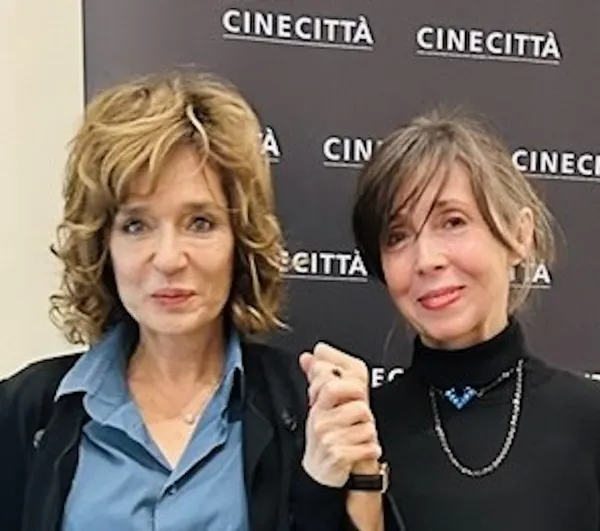
Valeria Golino with Anne-Katrin Titze on Roberto Rossellini: “Rossellini has left a trace in us.”
Photo: Sally Fischer PR
|
During Film at Lincoln Center and Cinecittà’s 25th anniversary edition of Open Roads: New Italian Cinema, I spoke with Valeria Golino (who could be seen in four selected films), and directors Nicolangelo Gelormini (La Gioia), Andrea Di Stefano (My Tennis Maestro / Il Maestro), Andrea De Sica (The Eyes Of Others / Gli Occhi Degli Altri), Massimiliano Camaiti, and his producer Giovanna Nicolai (Agnus Dei) about the legacy of Roberto Rossellini for them.
Now Film Forum, Cinecittà and the Italian Ministry of Culture continue the salute with Rossellini 120, a retrospective of the master of Italian Neorealism from November 20 to December 10 at Film Forum in New York. The festival will show 25 films, including new 4K restorations from Cinecittà and eleven 35mm prints from their library in Rome. Isabella Rossellini and Ingrid Rossellini, the director’s daughters, will introduce a number of the screenings.
|
|
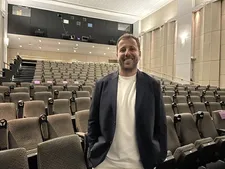
Andrea De Sica: ”I think my favorite film of his is Paisan, Germania, Anno Zero, Europa '51, I got many!”
Photo: Anne Katrin Titze
|
The master of cinema’s 120th birthday celebration began at Open Roads with a new documentary, Roberto Rossellini, Living Without A Script by Ilaria de Laurentiis, Raffaele Brunetti, Andrea Paolo Massara and a special tribute screening of Paisan.
Here is what the Italian filmmakers I spoke to had to say about what Rossellini’s legacy means to them and which films are their favourites.
Nicolangelo Gelormini presented in New York La Gioia which stars the fantastic Valeria Golino in the title role as a high school French teacher in her fifties, still living at home with her parents, whose reckless decisions lead to devastating revelations.
Anne-Katrin Titze: As you know, this year marks the 120th birthday of Roberto Rossellini. What do his films mean to you?
Nicolangelo Gelormini: Anne-Katrin, I'm delighted that Open Roads is celebrating the genius of the undisputed master Rossellini this year. I'm passionate about Viaggio in Italia, for its ability to convey reality like a permanent earthquake, for its ability to let the characters flow across that mysterious, magmatic terrain that connects Naples to Stromboli, terra di Dio, for its ability to open an abyss beneath the certainties of the repetition compulsions we cling to so as not to lose ourselves.
Andrea Di Stefano (The Last Night Of Amore) came to Lincoln Center with My Tennis Maestro / Il maestro, which stars the ever delightful Pierfrancesco Favino at his charmingly forlorn best as an aging tennis coach traveling along the Italian coast in the 1980s with his prodigy.
|
|
Andrea di Stefano spoke with Isabella Rossellini about Voyage to Italy and Martin Scorsese’s Taxi Driver: “I think there is a lot of inspiration also from Rossellini in that film.”
Photo: Anne Katrin Titze
|
Anne-Katrin Titze: We are celebrating Roberto Rossellini this year. Do you have favourite Rossellini movies?
Andrea Di Stefano: I can tell you that I recently showed Roma città aperta/Rome, Open City to my kids. And they were devastated at the end. And I'm amazed how they don't particularly know too much of Italian history, but they were completely drawn into the film.
AKT: How old are your kids?
ADS: 12 and 14. And, I went to the cinema also recently to look at another one. I was speaking to Isabella Rossellini about this, because I went recently to watch Viaggio in Italia with Ingrid Bergman.
AKT: I love it. I first saw Voyage to Italy in Paris and remember how impressed I was.
ADS: It's amazing, I was asking Isabella Rossellini, because I said: Did Scorsese ever watch that film before he made Taxi Driver? And she said, funny you bring that up, because I see the same things. Like, in Voyage To Italy, the point of view is from inside the car of the reality, Italian reality, people crossing the street, and the saints, and the architecture. It is exactly what Travis Bickle does in Taxi Driver.
And in fact, Rossellini shot it with a second unit. Scorsese’s best shot of Taxi Driver, that most talks about New York, and prostitution, and criminals on the street of New York, and the steam going up, was the second unit. It was really just shot by doing that, filming from a car. I think there is a lot of inspiration also from Rossellini in that film.
Valeria Golino showed her versatility in the record-breaking four films featured in this year’s edition of Open Roads: La Gioia by Gelormini, Elisa by Leonardo Di Costanzo, A Brief Affair / Breve storia d’amore by Ludovica Rampoldi, and Fuori by Mario Martone.
Anne-Katrin Titze: Valeria, although this is clearly your festival with four spectacular performances, this year also marks the 120th birthday of Roberto Rossellini. Do you have a favourite Rossellini film? Is he important to you?
|
|
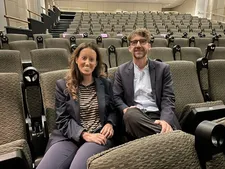
Massimiliano Camaiti with Giovanna Nicolai on Rossellini:” He focused on the story, on the strength of the narration and was able to make films that are universal and last forever.”
Photo: Anne Katrin Titze
|
Valeria Golino: Of course he is. Paisan! It is Rossellini?
AKT: Yes.
VG: Because there was a time when [Vittorio] De Sica and Rossellini… De Sica was lighter but there was a moment when their movies overlapped in my head because both were doing some neorealism. But Rossellini is the master of it. Rossellini has left a trace in us.
AKT: Voyage to Italy is unforgettable.
VG: Yes, Ingrid Bergman!
AKT: And George Sanders; it is one of his best.
VG: Amazing. Rossellini’s heritage that he left us! There’s five or six or maybe seven directors that have left us Italian movies and for a while we didn’t even know where to go after those masters. They were great masters. We are finding again an identity, I think.
AKT: I agree. In La Gioia there is a moment when you pose in front of a mural of Monica Vitti from La Notte. It feels like a nod to those masters, in this case Antonioni. The architecture.
VG: Yes! Nicolangelo [Gelormini] loves that. The aesthetic is very rigorous and imaginative at the same time.
Andrea De Sica’s The Eyes Of Others / Gli Occhi Degli Altri (starring Jasmine Trinca and Filippo Timi) is a supremely unholy story of ruthlessness among the scrupulously wealthy, a Rules Of The Game set in the Sixties with the 2020s in mind.
|
|
Nicolangelo Gelormini on appreciating Rossellini’s work “for its ability to open an abyss beneath the certainties of the repetition compulsions we cling to so as not to lose ourselves.”
Photo: Anne Katrin Titze
|
Anne-Katrin Titze: With your family background [Andrea is the grandson of the legendary director Vittorio De Sica] does Rossellini have a special position?
Andrea De Sica: He does! He was a very good friend of my grandfather Vittorio de Sica and my father. And my uncle Christian [De Sica] was engaged to Isabella Rossellini when they were young. So Isabella is also a very good friend of our family. My father used to say to me that Roberto Rossellini was a very unconventional guy who really didn’t care about technique or the crafts of movie making. It was just about ideas and he was always a step ahead of the others. That’s what even Vittorio De Sica said about him. They collaborated on Il generale della Rovere, which is a great movie with De Sica starring and Rossellini directing.
AKT: Do you have a favourite movie of his?
ADS: I think my favourite film of his is Paisan, Germania, Anno Zero, Europa '51, I got many! Viaggio in Italia is really amazing. Even the education films, the one about Jesus, the one about Plato, they’re all incredible. I love the lack of emphasis that he’s got for deep situations. The simplicity is something really unique.
AKT: Exactly - the simplicity and the depth.
ADS: Yeah! Because you watch American movies and it’s the total opposite.
Massimiliano Camaiti’s Agnus Dei, produced by Giovanna Nicolai (Vittorio De Sica’s granddaughter and Andrea De Sica’s cousin), is a documentary about two little lambs that are chosen each year and cared for by nuns in accordance to ancient tradition. They provide the special wool for the Pope’s sacred garments presented at the liturgical Feast of Saints Peter and Paul to new metropolitan archbishops.
|
|
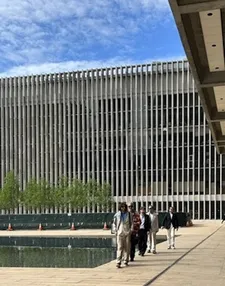
Italian filmmakers arrive at Lincoln Center for Open Roads
Photo: Anne Katrin Titze
|
Anne-Katrin Titze: Is Roberto Rossellini’s oeuvre important to you as filmmakers?
Massimiliano Camaiti: Obviously he is important for everyone. Not only Italian people.
AKT: Absolutely!
MC: He is not a direct reference. I have seen the documentary on him that is shown here. It’s a good one.
Giovanna Nicolai: He was a genius, of course! Inevitably you work with that heritage embedded inside our way of working. Even if we don’t reference it directly. Our knowledge comes with that.
MC: When we speak among directors, we always talk about what kind of film the industry can finance you. And his way to approach movies was an idea, a really good simple one. More important than many other things we are seeing every day.
AKT: His choices and then the brilliance in making them.
MC: Yes, clear choices. Simple and clear. Why? Because I like it. Not, I’m trying to do this kind of movie because of financing and this and that.
AKT: When I arrived here this morning, I saw all of you walking by the fountain, a row of directors! And I thought, what will each of you be doing? What will be financed? And what would you really like to make?
GN: With Agnus Dei it was a very free choice. With the budget we were very free to make the film Massimiliano wanted to make. And I think that the parallel with Rossellini would be that he did have very very little budget but he focused on the story, on the strength of the narration and was able to make films that are universal and last forever. I think that focus on the core of what you want to tell - if it’s a good story, no matter the budget, you can do a good film.