




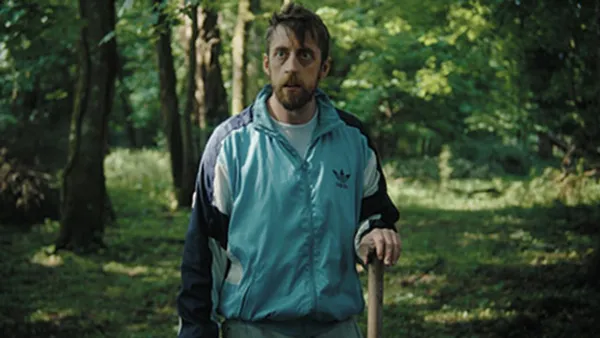
|
|
Lucky Liam
|
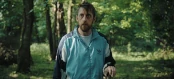
An Irish tale of two hitmen and a fast-talker determined to weasel his way out of being whacked, Lucky Liam is one of the true delights of this year’s Oscar race. It’s relentlessly entertaining and, as I explained to co-directors Troels Jacob Hundtofte (who goes by ‘TJ’ and also wrote) and Thomas Hefferon, a particular pleasure in the run-up to awards season, when most of the shorts one sees are issue films.
TJ agrees. “We really didn't set out to make a film that was going to sweep all the festivals or anything like that. We just wanted to make a film that made people laugh, that made us laugh – especially where the world is right now. It felt like everyone was so exhausted, and you know, issue films are really important, but sometimes you just need an escape. For us this was a labour of love. It was no expectations about anything. I think that's also part of the reason why it's done quite well so far.
We discuss the idea behind the film.
“Originally, about 20 years ago, I had this idea for a comedy sketch of a serial killer walking into a forest with a body and finding someone else burying a body there, and they get into an argument or something,” says Thomas. “It was just something that popped in my head that I chuckled and never thought much of. And then for whatever reason, about two and a half, three years ago, it popped into my head again. I think we were talking about trying to film a short with no money – the budget for this ended up being about €5,000, which obviously is very little, but were paying out of our own pockets and stuff. And so I thought one location in a forest should be easy enough to do. Because I live in Los Angeles, I completely forgot that in Ireland the weather is never the same more than an hour. We got quite lucky, but there was a bit of time when it rained and things like that.
“I think I said it to TJ, and TJ said ‘I think it should be two hitmen.’ Not too serious because I don't know where we go with that. And so it developed that and it was me and TJ working on it. We've been working together, I think, 18 years or something, and it's very much a back and forth, like a tennis match, so to speak, in that I'll throw an idea and he'll bounce it back with a better idea. I had two people, and then TJ was like, ‘It would work better if there was a third person.’
“I love Sergio Leone films, and so it popped in my head, this Western standoff where you see the three of them in this really epic wide shot, and then I was flicking through something and I saw the Last Supper painting and thought of the framing of it where you have Jesus in the middle. So that was how it developed. And then TJ Jumped in and he's really amazing at writing funny dialogues.”
“I told you when were being way too pretentious,” TJ reminds him.
I've seen features with less dialogue than this. Was it all scripted or was some of that improvised on the spot?
“I would love to take credit for all the dialogue, but a good third of it was improvised,” TJ says. “Joe [Joseph McGucken], our main actor, is just this incredible improviser, incredible comic talent. We told him ‘Don't worry about the exact words on the page. You know, run with them if you want to, but put your own spin on it.’ And he absolutely did. Some of the time it was him changing a line, but sometimes he’d just whole cloth invent a whole reaction to something that wasn't in the script, and we kept saying ‘Do more of that.’”
Thomas nods. “When people read the script, they were like, ‘This is so funny. It's brilliant.’ But I think Joe brought this extra bit to it. I actually think we learned a lot from Lucky Liam in terms of letting actors make it their own as much as they can.
“We just did a little horror short film that's almost finished, and I think what we learned on Lucky Liam was to really let actors inhabit the role. Even sometimes when they don't think they have that ability to bring improvisation. Even on the horror film we did, it was something that we brought on board, and we learned that if you work with the actor and you give them the creative space and the feeling of safety, they bring so much to it. I would say that probably the five or six funniest moments in the film are actually improvised by Joe.”
The crew sometimes had to cover their mouths to keep from laughing and losing takes, he recalls.
It's really hard to pace the dialogue and the action around it when that kind of thing is happening, I note.
“Yeah,” says TJ.
“We'll give a huge amount of credit to Harfun [Li], the editor, because she brought such an amazing comic sensibility and timing to things,” says Thomas. “Editing is a very iterative process and we like to spend a lot of time in the edit just because I think there's a lot of opportunity for self discovery. And, you know, I think when we were starting out, there's always that insecurity. I actually saw Ben Affleck talking about this in a podcast where he said the first cut is horrifying and you think your career is over. It's manically depressing. And the second cut, you know, you watch it and you think, ‘I'm a genius. This is going to win an Oscar.’ And then the third cut, you're kind of like, ‘Okay, this is pretty good.’
“The first cut, you try to get the story down, and the second cut, you can see the potential of it. I remember we were very close to the end of the edit and we took another 30 seconds off the film, and that really elevated it.
“Obviously our actors are great. You know, they've got great common timing. Tony [Doyle] who plays Frankie Fingers, and John [Quinn], who plays Harry the Hammer, they brought a different sensibility to it. John is this very serious character actor. That with Liam's silly motor mouth quality, it's just very funny, the contrast of the two.”
“We really believe in rehearsing a lot with the actors to get a sense of rhythm,” adds TJ. “You have a session zero which is where you figure out like, how does everyone want to play this? That was something we knew we wanted and something that we do on pretty much all our projects, just to make sure that the actors feel, once they hit at the set, like they know their stuff, they know what they're going to do. Thomas can speak to this as well because the way we shot it was like almost like a play.”
“We're always trying to think, you know, how do we do this better? Or how do we use our imagination to be clever about how we do something. Because I think a half finished masterpiece isn't as good as a very good finished film. We went into the shoot thinking ‘This is incredibly ambitious.’ We had planned to have 18 hours to do 11 pages. We ended up only having about 14 hours because of some issues like it rained and all this kind of stuff. There was no downtime. It was very manic and it was very like, you know, ‘Go again, go again,’ and just a few notes here and there.”
So was there a point during the making of the film when they realised they had something special, or did that come later on when other people started seeing it and reacting to it?
“I think it's one of those things when you know the material so well and you've read the script 100 times and you've rehearsed it 100 times and you're on set, there's a point when you hear the same word like 15 times and you're like, ‘This sounds weird now. Is this still funny? I can't tell.’ I remember on set, we were having a great time, we were laughing at Joe, all that kind of stuff. But you're always worried that like once you get into the edit, will it all come together? Will it just be a bunch of funny bits or will it come together like the way we wanted it? For me at least, it was in the edit that I really got the sense of like, ‘Oh yeah, this is working. Thank God.’”
“I think I went through the five stages of grieving in that I was a bit unsure,” says Thomas, “and then like on set, there was definitely a moment where I was like, ‘This is really good.’ When you get experienced or, you learn to just plough on and do your best that you can in that moment and try not to think about it, because I think you can really overthink things, and just try to have faith in the process a bit. So I think there was a bit of that and there was a bit of worry.
“In the edit, the editor rushed the footage and was like, ‘It's really good, guys. I think it's even better than the script.’ It took us about a year and a half to get it done, and it was a bit difficult. The actors stopped messaging us asking what was going on at a certain point, and I think you start to question things a little bit. It was only really when we reached a certain point that I was like, ‘Oh my God, I think we have a film.’”
“I agree with that,” says TJ. “I found it in the edit. Once Harfun came along and she got her eyes on it, it was like ‘Okay, this is working.’ And then we started to see the thing come together bit by bit. I had a suspicion on set that it would be good, but I always had these doubts; in the edit, that's when it came together for me.”
Are the actors are happy with them now?
“Yes,” he says. “Very happy with us now. Very, very happy with us.”