 |
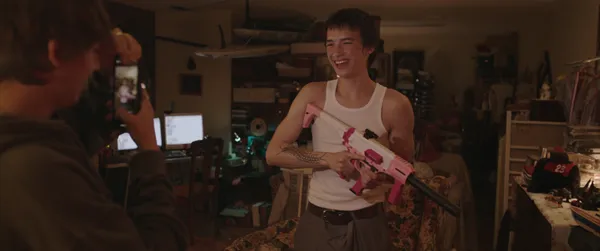
| Kit (Landon Tunold) takes a photo of Joey (Harris Lowe). Wayne Wapeemukwa says they settled on the settled on the FGC9 gun, 'FGC stands for Fuck Gun Control, so that gives you a sense of the kind of people involved' Photo: Courtesy of Locarno Film Festival |
We caught up with Wapeemukwa shortly after his film premiered in competition at Locarno Film Festival and ahead of its next festival dates in Sarajevo, to talk about Generation Z, colonialism and lost boys.
The director and his co-writer Anna-Lena Theobald take a psychological approach to this story, looking to dig into the boys’ motivations rather than to make a spectacle out of violence.
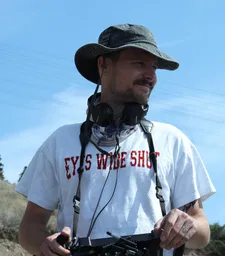 |
| Wayne Wapeemukwa: 'Fiction allowed us to expand the social critique' Photo: Courtesy of Locarno Film Festival |
“Fiction also allowed us to expand the social critique, which is why I was interested in the first place. Before 2019, I was sort of interested in the manosphere and right-wing masculinities as a philosophical subject matter, but it was during an actual road trip that I took in 2019 and the events that unfolded on TV that made me interested in how our attention as a Canadian society gravitates towards, the sensationalised string of events rather than an ongoing femicide and genocide, which is, I think, much more fundamental and like the engine for these kinds of problems in the first place. So, it was that philosophical interest and realisation about our attention, which links back to my first feature a little bit, that made me want to consider this as a project to explore dramatically.”
That film, Luk'Luk'I, which won Best Canadian First Feature after it premiered at Toronto in 2014, also had a foot in the real lives of its cast, who helped to develop their characters.
Wapeemukwa says that the “quote, unquote empty landscape of the film” is one of many references to colonialism. “Of course, they weren’t empty before Columbus,” he says, “They were full.” He adds that he uses this emptiness as “a structuring absence”.
Emptiness is also a word that could be used to describe the online world where Kit and Joey spend a lot of time.
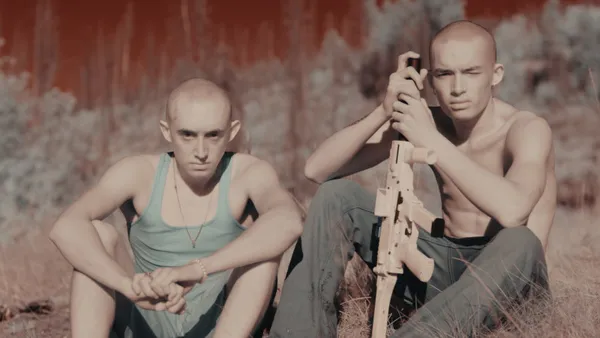 |
| Wayne Wapeemukwa: 'We're going into hell, and that's much more accurate as to how they would understand themselves in that environment. They're having a fucking awesome time until they don't' Photo: Courtesy of Locarno Film Festival |
The world of the game was developed by Sam Andrews and Yevgeniy Krivdyuk, who Wapeemukwa says are “Gen Z-ers”, which he says was crucial to the film. He explains: “Getting young people involved in the acting and the game developing is making it much more tolerable and understandable for young audiences.”
The casting process was also key and the director worked with the same team who helped cast Blue Heron, VAKA Street Casting, run by Katrin Braga. The director admits that one of the reasons for casting unknowns was budgetary, but adds: “I didn't want to anyway. I wanted to work with young people that looked like young people and sounded like young people instead of Millennials pretending that they're young people.”
They sent scouts to gaming conventions and rural communities. He says: “We found Harris one day shopping for rings downtown.”
He adds: “He submitted a tape, and I watched it and it was edited in camera because he's going to film school. He's just finished his second year. Now he wants to put his foot into acting but when we worked with him originally, he wanted to be like a filmmaker, and his tape was exceptional. It was exactly what we were looking for.He was 17, turning 18, which is also important because we wanted youth. So it was crystal clear and we cast him for Joey right away.
“The problem was we’d been casting for months, hundreds of people, and we hadn’t found our Kit. So I found London in the reject pile of this movie-of-the-week director who was casting some Hallmark movie. And I was like, ‘Wow, he looks fucking awesome’. So we invited him to come down to Vancouver, because they live about six hours away. He works at [Canadian retailer] SportChek. He came in and he just fucking smoked it and it was like it was super obvious right away that this was our duo.”
The women who play the two tourists are filmmakers in their own, Bianca and Dilara Foscht, whose work includes Day Of A Lion. “By writing these girls into the movie, what we wanted to do is present the men with women who problematise their stereotypical understanding of women, right, and provide a potential avenue out. But the point of no return has sort of been passed already.”
Indications of that point of no return and other psychological terrain that the teens cross comes through in the camerawork from Jonathan Glendon. As the pair head off on what they imagine will be a great adventure – with their homemade gun – the camera somersaults, as an invitation to note the shift of perspective.
Wapeemukwa says there were four versions of the gun, created by production designer Darren luc Sasges. Theirs was a legal version, since it couldn’t shoot bullets but the director says, “if we had put that in, it’s a firearm and illegal, so they're basically real.”
He adds: “In his research, he looked up what kind of 3D printed gun the boys might make, and he settled on the FGC9 – and the manual’s online – FGC stands for Fuck Gun Control, so that gives you a sense of the kind of people involved. So he made it, it’s 100% legit. It could shoot if we wanted to make it illegal and you can print it and buy parts off Amazon, that’s all you need.”
The film is, in part, about control and who has it, and it’s clear that Kit is the dominant partner in this twosome. Manhunt’s main focus, however, is Joey and I asked the director why he specifically wanted to zero in on him.
It turns out that in the original script they had “somewhat equal screentime” but that he cut some scenes that involved Kit’s backstory..
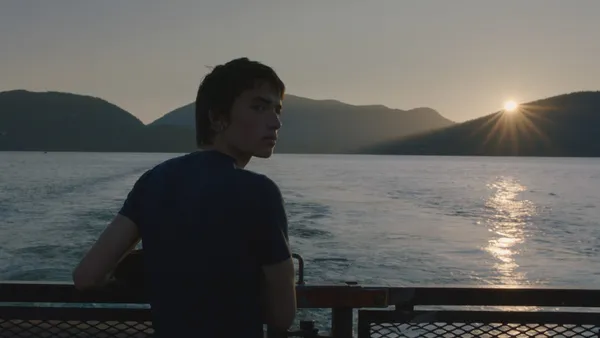 |
| Wayne Wapeemukwa: 'I wanted to work with young people that looked like young people and sounded like young people instead of Millennials pretending that they're young people' Photo: Courtesy of Locarno Film Festival |
“But, why focus on the one who's passive or submissive? I suppose there's a mechanism there to ingratiate [ourselves with] the audience a bit to get them to come along. We wanted to make sure that we allowed the audience to plug in a little bit and to come along for the ride before we pulled the rug out.”
As for the actors, “the primary direction was, ‘You’re looking for love, ultimately, and you’re doing it in all the wrong ways, but that’s what you need and that’s how you got here”.
In terms of control, Wapeemukwa has a strong hand on the tiller when it comes to the film’s look, which gradually becomes more hallucinatory as the boys’ dreams come up against a reality that they can’t really cope with. This slide into their world comes with saturated colours in the film’s final act.
“I would love it if you could say something about this because there's some misunderstanding about the technical aspect,” says the director “A lot of people we've seen after the screenings and such have said, ‘Oh yeah, it's just a post-effect’. It's not a post-effect, it's all in camera. We shot infrared cinematography, it's color infrared, and as far as I know, I think we're one of the first narrative features to use it. Dune did it, but it's monochromatic, so we're doing colour, and so the colour effect is created by different filters that we put in front of the infrared lens.
“Now, I'm not going to bore you with those details, but I just would like people to know that it's not like a fucking post-effect. We did it for real. We don't want the cinematography to be horror. We're going into hell, and that's much more accurate as to how they would understand themselves in that environment. They're having a fucking awesome time until they don't.” Beyond continuing this film’s festival run, Wapeemukwa is also planning future projects. “I've got a few projects cooking up right now,” he says. “A couple of them are youth-oriented. One of them is about the Squamish Five – ecological militants active in the early Eighites in Vancouver. The milieu is more like punk. The I have another thing about a suicide chain, which actually has a happy ending. Gen Z will get a bit of a break for now.”