





Eye For Film >> Movies >> Derek Vs Derek (2026) Film Review


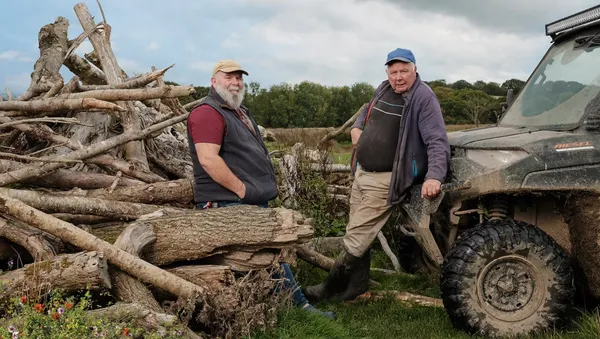

Peter Jackson fans may recall a certain saying about Dereks: they don’t run. But what happens when you have two Dereks on opposite sides of a conflict? Meet Derek Banbury, whose family has been working its land in Devon for 130 years, and Derek Gow, a Scottish incomer who has nevertheless spent several decades on his. Derek Banbury is a dairy farmer struggling to keep pace with a market which will pay less and less for his products. Derek Banbury changed tack recently and is aiming to rewild his land. “I suppose he got tired of traditional farming,” says Derek Banbury, “because he wasn’t too good at it.”
Derek Gow stresses that he didn’t just wake up one day and decide to change his life. he has been involved in environmental campaigning throughout his life, having raised rare animal breeds as a child, inspired by Gerald Durrell (who is seen here in archive footage at his Jersey zoo). He is now breeding 11 different endangered species, including water voles, which are Britain’s fastest declining mammal and an important part of the food chain. Derek Banbury’s wife, Linda, admires Derek Gow’s white storks, though she does worry a bit about her fish pond. Then there are the wild boar, who play a vital role in churning up the soil to allow for new growth. They have a habit of breaking out, leading to a row about a dead sheep. Derek Banbury has one trespasser shot and turns it into sausages, only to complain about the taste. It is not Eye For Film’s job to provide culinary advice, but we suspect that he was doing it wrong.
Amongst other things, the boar create mess, and Derek Banbury can’t abide mess. “Every year he comes to me and says ‘Would you like your hedgerows cut, Derek?’” observes Derek Gow. “And every year I say ‘Fuck off.’”
This being the state of negotiations, you might not expect that much will change over the course of the documentary. Indeed, Derek Banbury makes it clear: “I don’t want to broaden my mind.” Nevertheless, director James Dawson stuck with them over several years, and the results may surprise you. The two Dereks cannot avoid one another. It’s not just a matter of escaped animals. Derek Banbury’s wife lets out holiday cottages in the area, and is delighted by the amount of business that comes her ways as a result of students and philanthropists wanting to visit Derek Gow.
The two men have more in common that might be immediately obvious. Both face an ongoing struggle to access the funds that will keep them going. Both care about the wellbeing of their animals. Although he likes things to stay the same, Derek Banbury cannot help but observe, with regret, that the world is changing around him. He misses the butterflies that he used to see in profusion in his youth. Together they look out towards Dartmoor, lamenting what has happened to its curlew population.
The strength of the film lies not just in the personalities of its leads, but in the rich detail observed throughout. Both Dereks have the opportunity, just in passing, to reveal a vast knowledge of their profession and the natural world. There are occasional errors (beavers sometimes pull down trees but they do not eat them), but the stereotype of ignorant rural workers is efficiently dispatched. Dawson isn’t interested in patronising them, but in observing an aspect of our changing relationship with our planet that is at once vital and neglected. Personal decisions made in contexts like this can have major ecological consequences.
There is a lot here for viewers to learn, and a lot of humour to help wash it down. Intractable though its central dispute may initially appear, this is a film which celebrates possibility, and as a whole it is tremendously uplifting.
Reviewed on: 01 Oct 2026


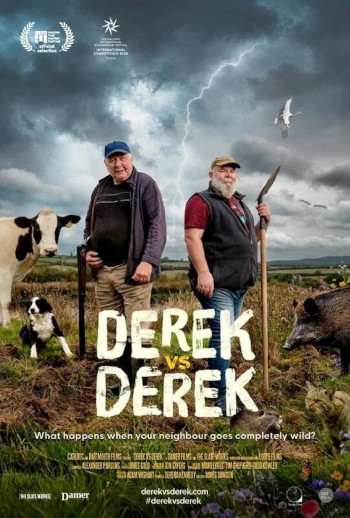
Director: James Dawson
Starring: Derek Benbury, Derek Gow, Linda Banbury
Year: 2026
Runtime: 87 minutes
Country: UK
Search database:
