 |
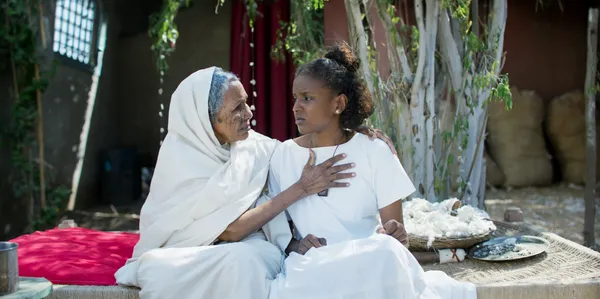
| Nafisa (Mihad Murtada) and Al-Sit (Rabha Mohamed Mahmoud, who Mirghani notes is 'an entertainer) Photo: Frida Marzouk/Strange Bird |
Tell me about developing the feature from your short film Al-Sit.
Suzannah Mirghani: Even though I'm from Sudan, I'm based in Qatar, and I hadn't made a film in Sudan previously, so I thought okay, instead of kind of jumping into the deep end with a feature, which is going to be very difficult as Sudan does not have a film industry, I thought I would start small and reduce that script down to a short, see where it takes me and then come back to kind of polish off the feature. That’s kind of what I did but it’s been a few years now.
You lived in Sudan until you were a teenager, so did you draw on your own experience?
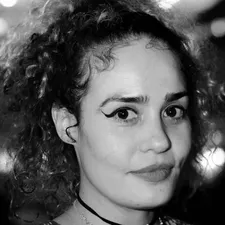 |
| Suzannah Mirghani: 'Magical realism is my favorite genre, and I think it's a really beautiful way of introducing politics and fairy tales together' Photo: Courtesy of Venice Film Festival |
Cotton Queen feels very culturally embedded within Sudan. You don’t shy away from some of the more damaging cultural customs but there’s also a celebration of that way of life to a degree. How important was it for you to bring both of those elements to the screen?
SM:I think it was really important to talk about warts and all. To talk about the positives and the negatives of Sudanese culture. We don't have nearly enough films that talk about Sudanese women especially so I wanted to kind of present a more holistic idea of what women go through and what women experience, including the huge bonds between them, the protection, the love but also the cruelty which exists. Outside of Sudan, what’s called female genital mutilation (FGM) but inside Sudan it’s called “purification”. It’s circumcision, it’s celebrated when a girl goes through that, there’s singing and dancing. So I wanted to make sure that the dark side, the underbelly of tradition is not forgotten and that we can talk about it. Once it's in this film, it becomes public and a public conversation. In Sudan, this is not a public conversation. So I really just wanted to show what women go through both positive and negative.
It’s interesting that language can be used in that way to make something acceptable. The very title Cotton Queen is an example of language being used by colonisers. Suggesting a celebration of a thing when in fact it was a time of oppression. How did you come across the Cotton Queen?
SM:The Cotton Queen is a beauty competition that started in the 1930s in England in the mills of Lancashire and Manchester and all the northern towns. They had a beauty competition for the prettiest girl working in the factories basically, and it was a way of promoting cotton as a fabric and promoting British industry. But of course, the cotton that the girls were handling was coming from elsewhere. It was extracted from Sudan and Egypt and India and other places. So I came across that fact just accidentally in a footnote as I was reading something about the Gezira cotton scheme in Sudan [a massive irrigation project], and it blew my mind. I had no idea about this.
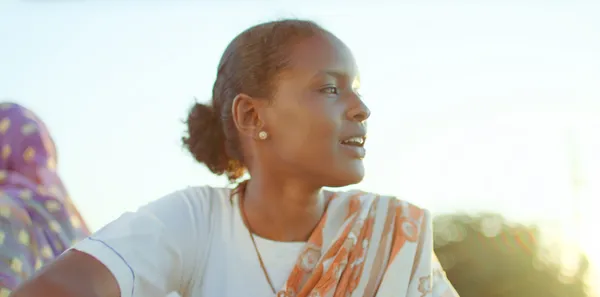 |
| Mihad Murtada was one of only five women to audition for the role of Nafisa Photo: Frida Marzouk/Strange Bird |
History and its mutability is also an interesting aspect of your film.
SM:Especially when it comes to the British colonialism of Sudan, the Sudanese never had a voice. There might be personal collections, but there was never an official account of the Sudanese perspective of life under the British colonial rule, so everything was filtered through the colonial gaze. So for me, it's important to make up stories – people can make up a past if they don't have their own past written, and especially the grandmother who can take that to her advantage and use it to teach history from a woman's perspective, where a woman is in charge and she sees the power in that, and that she can give it to her granddaughter who can inherit that power. I thought it was fun, because what do we know about our parents or grandparents apart from what they tell us?
The idea of colonialism is cyclical in Cotton Queen. We can see it has shifted shape but that it’s still making its presence felt. How important was it for you to talk about that neo-colonialism?
SM:When I was doing my research on the ground in Sudan, I was talking to a lot of farmers, I was going to a lot of fields when I was still writing the script. What I realised was there was this more insidious type of neo-colonialism because it doesn't announce itself that way. It doesn't say, ‘We're coming to take over’. It just happens through the industry. And so I spoke to a lot of farmers who were in the process of changing the entire structure of their farming methods by importing genetically modified seeds and depending on them. So they had to have a license that they would buy annually, and those seeds were coming from China, Brazil, and India. So now they're beholden to new masters in the industry. It's like it's the same thing with a different face so I found that to be quite interesting and, as you say, cyclical but just with a different mask.
We should also talk about the magic realist element of the film, which is key, and about working with your cinematographer in general. Were you using a lookbook? What was your approach?
SM:I was very fortunate to work with Frida Marzouk, the cinematographer. She's a French Tunisian wizard. She loves natural light. We used a lot of natural light during the daytime, and then in the evenings, we thought, okay, so nature exists in the sunlight, this is where you see and feel the beauty. But at night we decided together that we would go very artificial and to add on that kind of magical element, both during the day and the evening. So the lookbook that we had included a lot of her favourite shots and mine, including a scene from The Night Of The Hunter, when the kids go in the boat down the river and they have this little magical interlude. I love that so much, and I was, like, “Listen, I just want this somehow”. I love the feeling of it. I think it really brings us into another world and also into a child's world. And so this is when Nafisa is in the boat, and she kind of goes on this little nightmare journey down the Nile to meet a kind of witch character. Magical realism is my favorite genre, and I think it's a really beautiful way of introducing politics and fairy tales together. We don't have much fiction in Sudan. There's a lot of documentary, but rarely is there a fiction so I wanted to play with the cinematic form as well.
You have three generations of women in the film, tell me how you set about casting it.
SM:The grandmother and the mother are theatre actors in Sudan. They don’t act for the screen so, apart from my short, this is probably one of their first roles. Theatre is a very different acting style and so there had to be a lot of give and take there as well. Mihad Murtada is a first time actor who was in my short and now this is her very first feature. We found her through auditions.
Auditions for the short were way back in 2019 and we held open auditions. We advertised on Facebook and Instagram all over the country, and we had literally five girls come for the audition – it really shows you how devalued cinema is in the country, how people don’t take it seriously and also how families don’t allow their daughters to audition. So we were very fortunate that she was one of them. Then, of course, for the male roles we had hundreds coming.
Did Rabha Mohamed Mahmoud’s theatrical background help when it came to the storytelling scene with the children? It feels almost as though you’re just documenting what happened when she tells that tale.
Thank you, that’s a really good point. She’s an entertainer. Onscreen her character has a darker side but she lit up when it came to that scene because that is what she’s used to, expressing herself and not being restricted by the camera.
Despite the conflict in Sudan, there have been films coming through in recent years, including Goodbye, Julia and You Will Die At Twenty. How do you feel about the future of Sudanese voices in the current circumstances?
It's tough. It's such a shame that what is going on now in Sudan in terms of the war and the conflict has kind of pulled a rug from under us because we were heading in a very good direction. As you said, we had You Will Die At Twenty, we had Talking About Trees, We had [film]Khartoum Offside[/film[. There was a critical mass kind of coming up, and it was encouraging a lot more people.
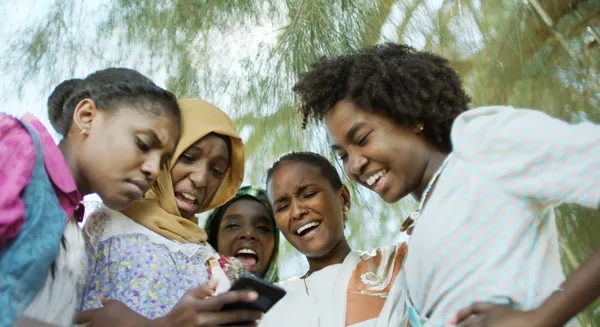 |
| Suzannah Mirghani: 'We used a lot of natural light during the daytime' Photo: Frida Marzouk/Strange Bird |
Tell me about the songs you use in the film?
The very first one that opens the film is a traditional genre of Sudanese song, literally called girls’ songs. They sing them either when they're working or when they're only in the company of women and these songs. It’s my favourite genre of Sudanese music because they're absolutely outrageous. The girls say things that will make you blush. They say things they would never say in any other circumstance, apart from between themselves. It's a very communal way of singing because they always add to it. It's never the same song twice.
When Nafisa is watching the YouTube video and there’s two girls singing, the artist is Alsarah and she has a band called the Nubatones. She has single-handedly made Sudanese girl songs famous internationally by singing them.
This film premiered last year in Venice, so are you working on your next film now?
Yes, I’m working on it now but it’s going to be a couple of years before it’s ready and hopefully by that time there will be an end to the war. It’s going to have magic realism but in this one it will be way more integrated. In Cotton Queen she takes the herbs and there’s a cause and effect and in my next one it’s more subtle.
For more information about UK screenings of Cotton Queen visit the official site.