





Eye For Film >> Movies >> Child (2026) Film Review


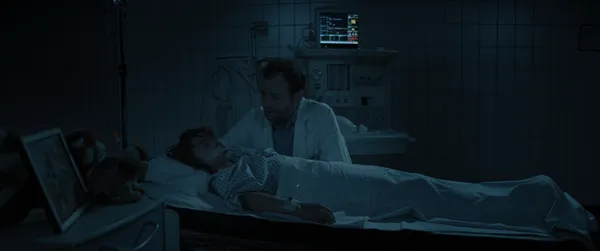

Luxembourg’s submission for the 2027 Oscars, Child is the first feature by Cyrus Neshvad, who made the excellent 2023 short The Red Suitcase. It’s well acted and well shot, with some interesting visual ideas. There’s plenty of mileage in the central idea. Unfortunately, its use of horror tropes as metaphor takes it into territory where its emotional and moral nuances risk being overwhelmed by what is, to the experienced horror viewer, rather mundane stuff.
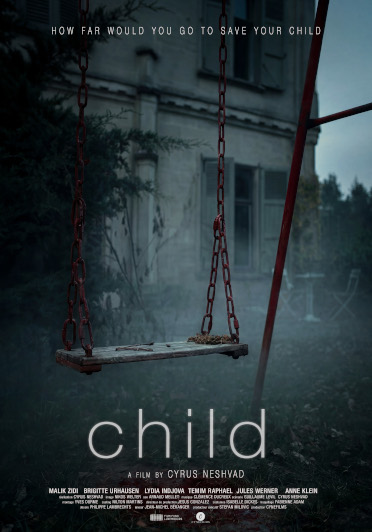
The first note of caution might be sounded by the poster, which featurea the most overused of child-in-danger clichés, the empty swing – but promotional materials like this sometimes have nothing to do with the original creative team. Then there’s the score, which is heavy handed at the start with irritating little medical-style pings, threatening to overwhelm a hospital scene shot with a blue filter and desaturated in that style that was everywhere 20 years ago. The good news is that both score and lighting settle down later. Neshvad uses a different colour tone for each of several environments in the film, but the others are subtler and allow more more variation, so are less frustrating to watch.
We’re in the hospital with Greg (Malik Zidi), whose young son Léo (Leo Todesco) is lying in bed in critical condition. An accident has occurred, for which Greg blames himself, and Léo is struggling to hold on to life. His only hope lies in an organ transplant. Curiously we are never told which organ. If there’s an artistic reason for this, it would appear to have been lost somewhere along the way. In the absence of that, one cannot help but wonder if it’s because the writers couldn’t think of a real medical condition that would fit the plot.
The primary focus of the plot, of course, is on how far Léo’s parents are willing to go to get him the organ he desperately needs, and viewers won’t need much help to figure that part out. The dynamics are interesting, however, because they’re no longer in a relationship yet must depend on one another to navigate a dangerous trip into a remote part of Eastern Europe. Greg effects not to know what this is about; he may well be denying it to himself. Anne (Brigitte Urhausen) has made the arrangements. The people they are there to deal with wear black, speak Bulgarian and intentionally make them uncomfortable, but there are much more serious threats to come.
The bulk of the film deals with the aftermath of this, when the former couple are trying to get back to the hospital in time to save their child. A series of catastrophes leads to them fleeing through a forest and seeking help in a mysterious house that they find there. The problem is that by placing them in immediate peril, the film provides them with a form of penance, and certainly with an immediate-term opportunity to set aside their feelings of guilt. On the one hand it’s a means of addressing what they have done to themselves by choosing this option; on the other, it seems significantly less distressing than the reality, and it also makes everything about them when they might otherwise have to think about other people.
Thinking about one’s child is, of course, not quite the same thing as thinking about other people. For most parents, the instinctive drive to protect is so fundamental that it seems more like selfishness. It’s so reflexive that it’s difficult to see in ordinary moral terms, and yet by having Greg and Anne come at it from difference angles, Neshvad succeeds in opening up a moral conversation which carries some weight. The breakdown of order which occurs in the aftermath of their moral breach suggests that it is they who have sent the gilm careering into a different genre space, and potentially one could interpret parts of the film as delusion brought on by psychological collapse. That instinct, however, steers its own course, and opens up further questions about what might happen if any of this comes to light in the future. It’s a huge subject and there is only room here to explore a small part of it. It’s a shame that so much time is wasted stumbling about in the dark instead – but perhaps that’s where the film is most human.
Reviewed on: 30 Sep 2026


Director: Cyrus Neshvad
Writer: Guillaume Levil, Cyrus Neshvad
Starring: Malik Zidi, Brigitte Urhausen, Lydia Indjova, Leo Todesco
Year: 2026
Runtime: 78 minutes
Country: Luxembourg
Festivals:
Search database: