




 |
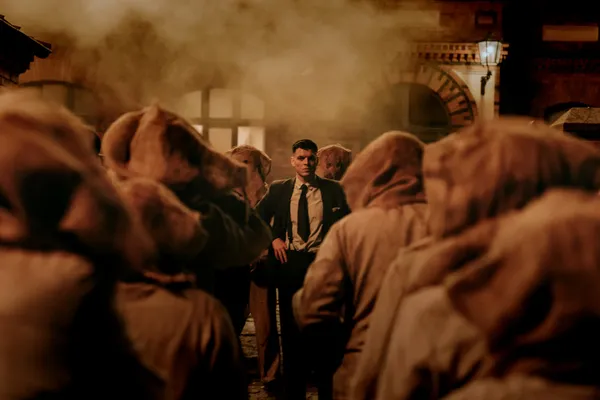
| Alex Høgh Andersen as Otto Himmelstrup, Christoffer Boe: 'I built everything around Alex' |
Can we start by talking about the research involved for this film? I’m interested in the split between fact and fiction.
Christoffer Boe: Originally I read the story, which is based on a fictional book, but that itself had a lot of research. The writer for that book had studied all the old journals in the police museum and, actually, while he was writing that book a lot of the private letters of Otto HImmelstrup suddenly dropped. That propelled the writer of the book to use this real historic figure, Himmelstrup, as the lead character for the story.
When I read the story, I immediately went to the police museum and the head of that place had written a book about the special unit. We read that and had this museum as a sort of consultant throughout the process. We used some of the real gadgets on the film set. So a lot of the things about how they work and the conflict with the local police officers is true. When it comes to the killing and the actual case, that’s all fiction.
And how about Himmelstrup himself? Is it rooted in his biography?
CB: It’s rooted in how he was maybe as a character. That is his real life journey. He was a quite young – but not as young as ours – police officer who became head of this special unit and he was the head of this special unit for many years, up until the Second World War, when he ended his career. It’s based on him and his work. He did introduce a lot of modern techniques into the police force in Denmark and he was very keen and effective in his use of PR and the Press. He was very good at activating the Press to cover what the special unit did around the country.
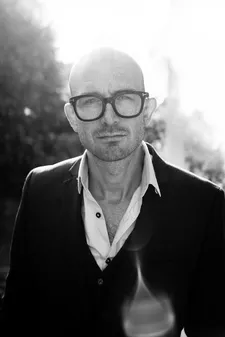 |
| Christoffer Boe: 'I think it’s very interesting to create this historical crime drama with hopefully a modern feel to it' |
CB: Yes, I think it’s very interesting to create this historical crime drama with hopefully a modern feel to it. I think there’s a reaction in the way we did this movie to the way that Danish movies usually portray the past, which is very boring and very clinical. I thought we could show the past in a more interesting and sexy way and basically create a playing field. There's lots of killing – even though we’re a small country, people love to kill each other, so there’s plenty of stuff to go around.
Yes, the film is very stylish, using cutaways to characters when they’re introduced and it’s also a very warm palette compared to a lot of Nordic crime drama. Tell me a bit about those aesthetic choices.
CB: Nordic noir has been a huge success internationally, but there was a sense of going back into the past and trying to find a new vocabulary of how to portray the past and how to do a crime story in that day and age. I wanted to do something that had a warm feel to skin tones but also see a feeling of texture and the sense of clothing and the patina on the walls. I tried to give it an atmospheric feel.
You’ve been involved quite a lot with TV crime drama in recent years but you decided to make this into a film. Why did you make that choice and do you prefer one medium over the other?
CB: For the past seven or eight years I’ve really combined making films and television series and I think we’ve had a sort of Golden Age in the way people talked about TV series. The range we could do, the way we did it and the interaction we had with the streamers or the broadcasters. At the moment, that’s changed a bit, at least in Denmark. It’s not as much fun making TV series at the moment, there's a stale staleness in the industry. I did crime in a new and interesting way, at least for me. One of the things I did was Face To Face, which was basically just one long conversation piece – each episode was just one long conversation for 25 minutes. I feel that at the moment, all that is out of the window. It's very conventional, a little bit static. So I think at the moment it's much more interesting to do feature films. With films, there’s always been a little more precision, you can go that extra mile with a feature film and elevate everything.
What is the biggest challenge in shooting a period drama?
CB:One of the challenges is that we wanted to recreate old Denmark. If you look back at how we usually recreate it, it becomes an extremely boring place. I mean, Denmark, 50 years ago, it seems like, who would live in this country? It doesn’t make any sense. Everything is so stale, basically nobody’s fucking, it’s a wonder there’s any children or anyone living in this country when there’s no sex in the streets. So I wanted to do something that felt sexy and had a scale to it. When you go back, unless it’s Copenhagen, everything seems tiny.
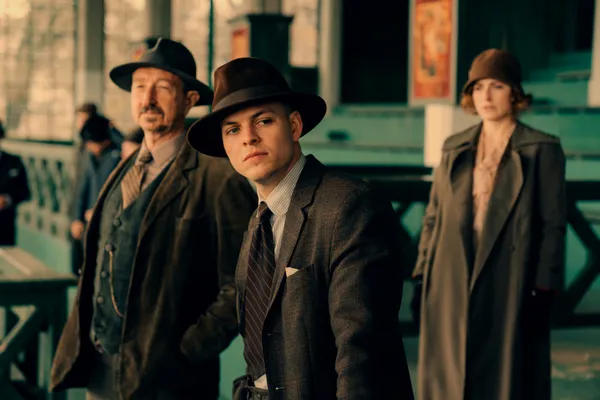 |
| Nicolaj Kopernikus, Mathilde Holdt and Alex Høgh Andersen. Christoffer Boe: 'I thought we could show the past in a more interesting and sexy way' |
You have a scene of someone essentially playing ‘chicken’ with a car on the beach. It looks as though it would have been fun to shoot but also quite difficult.
CB: We did shoot it on the beach, where, in that period, they did have motor races because the beach is so broad and the stacking of the sand is so had you can actually drive cars. They still have these cars and this is one of those that drives in the races each year. So the car was good but the thing is that it’s very windy. It was basically the last day of shooting, so we brought the Polish crew to Denmark on this beach at night. And in the morning, the scene was quite different. There was no chicken in the scene and I was talking to the DoP and he said: “It seems like there's something missing in the scene. Maybe we should do something.” And I wrote a bit before breakfast, when we were supposed to go out and scout, and I turned over the scene. So, basically, the whole scene as you see it was written on the same day so we had to improvise all the shots. I think it ended up quite funny and interesting.
Tell me about the casting, did you have people in mind?
CB:As soon as I figured out I wanted to do this movie and hopefully do more, as you just mentioned, with this tight knit crew, I knew I wanted to go younger with the casting. For many years I’ve been looking at Alex Høgh Andersen. We had a small commitment on one of my previous shows, but the calendar thing didn't work out so we couldn't work on that. He was a very interesting actor already on Vikings, but he's just really grown and had some minor roles when he really outshone the whole project. So I approached him very quickly and basically said, “I'm writing this movie, it's for you.” He was very interested, so I built everything around Alex. I’d never worked with Mathilde Marcel before. I’ve been so busy working for the past 20 years that I feel like I’ve worked with everybody, so it was very interesting to suddenly be on set and have lots and lots of people and actors that were completely new to me. I was very happy with them and I think they have great chemistry on and off-set because another thing is, we were all in Poland and we were working hard on set. So these three people were basically living on their own and they really enjoyed each other’s company and they really had fun and they brought that sort of funness on set.
So do you think the cast will be onboard for more films in the series?
CB:I hope so. I don’t want to say so much but I’m already working on the second one with my co-writer Lasse Kyed Rasmussen. We’ve already been scouting locations so let’s say the shoot of the next one isn’t so far away.