





Eye For Film >> Movies >> The Devil's Hand (1943) Film Review


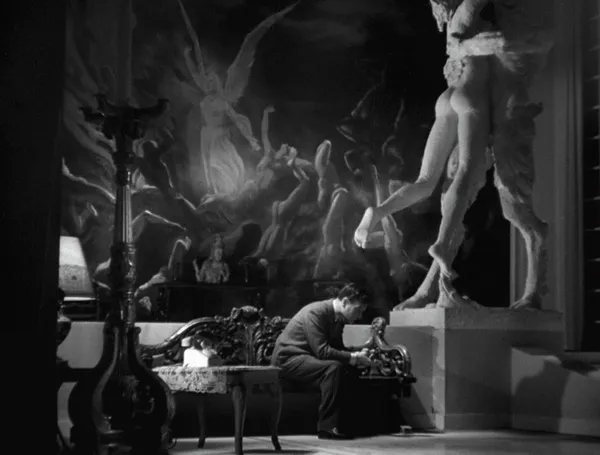

La Main Du Diable, known in English as the The Devil's Hand or Carnival Of Sinners was a French film from 1943. It was filmed by director Maurice Tourneur while France was under Nazi occupation.
One night beside the ruins of an old abbey in an isolated hotel cut off by snow, the guests argue and complain. They are all going to be there for some time and tempers are frayed. A one handed man enters the building: Roland Brissot (Pierre Fresnay), a painter and something of a celebrity in the Paris art scene. He is edgy, angry, and defensive about the package he carries under his arm. Blackout. When the electricity comes back on, his package is gone. Persuaded by the other guests, he tells his story. It is reminiscent of the The Bottle Imp by Robert Louis Stevenson or The Monkey's Paw by WW Jacobs. It's not how old the tale is, it's how well it's told.
This first scene is not exactly what you would expect to see in a movie from the 1940s. Up until the blackout the dialogue is delivered at breakneck speed, the actors and camera move a lot, and the cutting is frenetic. The impact of this might be dulled for a modern audience, used to television where the space for everything is squeezed down by the increasing size of the commercial break. Once Brissot starts to tell his story in flashbacks the pace slows a little, but Tourneur, showing a lack of self indulgence, never touches the brakes.
Brissot, a singularly untalented artist, tells his audience about his failed career, and then about how everything changed. The distraught Brissot sits at a restraint table, publicly dumped by his girlfriend Irène (Josseline Gaël). He is plied with alcohol and then given a proposition by the chef, Mélisse (Noël Roquevert). If he buys this talisman all his woes will be over. It's just one sou (penny). The talisman inside the box is a living left hand. On the conclusion of the deal, Mélisse's left hand vanishes, leaving only a stump. Painting under the pseudonym of Maximus Leo, Brissot gets the girl, the talent, the fame and fortune, and a pact with the Devil.
Considering when and where the film was made there is an obvious allegory between the plot and cooperating with the Nazi regime, or at least the Vichy puppet government. The claw-like hand on the original film posters looks very much like a swastika. The pact with the Devil is about the moral compromises that the French population were having to make just to get on with normal life while under occupation. The pact is one that Brissot is manipulated into: he is drunk, upset, vulnerable; the man selling him the hand has all its manipulative power. Brissot doesn't really have any choice but to buy.
When he enters the hotel, Brissot has the box with the talisman. He is also missing his left hand. Implicitly, from the start of the film, he has escaped the bargain. Doing so involves him meeting with all the previous owners of the hand. He finds them all dining together in masquerade costumes, animal visages of themselves. On a theatre stage somehow beyond the confines of the banquet, they each relate their story through a little play. These scenes, a masterpiece of surrealism, are what make La Main Du Diable special.
Reviewed on: 16 Mar 2026


