





Eye For Film >> Movies >> The Perfect Neighbor (2024) Film Review


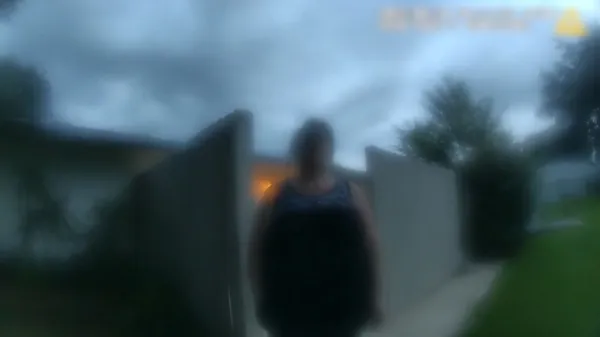

America’s “stand your ground” laws – which permit the use of deadly force in self-defence without the need to first attempt to retreat – have been subject to documentary scrutiny before in the likes of Marc Silver’s 3½ Minutes, Ten Bullets, about the death of unarmed African-American teenager Jordan and Abigail Disney’s Armor Of Light. Now Oscar nominee The Perfect Neighbour, plunges us into a first-person exploration of the killing of Black mum-of-four Ajike “AJ” Owens by fiftysomething Susan Lorincz, who is white, chiefly using footage from police body cameras, along with interview room film and mobile phone snippets. .
Beginning with the shooting itself in June 2023, which happened through a closed door, the film then winds back to trace the chilling baby steps that lead up to it. Geeta Gandbhir’s disturbing film shows paranoia turning deadly thanks to the easy accfess to guns in the States. Lorincz was not a good fit for the neighbourhood of Ocala, Florida, where the killing happened. It’s evident from the off that the area is full of families and she has a general dislike of children, as another mum puts it, “That lady yells at everybody’s kids around here”.
In between yelling at the kids to, “Get off my lawn” (although she, in fact, doesn’t own it), Lorincz regularly called the police – “I’m like the perfect neighbour, you barely ever see me,” she tells them in one of many delusional moments. The film is, in many ways, a triumph of editing by Viridiana Lieberman in terms of storytelling, as footage from the many police call-outs are interwoven with voices from the time as the situation was escalating. This is a true crime movie shot at ground level with a real time quality that keeps us in each dreadful moment.
Gandbhir doesn’t need to sensationalise any of this because it’s powerful enough as it tells its own story, as Lorincz’s manipulation of events in an attempt to gain sympathy are increasingly at play. Naturally, the kids are annoying sometimes – as one puts it in one of the many, fairly low key conversations with the community police, “We’re 11!” – but Lorincz’s response speaks to a paranoia all too easily weaponised in a country where you can buy a gun with your weekly shop.
This is a very American-specific documentary, since the “stand your ground laws” there have been linked to an eight to 11% rise in homicide. It tacitly asks urgent questions of a domestic audience, regarding law enforcement’s inability to prevent this despite the fact that it was evident something was brewing and surrounding eligibility for gun ownership. Even with something as, apparently, straightforwardly ‘reportage’ as this film, however, it is worth remembering that there is an editorial hand at work. During Lorincz’s trial – which is largely an after-thought here – her sister gave credible evidence that Lorincz had suffered sexual abuse as a child. While that in no way justifies picking up a gun and using deadly force or detracts from Lorincz’s evident racism, it does speak to a volatility that we also see in the film, as she batters a locked gate with a car because she felt trapped in a way that feels elided in the edit. While we see the grimly gripping horror of all this, the approach chosen by Gandbhir is inevitably narrow in terms of how much insight we gain into everyone involved. Decisions, in short, as with all films, have been made and that’s worth remembering as you watch.
Reviewed on: 15 Mar 2026


