 |
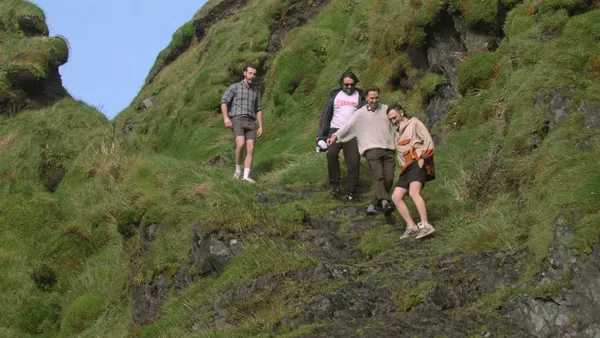
| Dennis Harvey on the participants of Celtic Utopia: 'Most people were politically engaged and doing slightly weird folk music' Photo: Tuva Bjork |
Celtic Utopia (Útóipe Cheilteach) – which won the Critics' Week prize in Locarno Film Festival – is chiefly a celebration of contemporary Irish folk music, but the documentary, directed by Irishman Dennis Harvey and Swede Lars Lovén, is also an exploration of the social landscape in modern day Ireland. It considers music, and its makers within a historic post-colonial context and scrutinises the complexities concerning the Irish language, including its historic ties to conservatism and religion. The pair met while Harvey was studying for a masters in Stockholm. The pair discussed Lovén’s previous doc Fonko, which considered the musical reimagining in post-colonial Africa.
Harvey explains: “The more we talked about it, we were like, ‘God there's actually a lot in common here with what's going on in Ireland’. We originally started thinking about doing this as a radio documentary, something small, but then quite quickly we realised actually there's a lot more to do here.
Working together proved useful not just because they were working, alongside two cinematographers, as a small team but also, as Lovén notes, because “we had two different perspectives on Ireland”.
He adds: “I'm coming from the outside and starting to discover things and something might seem even interesting to me that Dennis might take for granted. So I think that it was a fruitful discussion in that way.”
Harvey agrees: “It’s the inside/outside thing really. Lars would ask a certain question about Irish Society which I take for granted and, as I was explaining it I was realising, ‘Yes, this is insane.’
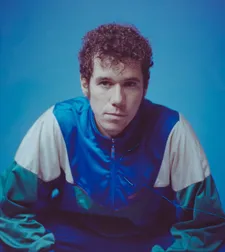 |
| Dennis Harvey Photo: George Hooker |
"One of the examples we mentioned is that sometimes when you're within the culture there's lots of sort of strange language around, say, what the mother and baby homes were in Ireland. But what they were, was mass income incarceration of unmarried mothers. But I think as an Irish person speaking to another Irish person it can be harder to get to that realisation for yourself but when you're explaining it to someone from a country like Sweden where women's liberation happened, maybe in the 1890s or whatever, you certainly start realising these things.”
Harvey says that when they started the process of making the film, they had 13 themes that they wanted to explore with the film but ultimately narrowed it down to about three or four. Although the film has been made with a domestic audience in mind as well as an international one, he admits: “There were certain things we had to take out because it was one step too far.”
In terms of his own language upbringing, Harvey grew up in an English-speaking household, although his mum is a fluent Irish speaker. He says he was “relatively fluent” by the time left school. At university, however, he studied Spanish alongside film and lived a year in Spain itself before going to Sweden.
He says: “I still understand the language pretty well but I've sort of lost the ability to speak it now because Spanish and Swedish are ahead.”
Lovén adds: “The language was something we wanted to interrogate from the start and it stuck. It really informs everything we do in the film.”
This interview was conducted ahead of the film's world premiere at Locarno Film Festival Celtic Utopia also brings home the monumental shifts that have happened in Ireland over the past 40 years.
Harvey says: “I was born in 1991 and when I was born, it was illegal to be gay, contraception was illegal, abortion was also illegal and you couldn't get divorced. That was illegal too – that's in my lifetime. And there was an ongoing war on the island, in Belfast, 150 miles up the road from Dublin, where I was born. And the Magdalene laundries were still open, the last one closed in the late 90s/early 2000s, so this stuff is so recent. Yet there's been such dramatic social change and social movement, but I think you can't escape from what that does to you.
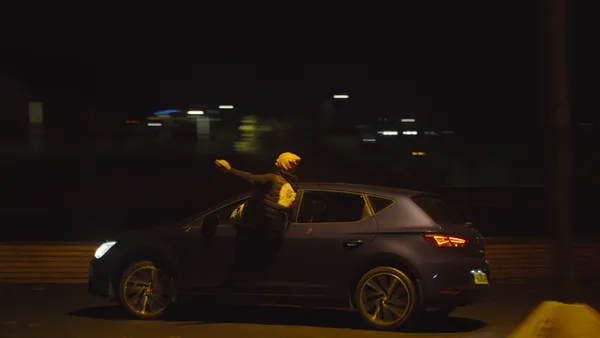 |
| Young Spencer in his car. Dennis Harvey: 'He's such an interesting character' Photo: Tuva Bjork |
“In many ways, I'm really lucky. I don't feel that I really felt the worst of the brunt of all that stuff but I do remember watching the news as a kid and seeing school kids in Belfast getting stones hurled at them by adults. I think it was maybe when I moved to Sweden I understood that and that this stuff has way more effect on you even if you weren’t the main target. It does take a long time to disentangle yourself from these internalised conflicts and traumas.”
He adds that they interviewed some bands in Dundalk, right by the Border between north and south where you really “feel the immediacy of that”.
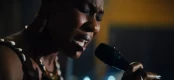
A key element of the film is, of course, music, with a whole raft of bands and singers featured, including The Mary Wallopers, Lankum, Young Spencer, Eoghan Ó Ceannabháin, Summer Newman and a whole lot more. But with such a rich music scene to choose from, how did they decide who to include? Harvey says: “Most people were politically engaged and doing slightly weird folk music.”
Lovén adds: “I think that kind of it kind of worked itself out because the people who did more interesting stuff and more experimental music were also more politically engaged.”
Harvey says there are 18 artists and bands in the final cut but that they filmed closer to 50. He says: “A lot of our research was meeting people and seeing how they were on camera and what they wanted to talk about and how they interacted with each other.
“Bands like Lankum, The Mary Wallopers and, obviously, Kneecap, come out of this hugely rich underground world.
“Lankum were pretty big, but The Mary Wallopers weren't nearly as big as they are now and Kneecap weren't as big – not that Kneecap are in the film.”
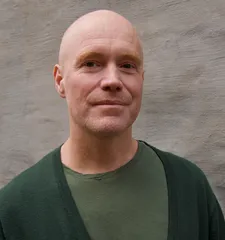 |
| Lars Lovén Photo: Elisabeth Marjanovic |
He adds: “We decided not to have them in the film in the end. We met them during research and they were in the conversation for a long time but we felt that Young Spencer [who has a Protestant background] would be more interesting.
“He's such an interesting character and really understands that thing that Kneecap are interested in as well, that the working-class communities in the north and in Belfast have way more in common with each other than they do with some of the politicians who are supposed to represent them.
“He’s someone that, if we’re looking towards the future and Ireland is potentially unified, I think feeling the warmth and intensity and sort of struggle of someone like Young Spencer is really important for Ireland because it would be the biggest tragedy if a unified Ireland treated the loyalist minority the way that the Catholic minority were treated in the north in the Sixties and Seventies. That would be the failure of state building in Ireland so to include someone like Young Spencer is incredibly important.”
Community is also an important part of the film, with many segments of it shot on the streets and the filmmakers deciding to include interactions with members of the public, including some who are worse for wear.
Harvey says: “We were really keen to capture the feeling of what it's like in Ireland. Not just the closed off, studio-type space, which some music documentaries present. We were really keen to be able to capture the feeling of what it's like to be around on the streets and it just meant we had to film loads and go to a lot of different places. It just made for challenging shoots.
“We never set up interruptions but we were always open to being interrupted because that was the sort of vibe we were going for.”
Lovén adds: "For me one of the most important things about documentaries is that it transports you somewhere… and you don't want to be transported to your concert hall. You want to be where people live and where things are happening.”
In terms of other projects, Harvey has been busy making a triptych of short films about migration and Ireland and is also working on a larger migration project. Lovén is also in the early stages of a project in Greece about protest and student uprising.