




 |
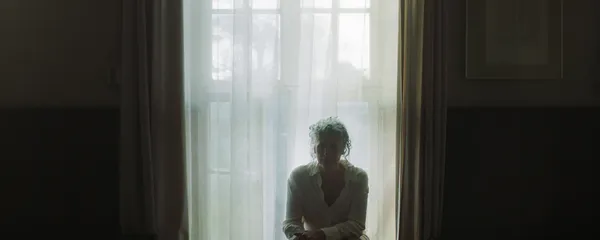
| Tamar van den Dop in Beyond Silence |
Marnie Blok has been through it herself. She has a lot of anger, she says, not so much in relation to her own experience but in the fact that so many women continue to be affected by rape and poor responses to it despite the decades spent fighting for change. That anger is part of what drove her to write her previous script on the subject, Wrinkle, and it also contributed to her short film Beyond Silence. Now that Beyond Silence has been shortlisted for the Oscars, she has a lot to say.
“The theme of Wrinkle was ‘a happy life is the best revenge,’ and that was something that really helped me through getting through that rape,” says the former actress when we meet. “Because, you know, you are so angry, and revenge is such an unfruitful feeling because what can you do? It doesn't help you? Somebody told me this line and that really helped me, so I wanted to write a script about it, but I didn't have a lot of experience with writing, so it was never made. And then I started developing myself as a scriptwriter. And then a few years ago, I revisited that very first script and I started doing research again. And then I found out that after #MeToo, reports of sexual abuse went up to 70%. So I thought, ‘Oh, whoa, that's really hopeful,’ then to read that the actual charges were that were pressed went up by only 1%.
“It dawned on me how huge the group of people is that are still silent. So then I thought, well, yeah, happy life is the best revenge. I'll have to wait with that script. I have to write something on breaking the silence and also on the costs of breaking the silence, because I think as a society, after #MeToo, we said ‘Please come forward with your stories,’ but we are not bearing the consequences of coming forward. People are getting discouraged – whether you go to the police or at universities, as in my film, or in hospitals, wherever, there is a power difference.
“There was one other reason, which was that I was shocked, honestly, by the reactions of women – mostly women my age or older – that were sort of irritated by #MeToo, like it was all so humourless and so one dimensional, and [they were] also warning younger women ‘Please don't become a victim again,’ as if victimhood equals being weak. And I thought it was such an inappropriate reaction, because I thought, first of all, finally there is an opening in society for women to come forward, or survivors – sometimes also men, though it’s mostly women – and then we shut them up. And secondly, I thought, you know, when you are raped, you are a victim. It's not weak, it's a fact. And coming forward is not weak either. It's very strong, actually. So there were lots of reasons to write this movie and I really wanted to have two generations in it because of this.
“I do understand the older woman as well, because when I was raped, I did keep silent, but it wasn't by choice. It was because there were three friends witnessing it and they couldn't intervene. But I did severely downplay it. And I did, you know, ‘Okay, shit happens. You have to move on.’ Rape is merely rape in the bigger schemes of all the shit that's happening in the world. And that helped me. Being tough helps. But it also held me back in ways that I didn't realise for a very long time.”
Even after #MeToo, I say, there's an assumption that rape is about physical differences and about men having more physical power than women, which isn't always true – and there are many other contexts in which power is an issue, too. That would have been worse, perhaps, for the older woman than it is for the younger woman in the film, in that there were very few women in academia when she was starting her career.
“Yeah, and I think also that women of her age, they couldn't vocalise it yet. When it came out, I realised that me, myself, as an actress, I had put up with far too much because I didn't want to be prudish, I didn't want to be humorless. ‘Play the game,’ blah, blah. And luckily this younger generation, at least because we're talking about it a lot more, they had more words to put their feelings in. Because we are more aware and we are more talking about it, because we're making films about it. At least there is some support for the younger generation to realise that it's completely wrong and you don't have to put up with all the stuff that I did put up with for a long time.”
There's a moment in the film where Eva, the young PhD student who, with her sister supporting her, has gone to head of faculty Sandrine to seek support, is talking about what happened to her. She says that her supervisor kissed her, and then she hesitates for just a second. It seems just long enough for Sandrine and viewers to wonder if that's all that happened and to think that obviously that's wrong and something should be done, but why is she so traumatised by it? I suggest that that's really powerful in itself because it does put it in that space of events that happen, any of which can be damaging because you don't know what's happened to somebody before or how vulnerable they are.
“Exactly,” she says, and confirms that the pause is intentional. “She says ‘and then he kissed me,’ and then I think she wants to go on, and then she can't go on. Her sister is waiting for her to go on and fills it in. And then she says, ‘Well, it's all there,’ because she doesn't want to put it into words again. She has written it down.”
I add that people often start by saying that something small has happened to them because that's the easier thing to say, and then get dismissed because people think that's everything. Here, it seems to point to that generational difference we were talking about. Maybe the older woman expects younger women to make complaints about ‘small’ things which, in her time, would have been dismissed as just an ordinary part of university life.
“Yeah. And I think she dismissed a lot more, even,” Marnie says.
She’s pleased when I mention the full ashtray that Sandrine keeps on her outside window ledge, as if she were literally walling off her own stress – and the scene over the end credits when the air is full of smoke, which made me think that Sandrine is killing herself with all those cigarettes, dying because she can’t talk about what happened.
“I also think smoking sort of muffles your emotions away,” she adds. “I have a friend who smoked for ages and he stopped, and he said ‘It's really irritating. I'm so much more emotional.”
Sandrine’s interactions with the cigarettes are very subtly handled.
“When I was writing the script, I really struggled with that. I really didn't want to put a lot in. I first had a whole audio track for her alone that would give her sounds of her own, whatever happened to her. But I thought ‘No, it's all far too thick,’ and I didn't want that. But then I was really curious to find out how people would react to the film and what they would think about her. Most of them get the message that I wanted to convey.
“I also was curious when she cries and then she lifts her head up, she takes another sigh. And then someone said to me ‘Oh, okay, now she decides, “Enough is enough. I'm going to talk myself,”’. And another one said to me ‘I think there she said “Okay, you had your emotions, now shut up again and just close it down and move on.”’ So there were two completely different reactions, which I actually like. Everybody will make their own story out of it as well.
“It's something I am thinking about a lot because I really would like to know. So many people ask me ‘What are the girls going to do now? What is she going to do? What happened to her? What happened to them? What will happen?’ And I already was thinking about, shouldn't I just make this scene into the first scene of a feature film and then follow both? What I really would like is to that those two generations in the end will become allies instead of being opposite of each other.”
We discuss the fact that Eva is Deaf. statistically, women in minoritised groups are more likely than others to be targeted for abuse, although as Marnie notes, being deaf doesn’t mean that people are natural victims or lack agency.
“When I was in theatre school, I had lessons in sign language,” she says. I forgot everything because it's very difficult, but I was really mesmerised by it. And also by the film Children Of A Lesser God, with Marlee Matlin in it. I thought that was so beautiful. But as a writer, I never felt I could use it in a proper way, because if you want to use it, you have to have a good reason. And somehow, very early in the process, I knew I wanted to have a deaf actress because I thought it's such a beautiful metaphor, literally for not being heard. People who are shouting are not heard. And I also knew I was going to be in one room, three people, a lot of talking. So I also knew it would give us something cinematographically and also in the sound design, because you can do so much with her sort of silence.
“Getting to know Henrianne [Jansen, who plays Eva], she's a tough cookie. She's a really very strong. Because I remember that when we went through the script, she said a couple of times, ‘Why is my sister speaking up for me? I can do it myself?’ And I said ‘It's not because you're Deaf. I know you can fight for yourself. It's because you're brave, and then the shame and the guilt keep you silent.’ And then she started to realise that it had nothing to do with that. Because a lot of people do think that we have to take care of Deaf people, but they can really very much take care of themselves.”
We discuss the fact that speaking out and enduring distress in silence each take their own kind of strength. She explains that there was one sentence that the older actress, Tamar van den Dop, found it difficult to say: “If we want equal rights and we want equal chances, then we also have to bear equal responsibility,” but they agreed to keep it in the film after she explained that it’s the most important sentence for your character. “She has to hold up her own truth, otherwise she would just go 30 years of being silent, she would betray herself.”
I heard that sentence from quite a lot from women during the MeToo conversations, I note, and she tells me that the inspiration for is was Donna Rotunno, Harvey Weinstein’s lawyer. “She's so on the wrong side of history.”
Having the character of the sister present made room to explore the way that people who have been raped can find what they have to say distorted or censored by other people – even well-intentioned people – as soon as they try to speak.
“You're right,” she says. “It gave me so much more opportunity to have a dynamic as well, three instead of two. And also, what I really liked from that role, and the way Sigrid ten Napel plays it, there is such a huge anger within her, but as an interpreter, you have to just voice the voice of the other one. And she has to fight herself so hard not to just give her own opinion. I love that about that character.”
We discuss casting.
“I knew from the beginning that I only would make this film if I found an actress who was Deaf,” she says. “Of course, actresses or actors can play stuff, but I thought, first of all, of inclusivity. You have an obligation, I think, to find someone who can do it. And then secondly, I thought, there is this whole complicated world we don't know a lot about. I thought I knew it. I could sort of imagine it. But it turned out to be so much more complicated and interesting than I knew. And I knew she would give much more authenticity to it than it would have had. So I knew I had to go and set up auditions and search for people.
“Before I started, my production designer introduced me to Henrianne, who was dating a friend of hers, so I had a talk with Henrianne for an hour and a half together with an interpreter. And then I drove home on my bike and I said to myself, ‘I'm going to do it with her.’ It was a sort of gut feeling. I knew I had to spend a lot of time with her, so we had endless sessions at the kitchen table at my home together – also with Sigrid, for them to feel what their sister bond was, but also for Henrianne to figure out what playing was about because she never acted before. This is her very first role. So that was really very interesting.”
It was boxing together, she says, that enabled Henrianne to walk onto the set and deliver something fresh and unselfconscious.
“That was a really good trick, actually. And Sigrid helped a lot because she is a very [well] known Dutch actress. Henrianne knew her from series and was pretty much in awe of her. And so she kept asking, ‘Sigrid, how do you do that? How do you play?’ And I said ‘You know, when I was in theatre school, some people could think about the grocery store list while they were playing and other ones really had to do the Stanislavski, so that's something you have to figure out for yourself, where it is with you. And we came a long way with Henrianne.
“Acting is a lot about enabling someone else to act. I knew I had two brilliant actresses on set, so they would help her. And if she didn't deliver, I'd get it all sort of it in the editing room. But in the end she delivered big time, so there was worry for nothing.
“I wanted to another actress I knew already. A couple of years ago, I had written a series called Childhood Dreams, which is on HBO now, and she played a big part in it. And I already was talking to her about wanting to make this short. I said, ‘You're going to be that woman,’ because she is a very good actress but she also so completely understands between the lines what I write. And Sigrid I knew from when she was 16. She was in a series that my husband directed and I wrote, together with some other writers. And so she came home a lot because she's the same age as my daughter.
“She spent a lot of time with us, and then she went to America for a long time. And then we met each other again on the highway with protests of Extinction Rebellion. And she said ‘Oh my God, can I come home again and have dinner with you?’ I was at that moment starting to look for a Deaf actress, and I found Henrianne, and then I knew I had to have Sig because apart from the fact that she is a very good actress, they also look alike, and the click was wonderful.”
I don’t know Dutch Sign Language, and ask if it’s possible to understand the film without subtitles if one does, but she admits that she’s not sure either.
“I've been thinking about how there's a couple of times when there’s sign language and there is no translation, but there are subtitles. But we've been discussing, should we take the subtitles away? Because it's interesting, because then we're with the woman who doesn't know either. So we tried that, but in the end I did decide to have it because I actually wanted the audience to understand that. She says ‘Well, what should I tell? I didn't do anything. I let it happen.’”
Following the signing presented an extra challenge for the cinematographer, and she’s full of praise for Myrthe Mosterman.
“There might be moments where you don't see all of the sign language, of course, because you skip to the other person. Because I'm also telling a story cinematographically and I also want to make it a very beautiful film. It's not a film about a Deaf girl. It's a film about a girl who's raped. She happens to be Deaf. But we were very conscious of it, to do it as good as we could.
“I also had literally three times seven hours to film it, because it was dark and only at half past nine the sun came up and it finished at half past four, like now. I had also a wonderful editor [Annelien von Wijnbergen], and so in the beginning when she put it together and I wanted to change a couple of things, she said ‘We're just beginning, Relax.’ And then we started, and she was very convinced that it would work. So we started fine tuning it. I really stripped the script down on the dialogue, because I wanted to have really sharp dialogue. And that's actually what she also did with the editing. She [taught] me just to look at the material and work with that material. And actually, in the end, for me, the film conveys everything I wanted to say.”
Then there’s the Oscar news. “I was thrilled, of course, and over the moon. I'm so happy. You never know. It's all such a tombola. I'm very grateful that the film resonates so much. We are picked up with a lot of festivals, but with the whole Oscar race, I'm incredibly thrilled.”