 |
| Prime |
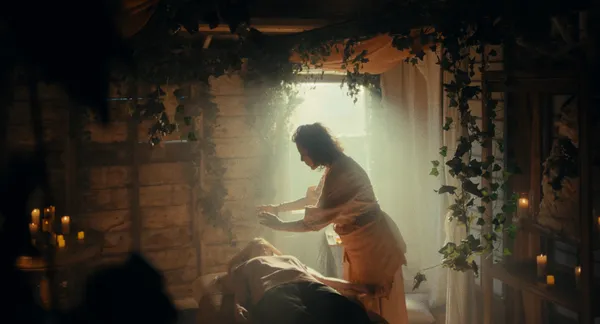
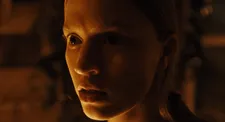
Director Meagan Coyle's short film Prime follows devoted environmentalist Claire, who, suffering trauma following the violent death of her mother, seeks out a utopian farming collective in upstate New York. Her hopes of a fresh start are shattered as she begins to realise the truths that lie beneath the surface of the utopian community.
Tis is Coyle's directorial début. She worked as a head make-up and hair stylist on director Charlotte Linden Ercoli Coe's comedy Fior Di Latte and Carlos Mirabella-Davis' Swallow. She produced Kyle Robert Morrison's short film Elle.
 |
| Prime |
Speaking with Eye For Film, she discussed her lifelong love of cinema, sharing her directorial début with an audience, and its politics.
Paul Risker: How would you describe your relationship to cinema?
Meagan Coyle: It's all that matters to me. Ever since I was little, it's the only thing that I've truly been obsessed with. Cinema is always there for you, on a good day or on a bad day. But it's funny, because the first thing I thought about was in my playroom — I had a VHS copy of Terminator 2 that I would just watch and rewind, watch and rewind. I was obsessed with Terminator 2 and that was the one for me, as well as Bill And Ted. Those movies were on repeat all the time.
PR: Youth is the perfect time to experience cinema because you're like a sponge, and you just soak films up. As you get older, you're more prone to overthink things, and also, for our generation, there's the fond memories of good stories being told in less time than is needed today.
MC: You're right, and part of me wonders if people are so obsessed with run times too, because watching YouTube, you're very cognisant of how long it is or how long is left, versus if you're watching something on TV, it's not going to say there's this much time left. Anyway, it's not that it wasn't a thing before, but people are compartmentalising the time that they're willing to give to things, because they have this device in their pocket that can give them the world. And then there are the algorithms suggesting things.
 |
| Prime |
It's sad that people's attention spans are starting to whittle away, but I do agree about running times and stuff. I was actually talking to someone a few days ago about how I love a really tight 90-minute horror movie, where there's no fat and if you blink, you'll be in the second act. But then I also love movies that linger, and you just absorb yourself in that world. You just lose yourself in those spaces, especially if you see it in a theatre.
PR: As we're speaking ahead of its première, how do you process the reality of sharing your film with an audience, who will inevitably foster competing opinions?
MC: It's terrifying, and what's crazy is I've worked on a lot of different films where I'm standing by the monitor and having to keep my opinions to myself. This movie was an opportunity to make something myself. And I feel fortunate that people are responding well to it. But I have to say, Sundance will be the first time I'm seeing it with an audience, where I'll talk to people who have seen the movie. It'll be like, "Oh, you watched that. It wasn't just a fever dream I had?" Now, people are going to have opinions about it, and maybe they'll understand some of the humour, and maybe they will not. As soon as you make any kind of art, you're putting yourself out there.
[...] You have to accept that you can't talk to every single person who's going to watch it and say, "Oh, well, this scene was cut for time..." It has to be its own standalone thing and I have to bite my tongue and just let people have their opinion about it. And the dream is that people watch it, and they have wildly different opinions. Then they go have a chat, and it gets people thinking or talking about it, because that's one of the best things about cinema.
 |
| Prime |
PR: What was the genesis of the idea for Prime?
MC: Well, a couple different things, but the main thing was that I was working on a movie with mostly vegetarians, and I felt weirdly defensive when someone asked, "Is this your meat meal?" I said. "Yes, it's my meat meal, but I try not to eat meat all the time." I just became weirdly defensive about it and on my way home, I thought, 'What was my deal there?'
I've always been interested in cults and the darker side of things like that. When you think about what ethical consumption is and who gets to decide what's ethical, that is very interesting, because I can have my opinion, but everyone thinks differently. And some people don't have the luxury of getting to have an opinion that they can enact, whether it be financially or geographically or socially. But everyone eats, and so, everyone's going to have an opinion.
PR: Does this mean Prime is political?
MC: - Maybe in the politics of food? I live in a country where there are food deserts, and I also live in New York, a city where there are people that have a lot of choices. And to have those choices, money is a barrier. If you're really hungry, you're going to eat what's in front of you. You're not going to be like, "Is this egg free-range?"
It's important to talk about these things, and while I don't have the answer, it's about being aware that food choice is a privilege. So, in that way, I guess it's political.
Prime premièred at the 2026 Sundance Film Festival, in the Midnight Shorts strand.