




 |
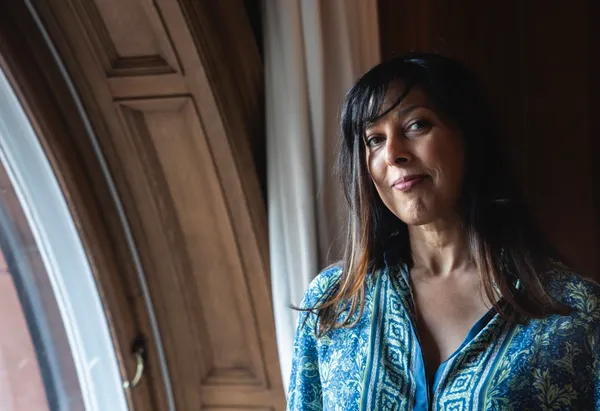
| Director and novelist Helen Walsh: 'I think being a brown skinned kid, growing up in a small predominantly white, Northern town in the 80s has certainly informed my lens' Photo: Kat Gollock for EIFF |
The British novelist and film writer and director Helen Walsh returned to the Edinburgh International Film Festival with On The Sea, an exploration of male desire and sexual identity set in a remote fishing community in Wales. She was last at the film festival in 2016 with her debut feature The Violators which dealt with female sexuality, parents, and relationships.
Her books - Brass, Once upon a Time in England, Go to Sleep and The Lemon Grove – have all explored what has been described as "the dark side of modern Britain." She talks about her obsessions, growing up in the unlikely surrounds of Warrington, her film-making influences and why a female director can “open more nuanced spaces” for depictions of male worlds.
Richard Mowe: You have gone from dealing with young girls’ burgeoning sexuality in The Violators to mature and closeted male sensibilities in On the Sea – the territories seem far apart but were there common threads to bind them together?
Helen Walsh: I think all my work deals with marginalised identities, outliers in some way, who are living lives or living in environments that are spatially or emotionally cut adrift. In The Violators, Shelly is trying to deal with the visibility of her sexuality in a world where men feel a God-given ownership over it. Jack in On The Sea has spent his whole life closed off, shut down, and when his sexual identity becomes visible in this close-knit community, he struggles to deal with the fallout.
RM: Did it help that your background in Warrington (also a place with a rather harsh and barren background) make the brooding Welsh setting seem somehow familiar – and how big a part did the atmosphere of the setting play in the mood of the film and in your writing generally?
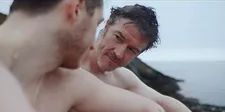 |
| Scene from On The Sea: Lorne MacFadyen and Barry Ward Photo: Courtesy of EIFF |
RM: What attracted you to a film with such a physical masculine aura – and do you think (without sounding too stereotypical) that it helped having a female perspective. And, in particular, in evoking the point of view of Maggie, who emerges as one of the strongest characters.
HW: I think in an age where masculinities, and, indeed, dominant traditional masculinity is slowly being unravelled, unpacked and reimagined, with much more sensitive and nuanced and intersectional appraisals emerging on screen, it felt timely to write about a very masculine world in which traits such as emotional and physical resilience, stoicism, were not only valued but integral to one’s work.
I love the strength and independence of Maggie. I think the contributions of women – economically and socially – are often overlooked and undervalued in small rural communities that pivot around predominantly male industries like fishery or farming, but women are often the backbone of these places. The men of On The Sea have so much love and respect for the women in their lives even though the relationships operate within a very patriarchal framework. I thought Liz White brought something really special to Maggie that wasn’t quite there at script level.
RM: You had an intimacy co-ordinator working on the film – what did they bring to the table and how did you decide on the levels of intimacy portrayed. Were these scenes the most challenging parts of the process?
HW: All my work is informed in some way by sex and desire and class. I find sex and desire very easy to write about but directing sex scenes with real people where real human emotions are involved was something that required expertise and sensitive handling. Lisa Jen Brown our intimacy coordinator was amazing. Her priorities lay first and foremost with the actors, but we achieved so much, and everyone worked hard together as a team to realise my vision for the intimacy scenes. I also think there is a kind of absurdity and black comedy that underpins all moments of human intimacy, especially simulated intimacy and Lisa Jenn Brown really leant into these moments of levity during the shoot.
RM: Was it more difficult to transfer your already acknowledged insights into female characters to a macho world. Have recent explorations of “toxic masculinity” opened the debate in a useful way? What was the starting point?
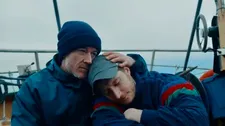 |
| "'I find essentialist ideas around masculinity harmful and unhelpful …' On The Sea director Helen Walsh Photo: Red Union Films |
Films are always a great starting point for conversations. After seeing How To Have Sex [directorial debut of Molly Manning Walker in 2023] I rang all my friends and told them to take their teenage sons to see it, to have the conversation about consent, and about the kinds of things they’re viewing online. When a film’s good, when it resonates powerfully, those conversations come naturally. There’s an urgency to them.
RM: As a youngster I understand you were a prolific reader but also watched a lot of films with your father – which ones made a big impression? You were attracted, I believe, to films with a very masculine aura – did that assist with any insights for the creation of On The Sea?
HW: Yes, as a child, I loved the macho men of Hollywood. Rambo – the emotionally detached antihero, Rocky the gutsy pugilist with a heart of gold. I wanted to be them and be with them! But I also remember watching David Lynch’s The Elephant Man with my dad (we hired it for a week and watched it every night) and it felt so fresh and different to anything I’d seen. I thought about it for months. It was such a sensitive portrayal of masculinity, of a man trying to take control of his own narrative with such quiet dignity and resilience.
RM: You had a light bulb moment (I believe) at University when you were taken to see Godard’s Breathless and then later to see The Son by the Dardennes. Talk me through that transformation and what films have shaped your film-making journey along the way.
HW: The discovery of European cinema when I was 19 completely changed the way I saw film. One of the first films I saw was The Son and I return to the Dardenne brothers again and again. I love their depictions of ordinary working-class life. I think we are nervous in this country of portraying the working classes as anything other than noble or completely dignified in their struggle. The Dardenne brothers neither patronise nor sentimentalise the working classes but present them as flawed and complex and despite such flaws, the audience is rooting for them.
RM: Your first love was the printed page – was there one book that opened your eyes to the possibilities of embarking on a literary trajectory and does filmmaking give you wider creative horizons? Will you oscillate between the two? Are you currently writing a novel? Or another film? Will writing and directing always go together as part of your process?
HW: I always felt growing up, absorbing cinema through the offerings of my local video store, that literature had so much more to say about female behaviour. Alice Walker, Charlotte Perkins Gilmore and Heather Lewis – all women who changed the face of literature in some way. But the first book I discovered that validated me, that made me feel seen, was written by a white male writing about homophobia, racism and transphobia, set in 50s Brooklyn docklands. Hubert Selby’s Last Exit To Brooklyn blew my mind. I carried it around with me for months. I simply could not believe that these kinds of worlds could be documented in fiction.
I think novel writing and writing-directing film are just different flexes of the same muscle. I love prose writing. It’s a hugely indulgent and selfish process, but I love the way in film constantly evolves and shifts and reimagines itself, all the way through from its inception to those final few flourishes in the edit.
RM: What kind of director are you? Do you want to be hands-on as part of the process, or do you prefer to allow the actors greater freedom and that if you make the right casting choices you are 90 per cent of the way there?
HW: In character-driven stories, casting is everything. And finding a great casting director and having autonomy over the casting process is key. I had a cuppa with the late Mike Hodges in a train station before I shot my first feature and I was stressing about tech jargon and how I’d get my vision across to the DoP, who I’d never worked with before. But he told me the only relationship that matters is your relationship with your producers, and I felt incredibly grateful with On The Sea to have both my producers and executives all so committed to realising and trusting my creative choices. But also building a solid team around you is important, working with crew who are invested in the world in some way (we sourced most of our crew from North Wales.) I like to work with small, intimate crews, and I like to be in a constant dialogue with them all the way through.
RM: What do you hope audiences will take away from On The Sea?
HW: I think the idea that Jack might have continued to live a quiet uneventful life, a life he might have looked back on with the deepest regret might give audiences a sense of perspective. I think the regret of missed opportunities or pathways avoided out of fear, can be painful and lasting.
On the Sea had its world premiere at the Edinburgh International Film Festival - and was of ten films competing for the £50,000 Sean Connery prize for feature filmmaking excellence.