 |
| Tether |
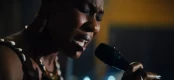
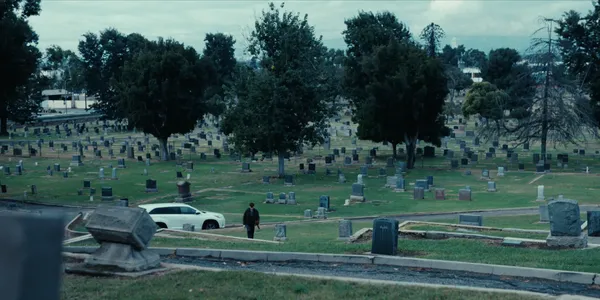
Hariharasudhen Nagarajan's directorial feature début, Tether, tells the story of Leonard (Nick Giedris), a father grieving the death of his daughter who was killed in a high school shooting. Holding onto the hope of a reconciliation with his wife, Amanda (Joanna Cretella), he encounters Gerald (Ben Burton), an ex-school resource officer who is crippled with guilt and shame for freezing during the massacre. Together, Leonard and Gerald must choose whether to lose themselves in the darkness that has engulfed them or find a way to move forward.
Nagarajan, who was born in India, has called America home for the last ten years. His short films include three collaborations with screenwriter Melanie Coffey, all of which deal with romantic and familial relationships. The Sharing follows a couple struggling with the rules of their already difficult relationship. Tomorrow sees two sisters argue, despite cause for celebration, while The Talk revolves around a woman's struggles to break up with her boyfriend.
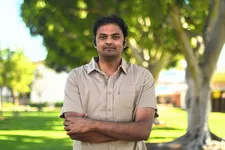 |
| Hariharasudhen Nagarajan |
In conversation with Eye For Film, Nagarajan discussed a personal connection to Tether's story, searching for unpredictability, and why this will remain his gutsiest film.
The following has been edited for clarity.
Paul Risker: How would you describe your relationship to cinema?
Hariharasudhen Nagarajan; I started watching films in 2009 when I was 18-years-old. When I was a child, I was more into academic things because I wanted to study and get into college. Then, when I did get into college, I felt slightly more independent and that I should start watching films.
I watched films as a casual movie viewer, but I was always into seeing the first showing because I wanted to see it without knowing anything, and before anyone could offer their thoughts to influence my judgement. And even now, I try my best to watch any film without reading reviews, and without knowing anything about the film.
After 2020, when I became interested in writing and directing, I started watching films slightly differently. I started noticing the craft and what goes into making a film.
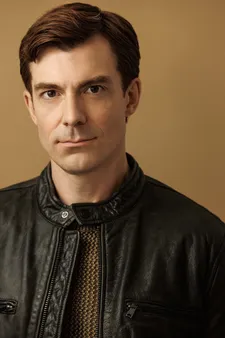 |
| Nick Giedris, who plays Leonard |
PR: For your feature début, you chose a story that deals with the unique American problem of gun violence. What drew you to Angus Houvouras' script?
HN: What I really loved about the script when I read it was the focus on the family. It's not a happy family that experiences this tragedy. Instead, it's a complex family where they all have issues with each other. The shooting made things a lot worse for them.
I once had a flatmate who I didn't get along with. We were sharing the same restroom, and he would take up too much time, and he'd also play loud music. When I complained to the landlord, he messaged me to say that I shouldn't complain about him. But then, he went to the landlord and complained about me. At one point I thought, what if he has a gun? So, with that question in my head, I knew I needed to leave because I didn't feel safe there.
It's this experience that made me want to say yes to this film. I'm an outsider, and in India there are a lot of problems, but this one is unique to America. And this gave me a personal connection to the script, which I needed if I was going to direct it.
PR; Outside of this personal connection, what struck you as the screenplay's strength?
HN: What this film does so wonderfully is mix together the multiple perspectives of its characters. Leonard has a perspective on the tragedy and so does Amanda, who sees it as a way to eventually move on, even if she's broken inside. Leonard chooses to sit back and just grieve. Then, there's Gerald's perspective on the same story, which is different.
Angus beautifully draws out these various perspectives, and when I read the script, I could feel them. In terms of rewrites and doing whatever we could do to make a scene better, the question was how could we draw this feeling out so it was stronger? And what could we do with the screenplay to make it slightly unpredictable? That's what the focus was on, because the fundamentals and the seriousness of it were already there.
PR: How did you navigate the challenges of the ten-day shoot?
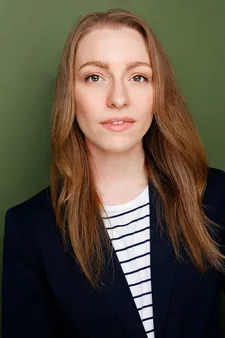 |
| Joanna Cretella, who plays Amanda |
HN: One thing about being an independent filmmaker is you don't have the luxury of time and resources. The one thing I pride myself on is not to waste too much time on set, because every minute counts. I put a lot of money into the film, and so, I wanted to ensure that whatever creative differences the producer, Nicole Wu and I had, everything was sorted off set and not on set. So, we did the shot-list, the visual and costume look-books, and the storyboard of some of the film's complex scenes. Everything was done in advance, so that way, when you get to the set, all the actors need to do is perform the scene to the best of their abilities with my direction. But everything else was already set in stone.
On set, we didn't change a single shot from what was in the shot-list. On a ten-day shoot, one moment can spoil everything. So, we had to be very careful of that, and Nicole and I, actually had eleven days scheduled, but Nicole ensured that we could shoot this in ten days.
PR: Was it necessary to make Tether as an independent film to fulfil your intentions?
HN; After deciding to make this film, the mindset I had was that I'd be happy if it didn't make a single dollar, because that's the way I could do justice to the story. If somebody else was investing, or I was doing this for a bigger production house or whatever, there would have been a lot more interference about the message and whether we need to really tell this story? I knew I was the only person who could do justice to this material. So, I tried to tell the story with whatever resources I had available.
In the future, I might work with and meet people who give me the resources to make films, but because I made this with my own money, I made it with no fear. I didn't care about the external factors when making this film because I didn't know about them. I only came to know about a lot of problems after I'd finished the film, like submitting to festivals or when I was submitting this film to potential producers who would be interested in coming on board.
If I had known about these problems, I don't think I'd have made Tether. But not knowing it helped, and now I know the problems that exist, I have to say, "Okay, what can I do to try to satisfy myself as well as the people involved?" So, in that sense, this will be the gutsiest film I'll ever make in my life. And even if I end up doing films that are better written and directed, I don't think they'll have the same level of guts this film had during its production.
Tether premiered at the Dances with Films Film Festival.