




|
|
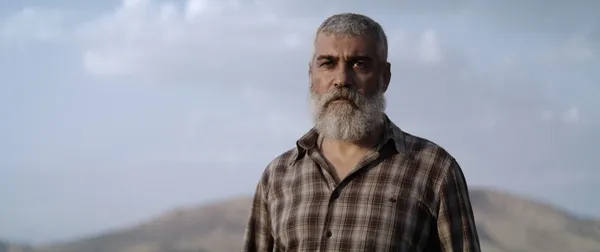
Caner Cı̇ndoruk as Mesut in Salvation. Emin Alper: 'He's not a simple monster. I always think that he's a kind of Shakespearean character'
Photo: Liman Film
|
Isolation and collectivism come together as a dangerous mix in Salvation, the latest from Turkish director Emin Alper. Inspired by a real-life massacre, his Berlinale Silver Bear-winning film shows how a dispute over land between two rival clans spirals into paranoia and violence. Central to the action is Mesut (Caner Cı̇ndoruk, in a powerful performance), who carries a thinly veiled grudge about his younger brother Sheikh Ferit (Feyyaz Duman) being top dog so far as the community is concerned. Mesut’s insecurities and fragile mental state is fuelled by insomnia, with Alper taking us into his nightmares but slowly the community begin to turn to Mesrut as an authority and a sort of collective hysteria begins to take hold. We caught up with Alper at Thessaloniki Film Festival, which was celebrating the director with a retrospective of his work, to talk about the weaknesses and paranoias that lead to violence, the influence of Westerns on his work and Salvation’s universal themes.
This is a film that is partially about waking and sleeping, and the interesting veil between those two things. I gather that dreams are a particularly significant element of Sufism. Why did you decide to focus on that?
Emin Alper: In all the mystic religions and traditions, dreams are very important. But dreams are also important for me, not only for Sufism. This is the gate which opens to fantasies, subconscious fears, conscious fears, paranoias, etc. The film is about all these fears, paranoias and self-delusions. So, after a point, all the characters lose touch with reality, so they're going into a dreamlike – well, not dreamlike, nightmarelike – situation. I wanted to merge all these elements. In Sufism, yes, dreams are very important. All the divine messages come through dreams.
And it's also very important for the people. They understand who is holy and who is a sheikh when they see them. It's not only about Islam, you can see it in Christianity as well. People see sense in their dreams.
So this dream element has these functions for me. First of all, it's very important to understand the world and the paranoias of the main protagonist, Mesut. Secondly, this mystic level is very important. I can say that dreams are the place where the politics of the town almost takes place. And, on a third level, it addresses the collective consciousness, because all the villagers start to see similar dreams. Since I use all these elements in the film, at one point it's very difficult to understand which one is real and which one is a dream. They're intertwined somehow.
It's interesting that you touch on collectivism, because it struck me that this is quite an interesting film about collective hysteria. Often, we see films about collective hysteria that involve women, and how they can fall into line with one another. Here it's the men who are experiencing this collective hysteria. Why did you choose to have male protagonists experience this?
EA: I believe that all kinds of wars and violence, all kinds of political violence, involve this kind of hysteria. The main perpetrators of political violence are men. So this kind of hysteric violence belongs to men rather than women. Especially here, we're talking about an almost genocide-like massacre, so it needs a real collective hysteria. This collective hysteria is fed by greed, but at the same time by some weaknesses, some weak points of masculinity: a lack of self-confidence, especially related to the main protagonist, Mesut's, weakness and vulnerability. He's jealous. He was a kind of underdog before.
All these weaknesses find a way to explode with this collective hysteria. For me, when we're talking about violence, we should talk about men’s hysteria, not women’s hysteria.
You bring home the way fear can play into that. The fear of not being considered part of the collective, perhaps, is what brings it out. Prayer is seen as a collective act too, so this community seems to be geared to this idea of doing things in unison.
EA: This is a close community and the main tie of this close community is this Sufi tradition. In terms of ritual, it's also very collectivist. Actually, Islamic prayer is also very collective, with everyone praying together in the mosque. And in this Sufi tradition, there's a kind of reverie, to lose your consciousness by chanting. And you believe that through this you feel closer to God.
You could almost apply this allegory to any community that has this combination of isolation and collective thought. Was that part of your motivation?
EA: I made this film for these universal messages. It started from a very local story, but I believe it has universal repercussions and references.
|
|
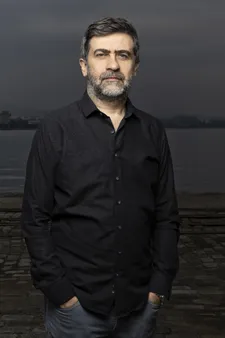
Emin Alper in Thessaloniki. 'I always like Western iconography, and my stories generally remind me of Western stories because they're all about small communities'
Photo: Courtesy of Thessaloniki Film Festival/Studio Aris Rammos
|
When the film was screened in Turkey and distributed there, the Iran war started. And there was a video from Trump. He was surrounded by eight priests – probably evangelical priests – and he was blessed for this “holy war”. I shared this image and invited people to come and see the film. So, you don’t have to be Muslim, you don’t even have to be religious. In a secular nation, you can see something like this. Nationalism can replace religion.
How did you go about casting the film? The actor you have playing Mesut delivers an incredibly powerful performance.
EA: He's quite popular in Turkey. He's very famous in TV series. I didn't choose him because he's popular. I know that his appearance is very good and fits our purposes, and I know he's a good actor. So I made a couple of auditions. After that, I said, ‘This guy convinced me that he could be the main protagonist’. So my main method is auditions.
What struck me was that this character has this constant sadness. It's almost as if he's saying, "I'm doing this terrible thing, but I'm really upset about it. Look, it's making me cry that I'm killing small children."
EA: We had some references for that particular scene from Sufi leaders, because Sufi leaders, like evangelical leaders, cry. They cry, and then the whole community starts crying. So this show of emotions is also a kind of action that connects people with each other. Yes, he's a complex character. He's not a simple monster. I always think that he's a kind of Shakespearean character. He's a haunted guy. He's sad, he's upset, and actually, it's an exit for him. He promises people salvation, but at the end, he feels he's stuck because he doesn't know what to do. And one of his dreams is very important for me. In one of his dreams, he sees the people coming together and toppling him. So he also has the fear of losing power at the same time. All these combinations push him towards this final solution.
Let’s talk about the female roles, because they're very interesting. The influence of women on the motivations of men, if you like. How did you approach writing those characters?
EA: The society is very masculine, very patriarchal. Actually, it's really difficult to find such a powerful figure in a real village. You can see powerful female figures, but mostly they become powerful by using the methods of men, by using male discourse. So this is an example of that. I wanted to elevate a female character, and the only way to do it was to show her as a soldier. She's a very important character for the film.
Of course, there's another female character, who is more like a victim: the wife of Mesut (Ozlem Tas). But the other girl, Fatma (Naz Göktan), is very powerful, very courageous and very important to the community. But she's completely speaking the discourse of men.
It struck me that this is set in a very small community, but these days, preachers can reach enormous distances through YouTube and everything. Was that on your mind as you were making this?
EA: Not only specific preachers, but of course, yes. These kinds of populist, totalitarian leaders have the qualities of preachers. They have a magnetic effect on people. They're very charismatic, so I believe that these evangelical priests and these leaders have similarities.
Tell me about the genre element of this film. I think genre elements can be quite freeing for a director, because they allow you to take films into a less realistic space and play with the audience a little bit in terms of what they think may or may not be real.
EA: In almost all my films I use genre elements but this is more. It wasn't an aim or purpose from the beginning. I don't say, “Oh, I have to make a film and use this genre element.” But when I write the script, all these genre elements come almost by themselves, autonomously. Since this film is about fear, and since I wanted to create a kind of tortured character full of nightmares, I started imagining horror film scenes. Then I realised that there are some genre elements here, and I developed them. I always like Western iconography, and my stories generally remind me of Western stories because they're all about small communities. In all these Westerns, there's also a threat, a danger, maybe from Indians, maybe from bandits. They're close communities, and bigotry is prevailing in these communities.
There are similarities between my films and Westerns, and between the landscape and Westerns. I like the landscape of Anatolia, this dry landscape. I generally cannot help myself from using Western imagery during my shooting.
I feel like Anatolia is really having quite a moment in cinema just now. One of the things that has always struck me about Anatolia is what directors can do with it. It feels quite ancient. But you really stress the modernity by having mobile phones go off. You remind us that this is not the past, this is now. I wonder how important it is for you to have those modern elements.
EA: Most of the villages in Turkey now are very modern. Very ugly and very modern. On purpose, I chose this stone village. It's a very ancient village. My aim was to emphasise this kind of biblical story of Abel and Cain. But, of course, it's at the same time a modern story and takes place during the war between the Kurdish fighters and Turkey. So you cannot escape using modern cars and telephones. On the contrary, I especially wanted to make this film in that village to remind us of the ancient history of mankind/humankind, which is actually full of violence.
To wrap up, given that this feels like more of a step into genre, is this something you think you might employ more going forward
EA: I have some scripts in my hands, well not scripts, but ideas. One is a full genre film, but the other two are not like that. So, it’s case by case. In Turkey it's getting more and more difficult to finance films. Not only in a political sense but also the Turkish economy is not very good. So it will not be easy to finance my next feature. We will see.