





Eye For Film >> Movies >> On Top Of The Cliff (2026) Film Review


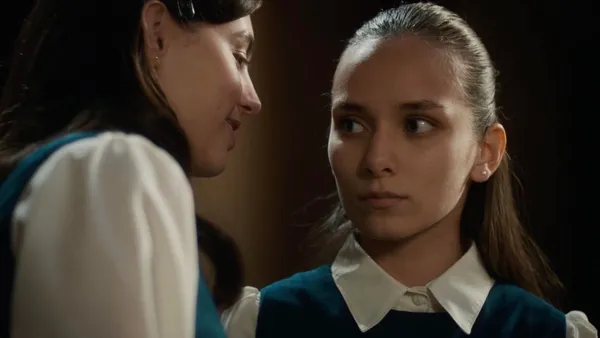

The waves roll onto a Lima beach. At the top of the cliff that towers over it, lies a Catholic girls’ boarding school where it’s turbulent teenage emotions that toss about. It’s the Fifties, so the youngsters are largely being groomed in domestic duties and Godliness – sitting with open legs is enough to get you a rap from a ruler and left-handedness is considered the Devil’s work.
Sixteen-year-old Ana (Bianca Buchelli) is the most pious of students. She had a vision of the Virgin Mary as a child that we see in grainy news footage, corroborated by the nuns, who view her as practically immaculate. Now, with classmates who also see her as a role model, she prays so fervently she barely sleeps, so it’s no wonder her emotions get sent into turmoil by the arrival of new student Rebecca (Renata Canales).

Rebecca looks more mature than the pensive and waiflike Ana with both stars sparking off one another, although it was newcomer Buchelli who snagged the Best Actress prize at Tallinn Black Nights, where the film also took home the Grand Prix. Rebecca also has a much wider view of the world, having moved from country to country with her diplomat father. She has a more rational approach to life at the convent school and little truck with beliefs about transubstantiation, recognising the oppression and stress around her for what it is.
There’s a sapphic undertow to Rebecca’s conversations with Ana, but the established queen bee is also stung by the new girl’s ability to draw the other girls into her orbit. Writer/director Enrica Pérez’s framing of the girls helps to suggest subtle changes in power. Initially Ana seems almost to glide ethereally about the place and often takes the centre of the frame. Later, Rebecca, who has a height advantage of Ana, is allowed to dominate, not least when she walks along the cliff top wall as Ana trails along on the lower level.
Pérez also taps into adolescent emotions that run close to the surface, including a glimmer of unexpected freedom when Rebecca persuades Ana to take her shoes and socks off at the beach, and a moment of awe as Rebecca inexplicably finds herself close to tears as she watches the other girl sing (coincidentally a hinge point also used in Thessaloniki winner A Day In The Life Of Jo: Chapter Phaedra).
Ana’s life is initially typified by order but her dreams, which stray close to horror territory, see cinematographer Sarasvati Herrera employ Dutch angles and shadowy dread. Rebecca is a natural disruptor, who has a more easygoing intelligence, while Ana, who unlike all the other girls even spends her weekends at the school, is a one-woman pressure cooker, only letting off steam through the self-harm of mortification. Pérez employs subtle tensions as the sexual and spiritual interweave and simple earthly temptations like a bar of chocolate become hard to resist. The ending is a little ushered in, compared to the slower burn of what has gone before but Ana’s journey, in particular, feels satisfyingly resolved.
Reviewed on: 26 Nov 2026