





 |
| Djinn Wedding. Ferit Karahan: 'When you understand one household, you can describe the whole century behind that' |
There’s a lot to talk about with Djinn Wedding but perhaps we could start by talking about its origins and your decision to let this single family reflect a lot of wider ideas about not only generational trauma but the way that societal trauma also gets passed down the generations?
Ferit Karahan: When you understand one household, you can describe the whole century behind that. That is one of my key points in the writing script. Usually before I write a script, I have one philosophical idea. My idea was can a person who denies their own darkness change their destiny? My aim is to write about the way things change, but not too much, and that they are repeated constantly because history is constantly repeating itself. There are common things in the same family that are circling over time.
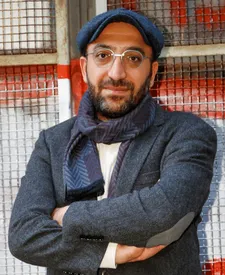 |
| Ferit Karahan: 'Before I start writing the characters, I have just one line for each of them' |
I'd love to know a little bit more about the significance of the Djinn in Anatolia because I was reading about it, and they seem quite ambivalent – they can be good or bad, it depends. I also read they’re often associated with weddings and death, and you have both in this film. Also, what drew you to the idea of using djinns?
FK: In Muslim countries, mostly, djinns live alongside human beings, but sometimes they are visible and sometimes they are not. My idea about the djinn, and a society that cannot confront their darkness and tries to hide something is that the djinns show something they cannot express. They are hiding reality behind the djinns.
Rumours and gossip and the idea of being unable to escape fate are part and parcel of the film, with people blaming the supernatural for things that they don’t like.
In the Middle East, from the past until now, people have had very limited power to change something, and so the djinn helps them to reflect their feelings. They can’t take the reality otherwise. I wanted to make a Greek, or Mesopotamian Kurdish tragedy. That was my aim.
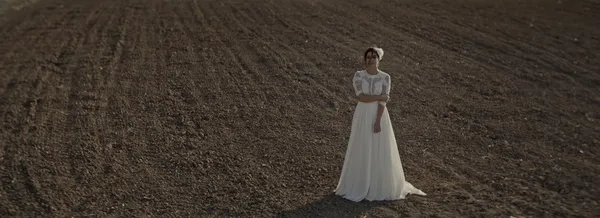
Time is a slippery concept in Djinn Wedding. It’s travelling through time but it has echoes of other time in it too, including the footprints of dinosaurs. The village where the family lives almost seems to be out of time, as connected to something ancient as it is to the modern world
FK: Yes. Turkey is between Europe and Asia, geographically and culturally, between the Middle East and the European. In terms of time, there are old habits and folklore as well as modern Turkey. We are stuck in this ‘dilemma’, and that is one of the main ideas of the movie.
The children are interesting because, as in Brother’s Keeper, they’re quite sympathetic characters but in both films they are quickly oppressed by adults.
FK: My interest in Brother’s Keeper and Djinn Wedding is actually the last day of childhood. That was important for me because I remember the day my childhood finished very well. I understood that the world is not so innocent, and full of fear. But also, I am helping these things to happen in the world, so I am part of this badness. So, in Brother’s Keeper I talk about the end of childhood for one character. In this movie, I talk about the last day of the childhood of three characters. It’s a bride to understand the world and move to the adults’ perspective.
There’s a key wedding scene in the film, involving many subsidiary characters and a lot of camera movement. Was that challenging to shoot?
FK: My films are very close to documentary style but, with this film, I drew every single frame. I placed the camera before shooting and I even placed where the sound guy will stand. But the problem with this scene was it’s about 300 people in the same room and the camera was moving all the time, 360° and we didn't have too much time to shoot. I did about 70 to 75 takes for the one shot. So it took all day.