





Eye For Film >> Movies >> Forever Is Now (2026) Film Review


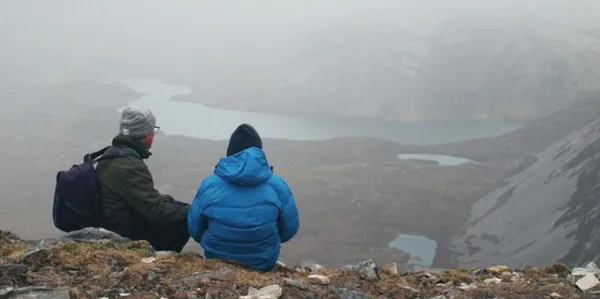

The mass disillusionment with politics in the Western world, fed through social media by those who would profit from the destruction of democracy, creates perverse outcomes. It’s easy enough to weather the abuse and attacks on one’s character that come from press and public alike if one is a self-serving individual engaging in politics primarily as a means of making a tidy profit. The people who get stung by that stuff, and potentially driven out, are the ones who care. Neasa Ní Chianáin’s documentary follows former Irish Greens leader Eamon Ryan through the last 18 months of his political career, and finds a man caught between two opposing forces: those who want everything to stay the same, and blame him for seeking change; and those who are angry because they don’t see the change that he says he supports happening fast enough.
Filmmaker and subject have known each other for 30 years, as they acknowledge at the start. This means there’s a risk that some subjectivity will be lost – not a major problem since we are made aware of it – and it also means that there’s an easiness between them which makes it simpler for Ryan to ignore the camera and behave naturally. We get intimate access to discussions between him and his advisors, and also to his provate life. The biggest cost of doing the work is to himself and his family, he says. He has four children and missed some of the best years with them as his career took off. One of them, Tom, has additional needs, and though they love spending time together, its is Ryan’s wife, Victoria, who provides the bulk of the care, with no prospect of reprieve when he’s away.
The first glimpse we get of the Irish landscape discreetly sets the tone for the film. Many will find it romantic: scattered houses among low fields and bare hills, with swollen grey clous up above like a rolling ocean in the sky, and heavy rain falling. It’s when you know what’s missing – when you realise that this was once a thickly forested country – that you’ll really take in the meaning of it, the past environmental destruction on display. Ní Chianáin cuts quickly to scenes of present day destruction as all that pretty rain swells streams and rivers and soon there are new rivers rolling along urban streets, an emergency worker waist-deep in water, waving his arms. People are trapped in their cars, staring out as the water comes almost up to window level. Afterwards they try to clean up, distraught. “It’s an abolute miracle no-one was killed,” says one man.
Visiting the scene, Ryan meets a woman who points out that nobody can get insurance, and wants him to do something about it – a tricky proposition. Others talk about how fast the flood came in, and want to know why nothing has been done about this. Where flood defences are concerned, they may have a point – if indeed their town is defensible. Sooner or later it won’t be. Unpalatable truths are left unspoken. The damage is done. If every country hits carbon zero right now, the water will continue to rise, the weather to get worse, for centuries to come. Ryan’s advisors gather about him, trying to think of policies that will improve the future whilst offering some tangible benefit to understandably frustrated people in the here and now.
To really resolve things, he says, Ireland will need to go fossil fuel-free within a generation. Does that seem too big a thing to be possible? Ní Chianáin captures the sense of monumental shift – coming one way or another no matter what we do – with images of giant, ancient trees uprooted in a valley through which the flood waters have passed. Their dark, twisted forms lie like collosal skeletons on the still-damp grass. As we watch, we hear an assortment of complaints about the Greens, including the familiar charge that they lack common sense. Could anything common be enough to deal with this? With a lot of low-lying land, Ireland faces higher risks than most countries in the relatively near future.
We see Ryan gardening with Tom, going on cycling and hiking trips with him, and participating in the hands-on work of renewal and rewilding. As he does so, we hear some of the more unpleasant online remarks targeted at him, some of them verging on threats. We see clips of fresh calamities cause by climate change, escalating crises. The volume steadily builds. It’s a simple trick which encapsulates the pressure involved in doing this kind of work. Yet when he is interrupted whilst giving a speech, Ryan takes the unusual step of trying to engage hecklers in constructive conversation. He remembers what it was like to be a young activist, elsewhere telling a great story about interrupting a meeting of US politicians with a giant balloon painted like the Earth.
There is a lot of information on climate policy here, much of its referenced in passing, likw the fact that Europeans pay 4% intereston renewables and in Africa that’s 15%, immediately disadvantaging the continent with the most solar potential. Yet there is also a recognition that information alone turns people off. “A bit of poetry” is needed. Ní Chianáin is good at finding the visual equivalent. On land given over to wind turbines, diverse new growth flourishes. This illustration will likely stay with viewers as long as anything actually said. In spite of everything, real, positive change can occur with a little effort in the right direction, but the human cost is high. Who will step into Ryan’s shoes?
Reviewed on: 16 Oct 2026


Search database: