 |
| Sara Marielle Gaup Beaska in Árru. Elle Sofe Sara: 'Everyone has a connection to the reindeer' Photo: © Dánil Røkke |
Elle Sofe Sara mixes the distinctive sound of Sámi traditional yoik singing with modern day drama in her feature debut Árru, which had its world premiere at this year's Berlin Film Festival. The choreographer and filmmaker, who was born in the part of the Sápmi region which extends into Norway, focuses on reindeer herder Maia (Sara Marielle Gaup Beaska, who is also an accomplished yoiker), who is fighting to save her ancestral lands from a mining project, alongside her taciturn brother Danel (Simon Issát Marainen) and her daughter Ailin (Ayla Garen Nutti). But when her other brother Lemme (Mikkel Gaup) returns from Canada to help them with the campaign, he brings trouble with him in the form of past secrets that now resurface.
Sara says it was always her plan to make a musical. “I’ve been working with dance and yoik onstage and have developed those sorts of ideas," she says. “I know it’s a very powerful way of telling a story because the yoik is deep and soulful.”
Speaking about the tradition of yoik, the director, who previously made short film Sámi Bojá, says it is complex.
“In my Village, the yoik tradition is very much alive but at the same time, yoik was considered a sin because of the Christian faith. So my grandparents were very of this belief, that yoking is a sinful thing to do. So it was done more in secret.”
Secrets – and why they are being kept – are a big part of Sara’s film. She says she was focused on Maia “and how she can find the courage to use her voice and use our traditional song, in a way, as a protest.”
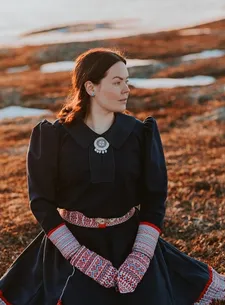 |
| Elle Sofe Sara: 'I really love working with yoik, so that is definitely something I want to keep developing in the future' Photo: Courtesy of Berlin Film Festival |
I ask whether the oppression and colonisation that the Sámi have been up against down the years plays into the idea of wanting to keep negative things within the community hidden from outsiders.
“That is definitely a big part. There has been many discussions about the fact that in societies where there is colonisation or suppression, you don’t have as much faith in government or the authorities like the police or health system. Maybe it's shown through the grandmother character and her way of thinking about things like this – that we should manage ourselves and be self-sufficient within the family because that's how we have had to do it in a way. Maia has had to carry the burden for some time.”
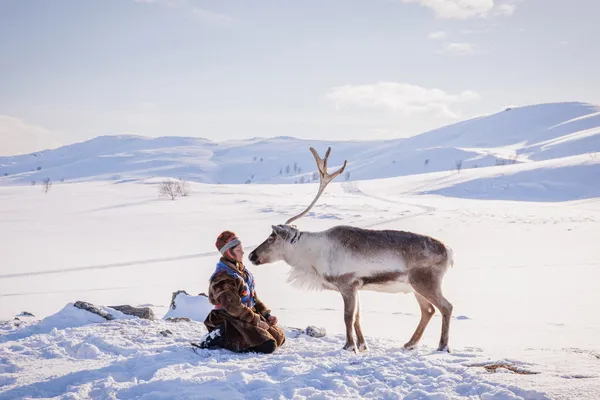
Another big element of the film is the reindeer and the landscape, which are beautifully shot by cinematographer Cecilie Semec, who also shot last year’s Berlinale Golden Bear winner Dreams.
Given the wintry backdrop, Sara says logistics are important. The landscape itself “was a very big part of the film”.
She adds: “We wanted to show why it’s so difficult for Maia. We wanted to show her connection to the land and that the land is almost its own character and it's linked to her and the reindeer. And so that was a very conscious choice and we tried to do it in a raw way because it’s her workplace in a way.
“It was quite challenging. We did a winter shoot and a summer shoot. In the winter, there’s a lot of logistics you have to know but luckily we had a lot of Sámi crew and reindeer herders during the preparation we could talk about the risk elements – so we had back-up plans that we could shift to a different location where the reindeer are or things like that. It’s quite difficult because it’s a wild herd, not like sheep that are inside a fence. So that was tricky but I’m also from reindeer herding myself, so we used a lot of reindeer from my area and some tame reindeer.”
The director says that making musicals or films with songs is something “we’re not so used to in Europe and it requires a little bit different pre and post-production.”
In terms of the yoik itself. The first one, about Gairu, had lyrics written by Sara and music composed by Marille. She explains: “She had loads of sketches and we listened to them and discussed what direction we wanted and the one we used has a very strong melody.”
And Sara is looking forward to future projects. “I don’t have strict boundaries,” she says: “When I feel a story, I know this is what I want to pursue and develop. You can feel that it’s really important and urgent. I really love working with yoik, so that is definitely something I want to keep developing in the future.”
Now she has one film under her belt, she also adds that going forwards, “I will try to stand up even more for some of the thoughts I have. For example, there were musical elements that we had to cut – I said yes to that and regret it a little bit now. So maybe I have more experience now and can understand what I have to stand up for.”