




 |
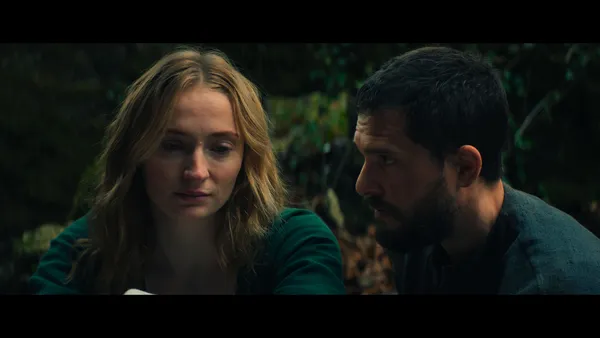
| The Dreadful Photo: courtesy of Lionsgate |
Since her breakthrough in 2017 with Imitation Girl, Iranian/US filmmaker Natasha Kermani has repeatedly delivered work that is intellectually challenging and visually beguiling. She added an interesting postscript to last year’s vampire film fad with family drama Abraham’s Boys, and this year will see her come to the attention of new audiences with The Dreadful, which features Game Of Thrones alumni Sophie Turner and Kit Harington alongside seasoned star Marcia Gay Harden. We laugh about the title, which is perhaps a dangerous thing to put in front of critics, but I tell her that I’m interested in the concept of dread and the way it saturates the film. It’s something we don’t encounter much in modern stories.
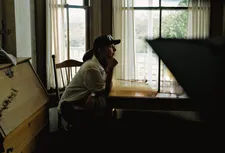 |
| Natasha Kermani Photo: courtesy of Lionsgate and Gabriel De Urioste. |
“I actually pulled the word for the title from the book of Genesis, where Lilith is described as Adam's dreadful first wife,” she says. “That always sort of stuck with me and Lilith, of course, is a character who appears in tons of horror and feminist writing and all of that good stuff. So that was the genesis of that word popping up in the context of this project. I've always wanted to place the story in the Dark Ages because of the idea of these women surviving during dark times in this brutal landscape. To be able to use the time period as an expression of the story in that way just felt very elegant.
“Putting it this late in the Medieval era was interesting to me because it's the end of the Dark Ages, so there's sort of a glimmer of light with the modern world and modern thought around the corner. But these women in our world are still very much in a place of dark magic, of people who truly believe that demons walk the Earth with them. There was a deep connection in that time between people and magic, so that just felt like a very rich place to put a folkloric, dark fantasy, Gothic, whatever you want to call it.”
Most films set in that period are about battles and big dramatic moments, I observe, but most people would never have left their villages. It seems appropriate that this story is quite small in terms of the number of characters, and there's an intimacy to it which is there in her films more generally.
“I did a lot of research,” she says. “I'm a big history nerd. I did a lot of research on the relationship between the peasant class and war – because usually we see lords, right? We see kings and barons and the ruling class engaged in war and the politics of that. But we don't really understand the relationship that the working class class or the labour class had with war. Of course, the war was an unending thing at the time. As it is now, unfortunately. But what was that relationship? There was this sort of unique relationship that the labour class had, which was that it was a way to make money.
“Once I unlocked that, it dovetailed really beautifully with the story I wanted to tell about these two women surviving, because there was this undercurrent of ‘I don't have enough and I want more.’ So the idea of this ambition, of greed being an underlying theme – more so with the male characters in the movie but certainly Morwen engages with it as well – felt very period accurate. It's obviously a detail in the movie, but I think it has a historical accuracy that I find very interesting and feels very truthful. That war, even, becomes just a way for us to survive. To try to make our way through this very difficult life. That felt very in keeping with the themes of the film and the story.”
We spend most of our time with Sophie’s character, Anne, a young woman whose husband left to fight in the war and who is bound by duty to Morwen, his mother. Although she’s tempted by the possibility of starting a new life with childhood friend Jago, this isn’t a film structured around a modern goal like romance or escape. It’s much more concerned with Anne’s desire to find a way of living which will allow her to be true to her own principles.
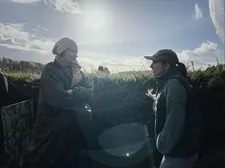 |
| Sophie Turner and Natasha Kermani on the set of The Dreadful Photo: courtesy of Lionsgate and Kate Eccariu |
“Yes, absolutely,” says Natasha. “I think she's maybe someone that would fit more in Shakespeare's time. She's almost more of a modern heroine in that way. I like that about her. Almost like she's a woman out of her time by the end of the film. She starts out very much under the thumb of the people around her but we end on a somewhat ambiguous note. I'm comfortable with that because whatever she chooses to do, wherever she chooses to go, whatever her next steps are, it's her choice and she has taken the reins for herself. That was really the point. Everything else that happens is window dressing, in a way, as long as she always got to that point by the end of the film.”
We talk about casting. I tell her that I think she’s done better than any other director to date at getting Kit Harrington to do something really different.
“Kit is amazing,” she says. “He's such an under-utilised actor. I just think he's wonderful and such a talent, and I think he does stand out in the movie. I think Sophie and Kit specifically had an interest in returning to this medieval time because they had not revisited it since Game Of Thrones. To return to it, but in a different context, I think was really interesting for them, and they're in a different place in their lives and all of that. So I think that there was a curiosity to return to the period, but then they wanted to know what was this relationship between these two people and how are these characters distinct from Jon and Sansa? So that they're not just playing the same roles again.”
There’s a flip side to that, which the two reportedly discovered when it came to kissing scenes – not easy to do with someone whom one has spent one’s formative years thinking of as a sibling. Awkwardness aside, however, they have clearly both invested heavily in their characters, whilst Marcia has had the chance to explore unusual territory, and the result is a film with a lot to offer. The Dreadful opens in US cinemas this Friday, 20 February.