 |
| Beniamino Barrese on his mother Benedetta Barzini: 'She holds a lot of contradictions, and this is why she’s such a force' Photo: Courtes of Kutaisi Film Festival |
During your recent festival workshop you screened several final-edit versions of the film’s beginning, including one that opens with Benedetta giving birth – a cut you said you loved. Why did you ultimately choose to introduce her as a cultural icon through other women’s voices?
Beniamino Barrese: The balance in the edit was hard to find. My intention in using the black and white footage of giving birth at the beginning was to give it a strong emotional value. However, it didn't work as an opening, so it became about finding a way to start the movie smoothly. From a conceptual point of view, placing this girl in front of the lens is more significant than an archive footage of her giving birth. My mum says, “Women are always expected to be mothers”, so it’s really a defining trait for women, and I thought that it could be an amazing statement to put there, but then, the movie was also about me, so then it was harder to introduce me.
 |
| Beniamino Barrese: 'My intention was to be collaborative' Photo: Courtesy of Kutaisi Film Festival |
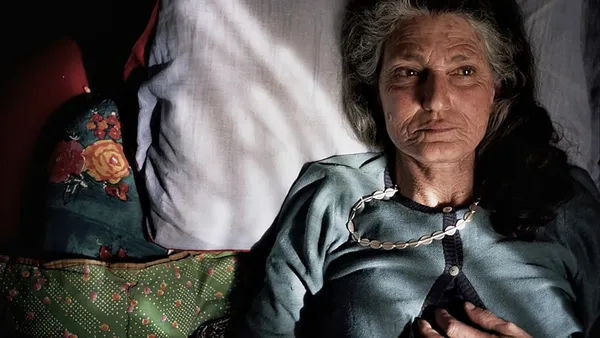
BB: She holds a lot of contradictions, and this is why she’s such a force. She is strongly opinionated, but also very vulnerable and often goes for contradictory behaviours that I think are what makes people, and also characters, interesting. Sometimes she might want to be isolated, but she also likes to be at the center of attention. For me, these things are coherent, though I keep them ambiguous in the movie.
What did Benedetta say after seeing the final cut, if she said anything at all?
BB: The first thing she said – very surprising – was, “I don’t think it’s clear enough from this film that I was… famous.” She added, “People will appreciate what’s going on today if they understand more of where this girl came from.” That was strange for me, because I had done everything to avoid going too much into the “cool past”, as I didn’t want to exploit that.
Speaking of which, close-ups can often feel exploitative. How do you avoid that?
BB: It’s not just close-ups. There is a scene in which she says, “I haven’t showered for two weeks” or one in which she pees in front of the camera – it’s intimate and powerful. There’s a close-up of her fingers bleeding. I never thought it was invasive; I’ve always looked at her as extremely beautiful or interesting. For me, it was a celebration of that beauty, so when she told me it was hurting her, I was surprised. Close-ups were a strategy to give dignity, not to objectify – there is a thin line. In the archival footage, there is a black-and-white shot of her eye, and I wanted to replicate it; in the mess of filming, I didn’t, so I did it later, randomly. I was bringing the camera back to the rental company when I discovered I still had a little piece of film left. I put her in the courtyard, in front of a door, and I shot quickly. I didn’t think she would feel weird about it; that came up later.
Which begs the question, then – if you and Benedetta collaborated, was your intention to show reality or rather a formalist depiction of it?
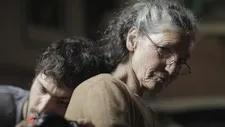 |
| Beniamino Barrese and his mother Benedetta. She is strongly opinionated, but also very vulnerable' Photo: Courtesy of Kutaisi Film Festival |
There is a scene in which Benedetta meets fellow model and actress Lauren Hutton. You and your camera end up being kicked out of the room. Is that the one time you were forced to confront your own disappearance, rather than your mother’s?
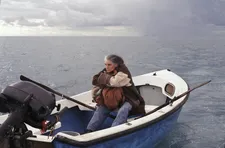
BB: I have to confess the scene isn’t real. I contacted Lauren Hutton and arranged the meeting, although it’s true that I was actually kicked out. I thought, “You’ve known for a year that I wanted this – why are you pushing me out?” I left because they didn’t want me there, but the part where I hide and keep filming is also fake – I shot that before the meeting started.
What could be the reason behind her seeking this disappearance? Do you think it’s the anticipation of a new entrance? After all, it’s now six years later and Benedetta is still traveling and attending screenings.
BB: I think it has to do with her womanhood, and the parts of her she wants to get rid of. So she can appear in a different form, and be able to have a say, an agency, a thought. It is also about her deep desire to escape capitalism, which is not easy to do. That’s why she’s still around, maybe.