 |
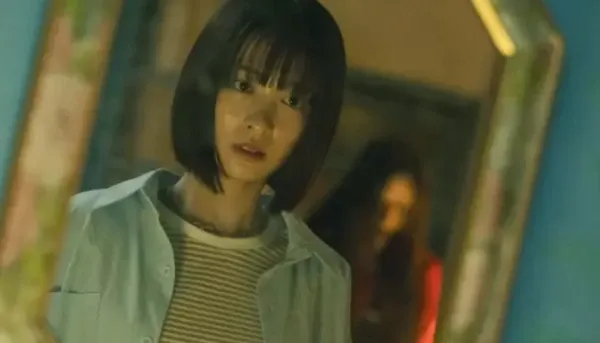
| The Curse Photo: Fantastic Fest |
One of the most eagerly anticipated titles at this year's Fantastic Fest, Kenichi Ugana's supernatural mystery tale The Curse was a hit with the audiences there on Friday night. It was good news for the director, who has been on a high since another of his films, I Fell In Love With A Z-Grade Director In Brooklyn, received the Bronze Award for best Asian Feature in the Audience Awards at Fantasia, where its star Ui Mihara won Best Actress in the Cheval Noir Awards.
In the run-up to Fantastic Fest, the director and I were chatting about both films, and decided that, to avoid having to use a translator, the best way to do an interview would be by way of written questions. This is the result.
Jennie Kermode: Looking back to Ringu, sharing videos then meant sharing a physical object. Now a video can be shared with millions of people in a few seconds. This means that the idea of the cursed video has to work in a different way in order for the story to work. Did you find this change, and other aspects of telling a story about a curse in today's world, to be frustrating or inspiring?
Kenichi Ugana: I've always thought that social media and film don't go together well, because they're impersonal and separate from the physical. However, in recent years, I've felt that social media has become a place where people speak more honestly than they would if they were real, and where you can see a person's personality better than they would if they were real, so I decided to take the plunge and write this script. However, at the same time, it was very stressful having to show my phone screen every time the story progressed.
JK: The ghosts in stories like The Curse are often traced back to Yotsuya Kaidan. Was that a conscious influence for you, on the slow disintegration of the cursed characters or the references to competition and jealousy between women?
KU: Yotsuya Kaidan is a very big symbol, and I think there are many stories and visuals that have been influenced by it. However, the visual of the woman who symbolises the curse in this film is actually based on the visual of a Taiwanese ghost, not a Japanese one. The image of a Taiwanese ghost is one that is dressed in red and has a long tongue sticking out.
JK: I don't want to give too much away, but there are strong themes throughout 'The Curse' about how inconsiderate or cruel behaviour on social media can lead to problems in other parts of life. What is it that interested you about that theme, and do you see similarities between it and the difference between our world and the world of ghosts?
KU: I think it's the same all over the world, but in recent years in Japan, I feel like there has been an increase in posts on social media criticising people with harsher language than ever before. That's why I wanted to depict this theme. Then, an acquaintance of mine said, "The account of a friend who passed away continues to post as if he were still alive," and these two points inspired me to make this film.
JK: In The Curse you make very effective use of familiar scares, like looking under the bed or being followed. How do you go about making these things scary again?
KU: When I thought about what it would be like to feel truly scared, I realised that it's the things that happen in everyday life that are scary, so I incorporated a lot of classic techniques. However, I also wanted to add something new, so I used various small touches, such as changing the editing rhythm and environmental sounds.
JK: I Fell In Love With A Z-Grade Director In Brooklyn seems to be making the point that any kind of horror film can be improved by good acting. Has this always been an important priority for you? What do you look for when you cast your films?
KU: Strictly speaking, I think the definition of 'good acting' changes depending on the film, but I strongly feel that acting is important in every production. When it comes to casting, each individual's acting is important, but I also place more emphasis on what will be created when all the actors are together.
JK: Romantic comedies often feature self-centred characters who talk about themselves without listening to other people, until a growing love means they begin to understand each other. Did you see this as natural fit for a story in which people are actually speaking different languages?
KU: I think the standard storyline of a romantic comedy in which completely opposite characters gradually become attracted to each other and the situation of not being able to speak the same language are a great match. In fact, the project started when I was having drinks with the producer of this film and he asked me, "What kind of film would you like to make next?" and I replied, "I want to make a film in New York." From the beginning, I had thought that if we were going to shoot in New York, I should have a setting where the two main characters don't understand each other's language.
JK: How does I Fell In Love With A Z-Grade Director In Brooklyn reflect your own feelings about travel and New York?
KU: Two years ago, I visited New York for a film festival and stayed at a film director's house for three weeks. I put into this film the admiration I've had for New York since I was a child, as well as the feelings I had during my stay there. Specifically, I found New York to be romantic and full of ambition, and the people there to be much kinder and more free-spirited than I had imagined.
JK: How does I Fell In Love With A Z-Grade Director In Brooklyn reflect your own experiences of filmmaking?
KU: Rather than filmmaking, this may reflect my experiences visiting other countries for film festivals. When I talk about films at overseas film festivals, I often find that I can communicate better than people who are much better at English than I am but don't know much about films. I felt that 'film' has become a language, and I reflected that in this film.
JK: How do you feel about the success of I Fell In Love With A Z-Grade Director In Brooklyn at Fantasia?
KU: The Fantasia Film Festival is a wonderful film festival, so I was very happy and surprised. I will do my best to return to the festival again with a new film.
JK: How do you feel about The Curse being selected for Fantastic Fest, and is there anything else that you look forward to watching at the festival?
KU: The world première of Visitors - Complete Edition two years ago was also at Fantastic Fest. It's a wonderful film festival, and one of my goals was to return there, so I'm very happy. I haven't actually checked out the festival line-up yet, but there are always so many great films being screened, so I'm looking forward to seeing as many as I can and being inspired by them.