 |
| Sibiry in Silent Legacy, Jenni Kivistö: 'When the box is the smallest, then this character is being born out of this kind of pressure of expectations' |
Finnish hybrid documentary Silent Legacy sees Jenni Kivistö and Jussi Rastas follow choreographer Sibiry Konate over a period of several years. Unusually, the focus is not on the issues Sibiry faces in his adopted home country but those that result from his homeland. The documentarians chart the pressures Sibiry, who is originally from Burkina Faso, faces to send money back to help others in his home village, whose view of his life in Finland is vastly inflated compared to the reality. The film, which incorporates dance elements choreographed and performed by Sibiry that offer a window into his feelings, considers the post-colonial impact on him and emigres like him as he decides to try to help his village to help themselves. Ahead of the film's world premiere at Locarno Film Festival, the directors told me about its long development process and the challenges they faced along the way.
Can you start by telling us how you came to know Sibiry Konate and to persuade him to let you become part of his life for such a long period of time.
Jenni Kivistö: We met him more than 10 years ago in artistic circles in Finland as he has been living here for more than 10 years and we became close friends. We had a common interest in developing a film with dance in it and he was interested in making a film. We never talked about the subject the film actually deals with. That came later. At first we were just intrigued by his personality, his way of speaking and his way of dancing. He has fascinating ideas and philosophical thoughts about being in the two societies at the same time and dealing with his identity in this context.
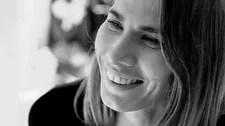 |
| Jenni Kivistö: 'We saw Finland in a different way after living abroad. So we kind of clicked in that sense' Photo: Jussi Rastas |
Jussi Rastas: Little by little, during years of shooting we came to understand. Actually, after filming in Burkina Faso with him, when we came back to Finland and translated what we had shot there, we understood that the material wanted to say something because people there were talking about things that we never imagined. You could see that Sibiry’s position in their eyes had changed. It was different than it used to be and Europe was talked about, and money was talked about. So then we understood, okay, we need to dig deeper and little by little we understood Sibiry is carrying some kind of legacy that we don't know about. And that's how it started.
It’s quite unusual for a documentary to talk about issues of returning home for migrants rather than about them forging a new life. Maybe that is what you were thinking you were going to do, perhaps representing him in his new life in Finland, but then this shifted as you got to know him, is that how it happened?
JK: Yeah, kind of. We also have a background in living in South America for quite a long time. So we connected initially with Sibiry, with the feelings of how you feel when you return to your home country, which is different, actually. How he, as a migrant, was seeing Finland, and how we also felt a little bit differently. We saw Finland in a different way after living abroad. So we kind of clicked in that sense. We understood his feelings a little bit better.
JR: I would say that many people from African countries are currently thinking about returning to their home country.
JK: As you say, it's an issue that it's not so talked about in the media and. It's really common that they think about returning and think about different projects. How to deal with this responsibility and how to give something back back at home.
I think that’s a universal sensation. A lot of people move away, perhaps not half way across the way, but away from where they originally lived and I think there’s always a sort of nostalgia associated with that but also a sense of maybe not being able to go back to the place you left because it, of course, has moved on without you.
JR: Yes, that's something that we thought a lot about in the film that, like if you make yourself part of two kinds of realities, you constantly have these two worlds in your mind, and that's also something that we wanted to reflect. Maybe the optimal place doesn't exist, and you are always somewhere in the middle.
JK: We started to understand a little bit more about the huge expectations he faces and how these expectations might affect your personality. Sibiry was really, truly, at some moment scared of changing as a person to become this colonial legacy character – throwing money, feeling superior, or like something he doesn't want to be and lost, kind of, between these two worlds.
How did you set about incorporating the choreographed elements with the more verite style of a lot of the film? To what extent were you collaborating with him as well?
JR: Originally, ten years back, we didn’t think about incorporating it at this level but, years later, because this has been a long process, we understood that we had a really good, maybe unique opportunity to express something with contemporary dance.
 |
| Jussi Rastas on Sibiry: 'He has fascinating ideas and philosophical thoughts about being in the two societies at the same time and dealing with his identity in this context' |
We understood that we could express something that is very internal to Sibiry in the film. The tension of the film is internal and that’s the way to discuss the internal level. That was an extensive process. We sat together and talked about this position. How he feels in Finland, how he feels in the eyes of the Burkinabes and how this could be transformed into movement and cinematic language.
JK: So we did it together but there were many things that Sibiry had used previously in his own choreographies in Finland, like his white suit character. In the film, at first, there is like this white space freedom of mind, and suddenly there are borders and when the box is the smallest, then this character is being born out of this kind of pressure of expectations.
 |
| Jussi Rastas on directing as a duo: 'We don’t need to talk much, we know what the other is thinking and we find solutions quite fast' Photo: Heidi Piirlonen |
JK: The first problem we had was the language. That was the biggest issue because we don’t speak French, also speaking French in Burkina Faso feels like not really the correct thing to do. And we didn't speak Dyula, so we had many translators in the process. That was kind of a big logistical issue but also it's intriguing, because then you get the material. You don't get a sense of this is the topic they are talking about, but then there might be surprises. We had many surprises in the material – in a good way. Also when you don’t understand the language, maybe people reveal something more about themselves.
JR: It was hilarious to understand what they thought and many of their thoughts are like many people in Finland would talk about some strangers, some foreigners.
JK: But at the same time, of course, our presence affected the outcome of the film. That's like this colonial legacy, the silent legacy of the film. It was something we didn't search for, and it happened constantly. This legacy was above everything, and below everything even though we didn't search for it
JR: Sibiry, in Europe, carries like this kind of legacy that maybe the westerners don't understand much about, but also we, as Europeans, we carry the same legacy in Africa, and we were not so aware of that. But translating and making this film, we understood, okay, we carry it for the same reasons because of the colonial time.
Do you find working as a pair helps?
JK: We have co-directed so long it feels strange to do it alone. Story-wise there were many difficult moments like how to combine the bus, which is really concrete with the Okay, now there is no bus, so things like that, or how to combine the bus, which is really concreting. Like the following the boss story to this internal story of Sibiry’s feelings and fears.
Speaking of friendship, did the fact you knew Sibiry well present challenges too. You’re documenting him but you’ve also got some skin in the game as his friend.
JR: Maybe the biggest challenge has been that we have been filming for such a long time that I think he has thought many times, ‘Will there ever be a film?’ We started 10 years ago. Sure and we made a film in Colombia in between that took us three years. He comes from the dance circle, and there the productions are very simple by comparison.
JK: Maybe you feel more pressure also. We wanted to maintain a good relationship with him, but we had to be critical towards the material so if he wanted to present things we had to think if it was suitable for the film. It’s a complex process.
JR: But Sibiry has been very relaxed towards us so there hasn’t been any pressure from him so that has been really great.
Has he seen the film?
JR: He's watched it twice. After the first screening, he was like, “Wow, this is better than I imagined”. And the second time he watched it and said, “Wow, this is better than I remember”.
Given how long documentaries take, I assume you are already thinking and possibly working on other projects, can you tell me anything about that?
JR: Well, if we can maybe say two things. One thing is that we are actually thinking about making some sort of film or audio visual work about the dance material we shot for this film – more dance, concentrated and maybe more experimental. The other thing is that we are going to Mexico for a few months where we try to renew ourselves.
JK: It’s an art residency so now we are a little bit in a relaxed mode. We want to dig deeper about different methods and renew our creativity a little bit and then maybe get back to a big project like this.