





 |
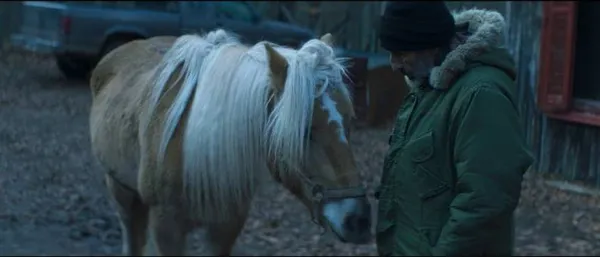
| Grigorakis' Digger screened at this year's Evia Project Photo: Courtesy of Thessaloniki International Film Festival |
It’s just one of a number of projects the Greek filmmaker is working on, including a series with Ken Loach’s Sixteen Films. I caught up with him in Edipsos to chat about his upcoming slate, beginning with the documentary hybrid, which was shot during this year’s edition of Thessaloniki’s Documentary Film Festival in March.
“It was an initiative of the Thessaloniki Film Festival in collaboration with Cosmote TV, a Greek TV platform,” says Grigorakis. He adds: “Orestes Andreadakis, the festival director, called me and said, ‘We want to make a documentary about the history of the festival. I don't want it to be like a History Channel thing with talking heads. I want you to make it into a film – think out of the box, have a concept and make something interesting. I want it to be a film that can go to festivals outside of the context of the history of the festival’.
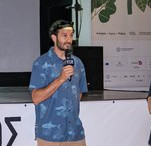 |
| Georgis Grigorakis introduces Digger in Edipsos Photo: Courtesy of Thessaloniki International Film Festival |
“So we have three layers. They’re trying to meet and they never meet; there’s a voiceover trying to think about where they met and recalling their experiences; and at the same time, they’re making a documentary of the festival. So there’s a meta element.”
In fact, when the audience sees a film within the context of the film, it is actually the completed documentary made by the couple. The history of the festival will come through in interviews which the couple take for their film but Grigorakis notes that it “is elliptical”.
But the filmmaker says it will detail how the festival grew up from the Sixties onwards and how it has continued to evolve, while at the same time giving “glimpses of the history of Greece and Greek filmmaking”.
It doesn’t shy away from the festival’s ups and downs, with the director noting a “decline” when TV came in the Eighties before in the Nineties, it became international and “opened up and became the festival it is now”.
The hope is for the film to be ready for November’s edition of the Thessaloniki event. “We tried to give emotional value to the whole thing with the love story and through the way this couple experiences the festival itself,” he adds. The resulting film also embraces different formats, including 16mm, digital and Super 8, not to mention a plethora of different formats from the archive material.
Grigorakis admits that achieving the docufiction mix was “a challenge, to make it feel organic”.
He added: “Maybe we were also lucky because some of the things that were said in the interviews also resonated with the story. Even by coincidence, I think there was a nice blend.”
Aside from that project, Grigorakis is also developing two TV series, including the one with Sixteen Films, which is a “social realist drama about gentrification in Athens”.
The second is a period drama about “two bandits in the mountains of northern Greece”. He adds: “In the early 20th Century there was anarchy, like the Wild West. There was no law.”
Finally, his feature project Nektar is “set on an island, no time, no place, sometime in the future”. He explains: “It’s like a reverse Odyssey. A woman captain returns to her home island after 20 years of absence to reconnect with her estranged son. So it’s a thematic continuation from Digger. That was the story of a father and son and based on the element of the earth. And now we have a mother and son with the water.”