





Eye For Film >> Movies >> Lesbian Lines (2026) Film Review



The 20th Century was a time of rapid change, social as well as technological – a time when scientists, politicians and news presenters spoke excitedly about progress and anything seemeed possible – yet for queer people in Ireland, even as late as the Nineties, it felt as if little had changed since Medieval times. For women especially, caught between Church and state, facing a culture of silence around domestic abuse, self-expression often seemed impossible. Many saw being lesbian as the worst thing one could possibly be; others had little concept of it at all, and therefoe no way to contextualise their feelings except to see themselves as sinful. This was an age when women were being shut away in mother and baby homes and Magdalene laundries with no redress, and when the threat of hellfire after death felt very real and terrifying.
In the face of all this, a helpline felt like so slight a gesture that it might very well be pointless, but a handful of women decided to try it anyway. Their actions saved lives, began the process of building community and, in time, contributed to changing their country. Those who lived through that time in that way will remember how much a simple word of acknowlegement could mean, and what a relief it was to find any evidence of other people who wanted to connect. But what did it means for the people operating the lines? How did they make it through all those long years, carrying others’ burdens as well as their own? Cara Holmes’ documentary sets out to explore this, and to uncover queer joy along the way.
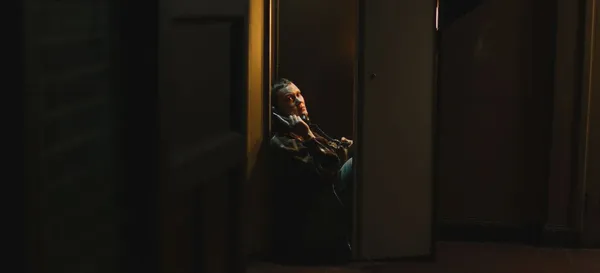
It is only really in the past decade that people around the world have begun to recognise the importance of preserving queer histories such as this. A handful of archive projects have been going for far longer, but there is still a vast amount that has not been addressed, and that is gradually disappearing as those involved grow old and disappear from their networks or die. Holmes has done a good job of hunting down original volunteers from the first lesbian line and its descendents, despite the fact that some still fear being publicly outed. Some speak to camera; others, in keeping with the theme, share their stories whilst the camera rests on a rotary-dial phone in a darkened room, or another piece of period audio equipment. They speak about the feeling of being landless, nationless, with no name and no rights. They speak of the deep seated human need to connect in honest dialogue with other people. They speak about the silent calls, all too common, of staying on the line with women who could not yet access the words to speak their truth.
Whilst his happens, Holmes builds atmosphere. A large room with plain brick walls, a single desk and a telephone recalls the conditions in which many of the lines operated. Swatches of film burn up at transition points, speaking both to the period and to the fragility of archive. Every now and again, a small details reveals the foreignness of the past, even for those who once lived there. The telephone used to be wired to the wall in the hallway, Holmes reminds us, and this commonplace reality is suddenly sinister, reflecting how difficult it was back then to find any form of privacy.
There is a clip from the Late Late Show in 1980 in which Joni Crone speaks to Gay Byrne, asserting the right of lesbians to live openly without persecution. To younger viewers, this may not seem extraordinary. Older ones will be stunned by her bravery. As the remembered years roll by, we come to hear of parties, bars, clubs. One woman cheerfully admits volunteering because it seemed like a good way to meet available women, and here a wealth of photographs emerges to recall the thrill of freedom, of dressing up and acting out with people who would never condemn it. Couples formed, for the night and for the decades since. And as one woman explains it, when no-one gives a damn about you, it’s creatively freeing – the women could model relationships and build community in new, healthier ways.
Still there were those who worried about not being a good enough lesbian, or a qualified enough lesbian, even to call the lines, and thus the film touches on fears that many women have to this day. One of the call handlers explains that when she started out she’d never had a girlfriend. That wasn’t the point. Elsewhere, briefly, the film deals with the complicating factor of religious tensions, the Troubles finding their way into everything, but the women are proud of how the need to survive inspired them to overcome such things.
An incredibly rich documentary full of passionate testimony, Lesbian Lines is a valuable contribution to the archives and also a fascinating watch. It will resonate strongly with queer people of that generation, whilst their straight peers may suddenly find themselves cognisant of another Irelandthey never knew was there. Young people who worry about the regressive potential of today’s politics will find many useful lessons within it. Anyone who thinks that the 21st Century’s LGBTQ communities came out of nowhere will get a taste of how much hard work it took to make them possible.
Reviewed on: 20 Jun 2026