 |
| Exorcist 2: The Heretic Photo: WT Films |
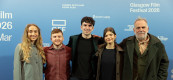
“I don't think that Boorman And The Devil is honestly really about Exorcist 2,” says David Kittredge, continuing our conversation about his highly acclaimed documentary, which screened as part of the Frightfest strand at the 2026 Glasgow Film Festival. In the first part of our conversation we discussed some of the myriad problems that beset the production of Exorcist 2: The Heretic. Now he’s ready to talk about how it fit into Boorman’s wider career.
“This is about what it means to be an artist, how to live as an artist and the courage you need as an artist. I feel like that's why it connects so much. That's why people are responding the way they are. This is not just some DVD documentary. This is about ambition and a cinema that I wish would come back, you know, studio supported or money supported, real artistic visions. I think we could use that right now so much.”
Speaking of artistic vision, I say, is that Excalibur, the sword from the film, propped against John Boorman’s piano during their interview.
“It is,” he says, beaming. “If you look at John Boorman's shot, there's the Zardoz mask. The Merlin mask is in the background. There's Excalibur and then you can see the Holy Grail in a couple of shots all the way to the left of the screen. We shot in Boorman's home. It was shot by his director of photography, Seamus Deasy, who did his last few films. He's a great cinematographer and a wonderful, lovely man, and he was just like, ‘Let's put some stuff in the background.’ It’s wonderful seeing people react.
“I wouldn't have wanted to shoot John any other way. It's so him. And I'm, you know, I just. I did a commentary track on the new Arrow Video 4K of Excalibur; I can't even express to you how gorgeous this transfer is.”
I'm keen to get hold of it, I tell him, noting that I do some writing for Arrow myself.
“To me,” he says, “Excalibur is his greatest film. At least it's his most Boorman film. It is Boorman being so Boorman that all of Boorman's obsessions and everything are in this film, and it is just a vision and it works. It's so good and it's so visionary and beautiful. I find it so amazing because that was his comeback movie. After the Heretic, he told me, he didn't do almost anything for a year and a half. He'd been trying to make Excalibur for years, and there were no takers. And ironically, one of the movies that blew him off the screens in ‘77 was Star Wars.
“It was because of Star Wars' success that studios were looking for these iconic Joseph Campbell mythos hero movies, which led to the greenlighting of Excalibur. So this is a weird kind of irony, that this movie that obliterated Exorcist 2 was the movie that helped get his dream project greenlit. He went through his period of walking in the desert alone in his own mind, because he couldn't believe that he miscalculated the audience so spectacularly with The Heretic. He really believed that this was a movie that would be embraced and accepted and enjoyed and a big hit.”
I suggest that perhaps all that trouble with Exorcist 2 was the price that he had to pay to be able to make Excalibur – as an artist, one has to be willing to risk that kind of catastrophe in order to create something exceptional.
“I totally believe that,” he says. “And I think the documentary is about that. I think one of the things that also turned him around was when I said ‘I don't think you could have made Excalibur if you hadn't gone through the crucible of The Heretic,’ because so many of those visual effects, those inconsistencies, the camera effects that he perfected on the Heretic, he used to great effect on Excalibur. Particularly ghost glass. There are only a few opticals in Excalibur. There's a lot of use of forced perspective and miniatures. There's a lot of incredibly evocative and unnaturalistic lighting and shots. It's a fever dream. It's amazing and colorful and shocking.
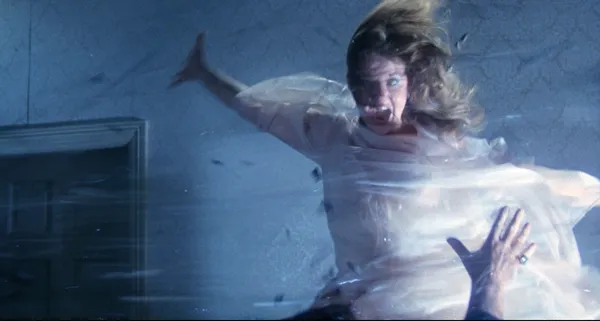
“If you remember the scene with Merlin and Morgana Le Fay in that lair, looking at all these people frozen in the ice, all these bits of time, it's so surreal and dreamlike. But I think that he couldn't have achieved a lot of that as well had he not gone through all of the crazy moments and shots on the Heretic. I tell people about that hypnosis scene with the ghost glass. We're so used to opticals now, and CGI, where it's just perfect. I tell people ‘No, this was done live.’ There were two sets. There was one in front and there was one off to the side, and there was a two way mirror. And literally everything had to be precisely choreographed.
“It was all live. There were lights coming up and going down. This is literally what the camera was seeing. There were no post production effects on this. And I think when people are told that in addition to all the other crazy, amazing technical feats that film did, they have a lot more appreciation for The Heretic. There were only a couple of movies that used steadicam before The Heretic, literally. Days Of Heaven, Bound For Glory, Marathon Man and Rocky, and all of them only use it for one or two shots.
“Glory had that really famous scene of the crane. Rocky had the running up the stairs. And Marathon man had Dustin Hoffman running away from being kidnapped. And that's really it. But in Exorcist 2: The Heretic, the steadicam is everywhere, and especially in those dream sequences, that one shot where it's coming up and around and it like lasts 20 or 30 seconds, and it's one of the most complex shots you've ever seen. I can imagine in the Seventies, sitting in a movie theatre and being like, “What? How on earth did they do that? That's insane.” Now we're just used to it. But this was an incredibly technically ambitious movie.
“I think all that good work was just ignored because people just wanted to see spinning heads and green vomit. And there's honestly an argument for that. It was called Exorcist 2. What do you do with that? If it had been called The Heretic, I think it would have been a different issue. Of course, it might not have opened as big, and maybe it wouldn't have done as well either, but I think it would have certainly been taken a lot less badly.”
We talk about the success to date of Boorman And The Devil.
“It’s a very odd time to have a documentary on the circuit,” he says. “The industry is crazy right now. This is a documentary that opened in Venice, has played a lot of huge festivals and got nothing but rave reviews, and it's very audience-friendly and all of these distribution execs are telling me how much they love it. And then a lot of the bigger companies are just very afraid to take any documentaries at all. And it's kind of crazy.”
I tell him that I hope Frightfest will help. Its team is very well connected and supportive.
“I hope so,” he says. “I'm so happy with it, and I'm really happy that people love it. It's the movie that I really, really wanted to see my whole life, and it came out about exactly as great as I possibly could have imagined. And I'm just so thrilled that it connects. I'm so thrilled that people understand what it's about and are moved by Boorman's story and are moved by this love letter to a specific kind of filmmaking.
“I'm a horror fan and I think horror audiences are far more sophisticated and appreciative of cinema than a lot of other audiences. Because if you think about horror, it’s about subverting expectations and being subversive in general. And when you do that in a film, when you take chances, when you do different things and undermine expectations, that, to me, is what art is about. That's what cinema is about. Most great horror movies are not just about scaring an audience. Most great horror movies are about something else, whatever it is. Even if it's just what's in the dark, the core of that fundamental human thing. There's the core of that in The Exorcist that Boorman is able to take and do something different with.
“I think that if the Exorcist was about the nature of faith – and I would argue it's actually pretty conservative because basically what that film is saying is you can be secular and you can be this groovy film star with a daughter and all this stuff, but when push comes to shove and the shit hits the fan, who do you call to save everything? It's not your PhDs and your doctors. It's going to be the old priest that's going to solve everything, and a male priest for women in trouble. It's a pretty fundamentally patriarchal and conservative message. It's powerful, and the Exorcist is a great film and it's about faith, but Exorcist 2: The Heretic is very, very different in that regard. It is extremely female oriented.
“It's about this coming together of religion and science as being two forces that are looking for the truth, ostensibly. And Richard Burton does this whole faith thing, but really Louise Fletcher, in a role that was written for a man, she is the heart and soul. He comes around to appreciating science and she, by the end, comes around to appreciating forces that she doesn't understand, like supernatural forces and spiritual forces. And it's about the fact that these things aren't antithetical. They coexist.
“In Exorcist 2: The Heretic, men don't save anything. It's about this young girl who saves everybody by the end and comes into her own power. And that's pretty inherently and powerfully feminist.
“I think that the mores around female empowerment are radically different now than they were 50 years ago. I think that one of the reasons that people had a hard time with Exorcist 2: The Heretic was exactly that. Because it wasn't about old religious men saving everything from the secular feminist whatever. I think that one of the reasons that Exorcist 2: The Heretic was rejected the way it was, was because it didn't challenge feminism. It embraced it. It's not, I think, the primary reason, but it is a reason. One of the reasons that it was so vilified, because when a movie comes out and it has that level of hatred, that's beyond a ‘bad movie’. That means that movie is. Is tapping into things that really challenge and annoy the audience and the audience's expectations.
“The primary reason would be that it's not really a horror movie and it's not really scary in the way that The Exorcist was. But I think another reason is because it shows that science and religion aren't necessarily at odds and that women have agency. Both of those points are exactly the opposite in the previous film. Me personally, I would rather hang with the vibe of the second film.”
Does he think that's something that Boorman was particularly conscious of, or did that just seem to him like a natural route to take with the story?
“I don't know. I mean, I think that if you look at Zardoz, which was the film he made before, that he certainly has a lot of things to say about gender and women and men in that film. A lot of that is much more traditional, but I do think that there are elements of respect for women in The Heretic that are certainly not in The Exorcist. Despite Ellen Burstyn's fantastic and legendary performance of this wonderful character, she basically is victimized in this movie from a woman running her successful, secular life into this frightened, humbled mom.”
We go on to talk about one of the few bits of Exorcist 2: The Heretic which did receive praise at the time of release: Ennio Morricone’s score.
“What a risk taking, unbelievably interesting and subversive score this was!” David declares. “When you look up really great scores for horror movies in general, Exorcist 2: The Heretic always pops up in the top 25 or 50 or whatever. It was extremely influential. You can find covers of Magic And Ecstasy or Regan's Theme all over the place. Quentin Tarantino used Regan's Theme in The Hateful Eight, which of course Ennio Morricone scored and won an Oscar for, so it's kind of full circle. It's a weird and disturbing and phenomenal score. It's astounding. And it was astounding that he just kind of did it.
“They were crunched for time at that moment because the film had gone so far over schedule, because they had to shut down because Boorman was sick. They were supposed to wrap over two months before they did, which pushed back post production. There was a lot of post production work to done. There were a lot of miniatures, there were a lot of effects that needed to be done and there was a very complex mix. So they wrapped that film in early November 1976, and it released in June 1977. But they were working basically day and night to get that cut ready and get the mix ready and get the score.
“I think Ennio worked on the score in March or April of that year, so two months before that film came out. And one of the things that I talk about in the documentary is that they had no time to test it because they were locked into that release date because of the way the film was financed. I wonder if that was a good thing or not, because certainly I don't think we would have had the film that we have had it been tested. They none of them, not the Warner Brothers people, not Boorman, nobody expected the audience reaction to be so severe. Which, of course, led to the recutting while the movie was in wide release, which is something you don't really do. That's not a good thing. When you're cutting the ending out of your movie while it's playing in 700 screens, theatre by theatre, you're in deep trouble.
“The first thing that went in the recut was the happy ending. He changed it without shooting anything. It was clever editing. He changed it from Burton and Blair walking off into the sunset or onto the horizon, leaving Fletcher there, and recut it so that Burton, offscreen, dies in the house collapse, and Fletcher's there to kind of be there for Blair and pick up the pieces. You know, to be completely candid, Boorman told me more than once that he prefers the recut ending, because he thinks that even as the film that he made, it doesn't work the way he wanted it to. And, you know, I respect that. But I do think that the ending with them walking off is much more consistent with the film than the Burton dying ending.”
One of the things that comes out of the documentary, I say, is just how much talent was involved in The Heretic – so it really needed this collection of disasters in order to bring all that down.
“You had so many amazing, talented people,” he nods. “William A Fraker was already an established A-list cinematographer. He had not yet had any of the six Academy Award nominations he would have before he passed, but the next film he shot, right after Exorcist 2: The Heretic, was Looking For Mr Goodbar, which was his first Academy Award nomination. And he brought on with him his camera operator and his first AC and his second AC. So having bonded on The Heretic, they went and did Goodbar, which is a really fascinating visual film, by the way. I just watched it again recently. There was a 4K that was released by Vinegar Syndrome. It's really amazing.
“You have Ennio Morricone and you have the production designer, Richard Macdonald, who had done Jesus Christ Superstar and Day Of The Locust and all the Joseph Losey movies. You had spectacular A-list talent. You had Warner Brothers giving enormous amounts of money for them. I mean, it wasn't one of the most expensive movies ever made but was by far the most expensive movie Warner Brothers had ever made. That summer, ironically, Sorcerer, William Friedkin's follow-up, cost way more than The Heretic and grossed way, way less. And that year also, Close Encounters, I believe, cost far more than The Heretic, too. But of course, that was a huge hit. So we were getting into this place in the mid-Seventies where movies were suddenly costing a lot more money.
“Deliverance cost a million bucks, you can imagine, you know, but suddenly we're in the world where a year or two later, Superman, which was financed by European money, cost allegedly over $50 million. And most of that was in research and development because they just wanted to get the green screen right, so that he could fly, and they couldn't figure out how. It cost an enormous amount of money but it was a hit. And then just a couple years later, Heaven's Gate, of course, was budgeted at some reasonable amount of money, but it ended up costing $44 million.
“I think Star wars and Jaws and these blockbusters showed the money to be made, but then everything just started costing so much. It's interesting seeing where we are in the business now right now with this unprecedented shift in not just how audiences consume entertainment, but how we regard entertainment and certainly what pays for entertainment. I think it's a fight right now for artists to do things that are interesting. Certainly it's a fight to get anything made. I feel like the only way out of this and the only way to succeed now is to reject the expected. Which, of course, executives don't want to do because they want to keep their jobs, and stockholders don't like it because they want quarterly earnings.
“I think it's the only way out, and I think a few executives know that. I think that Michael De Luca and Pam Abdy at Warner Brothers understand that. They greenlit the Minecraft movie, but they also greenlit One Battle After Another and Weapons and Sinners, so I think maybe there's a balance to be made. Maybe we need to look at these crazy swings a little bit more. We need to make good stuff and we need to make unexpected stuff and we need to take risks. And I really want to go to movies that take risks.
“That’s part of why I did Boorman And The Devil. I mean, I didn't necessarily want to make a documentary. I had a documentary filmmaker friend who was just like, ‘If you don't make this movie, no one will.’ And it's true, because I'm obsessed with Exorcist 2 and all the things about Exorcist 2. When I first got to talk to John Boorman, I was like ‘I can't believe I'm talking to John Boorman!’ That was amazing. When I shot that interview with him, we did it one day, but it was a full day. He was so sweet to give me that day. After that, I looked at the footage and I was like, ‘I know what this movie is now.’
“It's not about Exorcist 2, and I don't think it ever was going to be. It's about what it means to be an artist and what it means to take risks and how that's necessary. You need to take risks as an artist. It is not an option. And Boorman is one of the most amazing, most risk-taking directors I am aware of. He is one of the greats of all time. Even though you can look at some of his films and say ‘That doesn't work as well,’ it's because he takes these risks and because he tries stuff that might not work, that makes him great. And I would take a movie that tries something over ten movies that are just good.”
You see them every year on the awards circuit, I note, agreeing, and it’s clear that we’re on the same page.
“There are movies are just like, okay, that was fine, and I don't never need to see it again. It did exactly what I thought it was going to do, and did it exactly fine. Whatever. I would rather see Exorcist 2. I would rather see Southland Tales. I would rather see Miami Vice. I would rather see One Battle After Another. I would rather see anything that actually challenges me and risks failure. If you're not risking failure in art, stop. I don't want to see your art. I don't. That's where I'm at in my life.
“I feel like culture, at least me personally, I've moved on. I want to see movies that are polarising and that push buttons and that try things, and Boorman And The Devil is a clarion call for that. It is a celebration of risk taking in cinema and it's a celebration of art in cinema. I made the film for filmmakers and artists. It's like. It tells them there are worse things than failure. This movie failed in about as many ways as it possibly could and in as many directions, and it was traumatising and it broke everybody's heart. But you know what happened? He went on to make Excalibur.
“He could not have made Excalibur without having made this. He could not have made Emerald Forest without having made Exorcist 2: The Heretic. He could not have made Hope And Glory or any of the subsequent films. The General, which I wish more people would see. It's such a great film with Brendan Gleason. Queen And Country, Tailor of Panama. It's impossible to make great art without falling on your face every once in a while, or at least risking falling on your face.
So what’s next for him as an artist? I ask.
“Right now my focus is getting Boorman And The Devil out to as many people as possible, and having the best distribution possible. I'm planning a number of other things. I have a couple of narrative projects and a documentary project that I'm putting together now. But I will say this – I didn’t expect this – Boorman And The Devil has given me a lot of attention. I mean, Edgar Wright saw it and loved it. Sean Baker saw it and loved it. Luca Guadagnino put it on his top 10 movies of last year. I don't even know how he saw it. I desperately want to talk to him, just to thank him, but it's completely surreal to me to have like these amazing filmmakers who I respect and adore see my movie and like it.”
Since this interview took place, Boorman And The Devil has screened at Glasgow Frightfest and won many more admirers. It’s widely considered to be one of the top films at the wider 2026 Glasgow Film Festival, in what has been a strong year, and it looks likely to go from strength to strength.