





Eye For Film >> Movies >> Wolfram (2025) Film Review


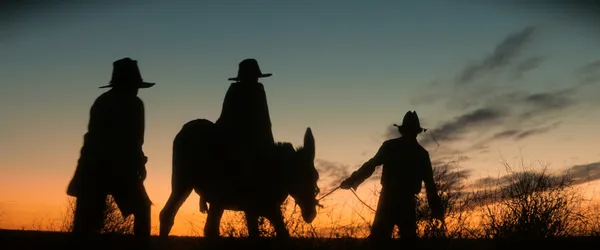

Westerns are generally hot and parched milieux, where the aridity hardens men’s souls and the cracks in humanity show. With his latest film – which returns to the town of Henry, where 2017’s Sweet Country was set – Warwick Thornton gives the genre a sweaty, fly-infested Australian colonial twist. The white community of Henry aren’t just baking in the heat, they’re rotting just like the horse carcass nobody can be bothered shifting from the town square, and we can almost smell it. Despite this, or perhaps even because of it, the warmer notes that are offered by a narrative following the plight of two Aboriginal children Max and Kid and their mother Pansy (Deborah Mailman), who is searching for them, burn all the brighter.
The young siblings and their mum are just part of this tapestry of a story that takes its time to coalesce and which considers the toll taken on families by colonialism at the same time as emphasising the resilience of the indigenous population. The kids, along with an army of similar aged youngsters snatched from their families, face being lowered down into holes to mine the wolfram of the title – known more familiarly these days as tungsten and highly prized in the Thirties when the film is set. They’re looked after – although that suggests a level of care that doesn’t exist – by Billy (Matt Nable), a heavy and volatile drinking miner.
He’s just one of the dangerous white men that populate Thornton’s world, although he seems positively pleasant compared to the two strangers who ride into town. Casey (Erroll Shand) is virtually pestilence personified, as though the flies that are heard and seen constantly in this film have buzzed together in human form, and his younger sidekick Frank (Joe Bird) is already well on the road to being just like him. Hoping to stake a claim, they’re looking for Casey’s cousin Kennedy (Thomas M Wright) – a returning character from Sweet Country, who seems to have gone almost mad from the heat and his conflicted relationship with his mixed heritage son Philomac (Pedrea Jackson), whom he treats like a slave.
Despite the men’s capacity for violence, the script from David Tranter (who drew on his own family history) and Steven McGregor, emphasises how pathetic and, when push really comes to shove, physically vulnerable they actually are. Death is dealt just as quickly by nature as it is by other humans.
The youngsters, meanwhile, along with their mother and her Chinese partner Zhang (Jason Chong) are shown to be resilient and resourceful in the face of brutality with the kids shown as scrappy adventurers, with Thornton – who acts as his own DoP – fully in tune with their perspective. This is a film about as much about the vital connections you can’t see – and which the white settlers are ignorant of – as the ones that you can, underlined by the way that Pansy cuts off locks of her hair to leave as talismans for the children to find.
Thornton demands a certain level of patience from the audience as the narratives mosey along, but his control of mood is a major asset. By keeping the tension levels generally high, while allowing some lighter and more emotional moments courtesy of Max and Kid, he maintains the pace and intensity.
The wide ensemble cast also means Wolfram touches on elements you don’t often see explored in this sort of film, particularly the presence of Asian prospectors in the Australia of this period and how they sit within the wider race dynamic. Thornton has said flies were a constant presence on the set and Liam Egan’s excellent sound design lets them buzz in when needed to goose the tension. Spare scoring from Charlie Barker, who uses a “saw harp”, crops up in moody melancholy interludes. Thornton doesn’t lean into violence so much as let it simmer casually, but when comeuppance arrives it’s entertainingly done. Despite the sometimes grim subject matter – and wound detail you may well want to unsee – Thornton makes the revenge and emotional elements form an impressive pincer movement with a satisfying pay-off that feels like justice has been done not just to this story but to the many real people who survived similar circumstances.
Reviewed on: 27 Feb 2026


