





Eye For Film >> Movies >> Filipiñana (2026) Film Review



The humour in Filipiñana is dry as a bone, appropriate for an increasingly dark comedy which is scathing in its assessment of the way water, along with other resources, is wasted in all the wrong places in the Philippines. We only glance at the bustle of regular life in the southeast Asian country, as people queue for water from the back of a truck in a city, before writer/director Rafael Manuel shows us the flipside, as sprinklers gently spritz water across an apparently empty golf course. Later the profligate waste of it is underlined, as girls wash rescued golf balls, ready to be used again. This locked-off shot is one of many fascinatingly framed moments in a film that is built less around complex story than around day-to-day details which, because of Manuel and his cinematographer Xenia Patricia’s rigorous handling, are allowed to take on increasing amounts of unsettling weight.
The golf club is where the bulk of the film takes place as we follow a sultry, surreal and slowly unfolding day in the life of teenager Isabel (Jorrybell Agoto), who is a new hire. The film, expanded from Manuel’s 2021 short of the same name, is constructed around a dance between the social classes. In one tier are the elite who frequent the club and, in the other, those who work there, “stealing” a breath of air-conditioning or a lick of cake icing where they can. Sociopolitics spritzes delicately, like the water from the club's sprinklers, over the whole affair. The trees, like the golf club denizens, are wilting under the heat bu't we hear that, “If one of them dies, it will be replaced”, with the suggestion that death is irrelevant to the wealthy. They live in a sort of perpetual, falsified present, untroubled by their colonialist past in the certain belief that there’s plenty more of whatever they need wherever the first came from. Control is also evident everywhere, even on the trees, where mangoes hang wrapped in paper bags.

Isabel is a tee girl, whose job is to place the balls for the club’s, notably male, patrons to hit. In another of those beautifully framed shots, we see Isabel through a golfer’s legs, sitting at crotch height to do this, a nod to a sexual exploitation undercurrent that suggests other, more intimate balls, may be being attended to by the young female staff in the course of a day’s work.
Among those out on the course is its president Dr Palanca (Teroy Guzman), who becomes a sort of fascination for Isabel, not least because he comes from the same religion of Luzon island as she does. Also playing a round is Clara (Carmen Castellanos), an American-based young Filipina, whose uncle (Carlos Siguion-Reyna) is trying to persuade her to move back home but who is all too aware of the exploitation around her, even as she benefits from it. The driver for the action is a club, which Isabel carries inside and out, in search of the elusive Palanca.
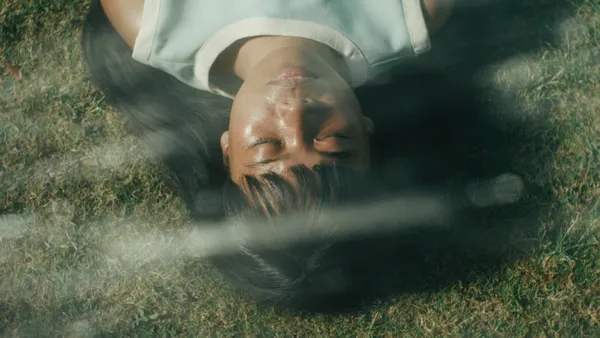
Manuel shows paradise as a thin veneer, where food is so elaborate and over-served that it pushes to the edge of disgust and where mangoes don’t last long if they fall. The writer/director won’t be hurried, deliberately walking us through the day at a languid pace, which only serves to underline the rot and cruelty that lies just beneath the surface. This is an environment where appearances are deceptive, after all peaceful sleep can look like death from the right or wrong angle and the innocuous becomes insidious. When Dr Palanca sings a karaoke version of You Always Hurt The Ones You Love, Manuel’s message rings out clear as a bell.
Reviewed on: 03 Mar 2026


