 |
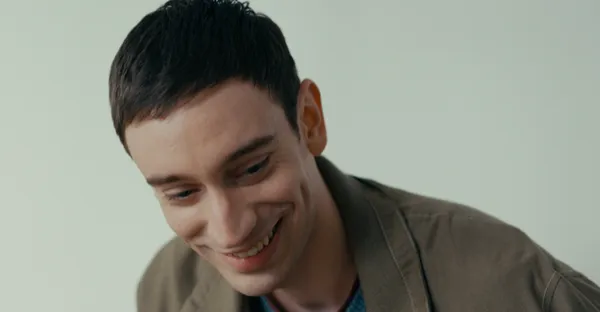
| Director Pauline Loquès on actor Théodore Pellerin: 'Before I met Théodore I was intimidated by the idea of writing about a young man' Photo: UniFrance |
Pauline Loquès who originally studied literature and law, could not be more pleased with the reception given to Nino, first in the Critics’ Week at the Cannes Film Festival and subsequently in various festivals. Since our interview it has enjoyed further success, winning two Césars and it will have its UK premiere at Glasgow Film Festival on February 27.
Nino started by happenstance. She met a producer who had seen her first short film La Vie d’Une Jeune Fille and asked if she was ready to contemplate a full-length feature.
“I told her that the only thing I could write about was something painful going on in my life. Initially I didn’t want to tell the story because it was so sad, painful and desperate,” Loquès told me.
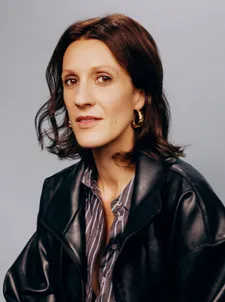 |
| Nino director Pauline Loquès: 'At the time I felt anger and sadness towards the illness and life, so I started to write' Photo: Marie Rouge |
“I lost someone in my family (also a young man) who suffered an aggressive cancer at the age of 37, and he died. At the time I felt anger and sadness towards the illness and life, so I started to write. But at first it was just a kind of therapy to get back some joy and hope. Then I kept going because I was intrigued by the idea of a young man who was told he had a cancer. I was haunted by it, so I wrote a lot about it. At a certain moment it began to take shape in my head, and I thought I’ll follow him as he wanders around and guide him, despite everything, towards some kind of enlightenment.”
Once she found her her main actor Théodore Pellerin, who’s mainly worked in Quebec, it all began to fall into place.
“Before I met Théodore I was intimidated by the idea of writing about a young man,” she confessed. “Then I thought the only answer is put a lot of myself into it, his sense of being rejected from things but he’s also someone who likes to socialise. So, I put myself in his shoes as much as I could. I still worried it was not enough, and when Théodore came along it all opened up.
“It was if I could completely put my trust in him. That I had written something that I felt was true, and now, you can do what you want with it and be more honest, beautiful and powerful than what I wrote. Actually, sometimes I’d say, 'This is badly written’ and he’d say 'It’s fine, don’t change it.’”
Taking an objective view of the film now she suggests that it is really a story about parenthood. “The theme, in fact, runs right through it from beginning to end. It’s all about fathers and sons, mothers and daughters. I didn’t do it deliberately. But I think there is something about it when you’re forced to confront death at that age, you’re pulled in two directions, towards your past and towards your future. Your past and who you were as a child, the circumstances of your birth, and where you’re heading which is typical in your late 20s. You’re no longer the child of your parents, but society is also telling you, now’s the time, you’re finally able to work, to fall in love, be responsible.
 |
| 'When Théodore came along it all opened up. It was if I could completely put my trust in him' - Nino director Pauline Loquès Photo: UniFrance |
She also enjoyed exploring Paris, where she now lives, having grown up in the south of France. “I didn’t want the picture postcard version but rather to have the feel that it could be any big city. In any case Paris seems to be perpetually under construction and constantly changing. When Nino receives the news it’s like everything comes to a standstill but it’s quite the reverse: the city’s hustle and bustle doesn’t stop.”
Besides Pellerin she feels well served by the rest of the cast (Salomé Dewaels, William Lebghil, Camille Rutherford) as well as two French cinema stalwarts Jeanne Balibar and Mathieu Amalric. Loquès told a colleague that: “They are everything I love about cinema: the passion for acting, humility and freedom in their craft, and boundless curiosity for stories and characters.
 |
| Actor Théodore Pellerin and director Pauline Loquès in conversation after the premiere of Nino in Cannes Critics’ Week and now receiving its UK premiere at Glasgow Film Festival Photo: UniFrance |
Loquès becomes animated. “It’s annoying that we haven’t made more progress, and it remains a challenge. But the quality of women directors is high whereas you have a surfeit of rubbish men.”
She declines to be draw on the details of her next project but she’s pleased to confess it is already under way. “First, though, I always have to find something deep inside me. I am pleased I have even though I’m still talking about Nino.”
Nino has its UK premiere as part of Glasgow Film Festival on 27 February at 8.45pm at Odeon Glasgow Quay and on 28 February at 2.30pm at GFT. At the time of publishing, there are five tickets left, buy one here. To be released in the UK later in the year.
Richard Mowe talked to Pauline Loquès at the UniFrance Rendez-vous with French Cinema in Paris in January.