





Eye For Film >> Movies >> Molly Vs The Machines (2025) Film Review


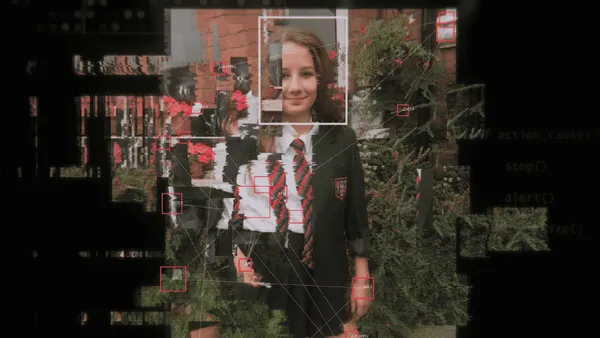

On 21 November 2017, 14-year-old Molly Russell was found dead in her bedroom in a modest family home in Harrow, London. Though it’s not addressed directly here, the coroner would go on to state that there was uncertainty as to whether or not she had intended to die. What was clear was that she had intended to cause herself harm, and that she had been suffering from severe depression for several months.
It’s not that awful morning that her father, Ian Russell, describes with searing clarity at the start of this documentary. Rather, it’s the day before. A day when he spent some time in the car next to Molly. When she was distant, as she had often been around that time, and he asked her if anything was wrong, and she turned down the opportunity to engage. Parents in this situation inevitably spend the rest of their lives wondering if there was anything they could have done, if some magic formula of words could have averted what happened. Ian, however, is a rational man, and not given to focusing vainly on the past when instead he might do something to decrease the risk of other young people dying like that in the future.

Teen access to social media is a hot button issue in the UK at the time of writing, when Molly Vs The Machines is screening as part of the Glasgow Film Festival. The other key thing the coroner concluded at the inquest into Molly’s death was that her inclination to self harm had been exacerbated by exposure to harmful content on social media. Viewers should be aware that some of this is included in the documentary. It’s easy, upon viewing it, to have a strong emotional reaction. One can see why some people want to ban young people from social media altogether – something which would be very difficult to achieve in practice, and would have the side effect of cutting off some from vital support networks. Marc Silver’s film is refreshingly alert to the nuances of the issue – as, in fact, is Ian, despite the way that some clickbait-focused commentators have characterised him.
Inspired by Shoshana Zuboff’s book The Age Of Surveillance Capitalism, the film addresses the challenges of protecting young people at the same time as acknowledging the weight of data which points to social media in its current form making matters worse. A group of Molly’s friends talk about how much they would have struggled at that age to cope with the kind of material she was confronted with, but also note that for someone like her, afraid that she was ugly and obsessed by measuring her stomach, any image of a skinny girl could be triggering – the whole of our society is saturated by them. Speaking for Meta, Sheryl Sandberg argues that some of the problematic material shouldn’t be removed because it comes from young people who are themselves troubled and is part of their coping process. Other material, however, seems directly designed to do harm. For some people online, adding to the trauma of vulnerable teenagers is sport.
Can’t modern technology tell the difference between these various types of content? The tech companies want praise for its successes but seem remarkably unconcerned by how much damaging material is still slipping through. Mark Zuckerberg looks confused when asked to apologise in court, as if he has given the matter no thought. We hear from a former head of the Compassion Team at Facebook, who talks about the company’s efforts to reach out to vulnerable people and direct them to appropriate support; about how successful it was, and about how it was closed down – after all, its economic benefits were unclear. We also see Peter Thiel making his time-worn technology as an alternative to politics speech. As many viewers will be unfamiliar with him, it might have been useful to have included a little context establishing just how out of step his broader philosophy and beliefs are with those of society at large.
Parts of the film are animated and narrated using AI-driven processes which not all viewers will be comfortable with. The justification for this would appear to be that it enables Silver to examine issues of framing using his own work as an example. In one telling moment, the software is instructed to shift from the voice of a Silicon Valley tech expert to a sympathetic voice encouraging viewers to take action; it switches from a white male voice to a Black female one.
In contrast to the primary narrative delivered by that first voice, which takes on the perspective of a data-gathering, algorithm-feeding machine whose interest in Molly involves no human concern at all, Silver employs an old-fashioned technique as the film nears its conclusion; parents silently holding up pictures of their children who have died in similar circumstances. Though naturally sympathetic, this could of course be considered manipulative too – but crucially, it can’t happen without human input. It’s clear who is responsible for it, and the motives of each person involved can be clearly established. The algorithm that contributed to Molly’s suffering has no such redeeming features. Its creators are anonymous; its complexity is used as a shield, with its defenders thus implying that it’s too difficult to control. Meanwhile, there is the undeniable fact that teenage social media use corresponds with a substantially elevated risk of suicidal ideation or self harm.
Molly Vs The Machines doesn’t put much emphasis on possible solutions, but has plenty to fill its 90 minute running time as it explores the complexities of the problem. As such, it’s a good starting point for people who want to understand more about the issue before weighing in on what might be done. It’s pretty grim viewing, and there is little effort made to provide relief at a visual level, but it’s an astute and necessary piece of work.
Reviewed on: 26 Feb 2026



Director: Marc Silver
Starring: Michael Shaeffer, Kerri McLean, Angela Peters, Ivy Blackshaw
Year: 2025
Runtime: 91 minutes
Country: UK
Search database:
