 |
| The Bones Of Our Never-cestors |
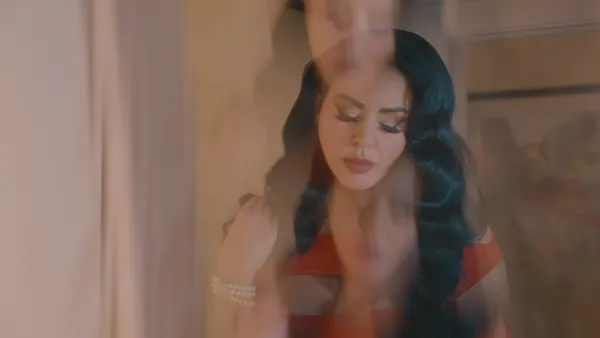
What happens to those people who never succeed in becoming ancestors? How do subsequent generations relate to them? Andrea Grant’s new short film The Bones Of Our Never-cestors explores this theme from a Coast Salish and broader indigenous perspective, using spoken work poetry alongside imagery which has both documentary and narrative aspects. This is, I acknowledge, an type of film which I don’t have a lot of experience with; I understand that she’s done quite a bit of it.
“Yes, definitely,” she says. “I started out doing poetry readings traditionally, in front of a room with the microphone and piece of paper - these were before the days of iPads – and then I started making spoken word films a few years ago. I did a spoken word album in 2003, so quite a while ago, but it still seems to do well and be downloaded and everything. So that's really lovely.”
The images tend to come when developing the words, she says. “When I'm planning a film, I basically create an Excel doc with my poem at one side broken into pieces, and then think about what kind of action would go with the theme and how it could tie all together. There's actually a lot of planning involved.
“Usually it's a two or three day shoot. How long the days are just depends on what area, you know – if there's driving involved, if we're moving around a lot, if there's a nighttime scene, lighting, all of that. We try to cover as much as we can, but it's hard to do more than two locations. You know, three is about the max you can do.
“The first film I made, Modern Native, I filmed scenes in New York. I was experienced with scripting it all out, so I filmed some scenes in New York with one team and then I filmed some scenes in LA with another team. And then I went to the Pacific Northwest, to Canada, where my tribe is from, and filmed with relatives and friends and had a studio day where there were a bunch of Native American actors and they were lip syncing the words to the poem. So that was really cool. And then with my second film, Night Swimming, I wanted that to really showcase bodies of water, so the ocean.
“We did some scenes in a studio, in a rain room. So it was like a faucet you would turn on, kind of like a big shower that you would step into and just get drenched. I don't really like getting my hair wet, so that was challenging, but it was fun. And we had a pool nighttime scene. That turned out really lovely and I think that was a great project. The Bones Of Our Never-cestors is my third film.
“I see them as linked by certain references: calling upon the ancestors, some of the mythology threads. They are very different. But I really wanted this third one to explore a slightly darker topic, you know? So there's the one which is about connecting to your people and your tribe. The second one was representative of feminine emotion and the ranges that we feel, represented by the water. And then [for] the third one, we found some really interesting locations, like a beautiful church.
“No one really minded if you went in and filmed because I guess it's kind of a tourist attraction, but having that mixed in there, and some of the architecture in that area that we filmed – the buildings are very unique, kind of like an adobe style – it's got a certain look. And then, yeah, we filmed two days when it was really hot last September, and then we filmed a day at the end of January to get the lip syncing and some of the other details, and shoot in a hotel. So it was about like the common thread, the journey, that the characters go on within the narrative.”
“There's something definitely haunting about the subject matter because, I think, the last residential school shut down in the 1970s. That's not very long ago. There's still a lot of people who did survive and grow up in those environments who are absolutely traumatised, and of course, the government denied it for decades. All these didn't exist. It didn't happen.
“Around 2011, 2012, little bones were washing up. There would be a rainstorm behind an old residential school, and they'd find tons of little bones. And that number's into the thousands. I don't know exactly the count, but it kept happening, and then it was undeniable. And then, of course, the government was trying to apologise for that having happened, but it doesn't really go that far when they apologise, when there's still a shortage of help for people who are recovering from being in those schools.
“I talked to a cousin. Her father [was] a survivor and had a lot of stories. And then I talked to some of the elders who maybe hadn't been in the schools, but of course, they were immersed so deeply in the community. Maybe they were older when that stuff started happening, or they somehow escaped, you know. But really, just to see how it's still affecting people, there's still a lot of suicide, even now, among survivors.”
Does she feel that it has a particular effect on people of her own, younger generation as well?
“Definitely. It's the ghosts of the past and part of the culture and the history. It's had a negative effect in terms of intergenerational trauma, of course. That happens in every culture that had something really traumatic happen. So it's still felt and talked about.
“I really hope to touch people in a poetic way when I describe it, because there have been a few documentaries, and they're really about the dark side of it. There are interviews with survivors, and I wanted to go into a daydream about where the hinterland is where these children are. Of course, they are existing in our memories and being honoured by their families in different ways, but there have been ceremonies to redistribute the graves and such, so it is a hot topic.”
I suggest that when we're older, we tend to think more like documentarians about things like that, but when one is a child and actually in that situation, it probably is a more poetical, dreamlike experience.
“I'm sure. Very surreal, especially. I'm sure they didn't really understand what was going on.”
She hopes to go beyond speaking to indigenous people with the film, she says.
“I think it's a way of educating people in a palatable way. You know, with the imagery and the words. I found that if something's melodic, it's sometimes easier to absorb than just a straight up documentary.
“It basically happened in Canada, the United States and then Australia. I didn't know that until I started doing research, you know, but it didn't happen to the French or, you know, the Germans.”
I note that it has emerged in recent years that Gypsy* Traveller children were taken from their families in Scotland and sent to residential schools in Canada with the same aim – destroying their culture – in mind. This is new to Andrea and she’s intrigued. We discuss how she chose the imagery she uses to depict residential school life, and how she employs it in montage.
“I did a lot of research and looked through a lot of photos, a lot of museum archives, and thought, you know, what would represent the children that were being stripped of their culture? So girls with shorter hair, because their hair had been cut. And then the villain, in a way, is the Catholic Church in the story, so filming in a place like [the church], it's sort of like going in and questioning, ‘Why would you do this?’ And kind of imploring some spirit for answer. One of the places that we filmed in another museum, it had pages on the wall and it was like a sheriff and cowboys in the picture, and then the monks or the priests and then some Native people. One of them was trying to baptise a baby, but in nature. It was strange to see that depicted.”
Is there anything in particular that she would like people to take away from the film?
“I think I would like it to provoke interest so that people take a look and do a little bit of research and are more aware of this. We learn so much from history, of course, and history, it doesn't repeat itself exactly, but we don't want these things to happen again, obviously. Just to make people think and come from a different perspective and enjoy the artistic aspect of it, too.
“I wove in the myth of Hansel and Gretel and reimagined that, so the overall theme is lost children or stolen children, and how do you make up for it, and how do you reconcile that horror within yourself?”
We talk about finance.
“I'm really lucky. There's an aboriginal organisation in Canada and they seem to like my films, so they've been very supportive. I basically apply for arts grants. I don’t get all of them, but I have been very blessed.”
She’s now hard at work on another project.
“I'm really excited about this next one. I started writing a poem a few years ago before my father had passed away, and it was about him, and it's called The Jacket. It’s about this road trip that we went on. We went to Oregon, went to a powwow and had a spiritual experience at the event with the Native people that we became friends with. Then we drove back to the Oregon coast, which is cold, and I was freezing. And so we found a cool thrift store, and my father bought me this leather jacket, which I still have. It became a symbol of the relationship between fathers and daughters, and armour.
“The gesture of giving somebody a leather jacket, it's like offering them protection against the world and the elements. I'm going to have guys in it wearing leather jackets, characters, and they'll kind of have a James Dean look, so there will be a bit of a retro feeling. It's in the planning stage. We film in early October, so I'm really excited about that one.
“It's really fun to think about costumes and think about people's height and how certain garments fit them, and think about mood boards and warm colours for these scenes and cool colours for these scenes. I think it will be really interesting. A good friend of mine is a rapper named Prevail. He is from a group called Swollen Members and another one called Split Sphere. He's very articulate and he's done a lot of spoken word, so he contributed a verse which will go at the end. I'm really excited to have a male voice intermingle.”
* We acknowledge that many people find the term 'Gypsy' offensive, but it is the term preferred by this specific community; we use it advisedly.