 |
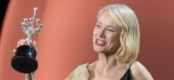
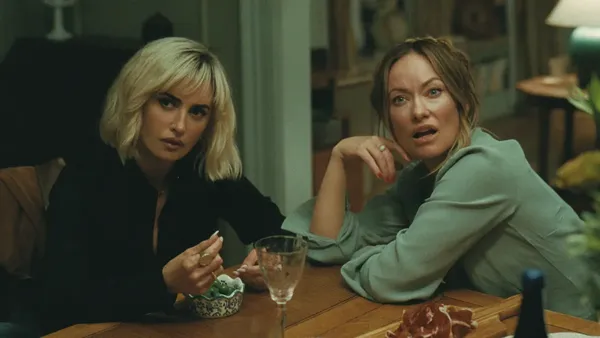
| Penélope Cruz and Olivia Wilde in The Invite. Wilde: 'It became about letting the camera language evolve with the audience's emotional experience of the characters' Photo: A24 |
Before reading Rashida Jones and Will McCormack's screenplay, Wilde sought out Cesc Gay's original Spanish film, The People Upstairs, to understand why the story had universal resonance.
"I thought, what story is so relevant across so many different cultures? There must be a very authentic core to it," she said. That deceptively simple premise immediately appealed to her. "It finally offered something simple enough to create the framework for the kind of production process I had dreamed of."
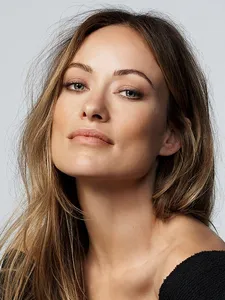 |
| Olivia Wilde: 'The whole experience has made me less cynical' Photo: Courtesy of Sundance Institute |
Inspired by filmmakers including Sidney Lumet and Mike Nichols, Wilde rehearsed extensively, encouraged improvisation and shot the film chronologically. "The script changed a huge amount from the time I read it to the time we shot it," she explained, before changing again during production "because of these extraordinary actors and all the specificity they brought to it".
That collaborative spirit extended to every aspect of production. Rather than treating preparation and spontaneity as opposites, Wilde discovered they strengthened one another.
"It was the first time I really understood that combination: preparation meets complete liberation," she said. Establishing a clear visual language beforehand meant she could direct instinctively, responding to performances as they unfolded rather than rigidly following a predetermined plan.
The film's apartment, where almost the entire story takes place, became central to that philosophy. Wilde rejected the screenplay's original open-plan layout because "we needed spaces to hide, spaces with a little privacy", allowing couples to split off and reveal different sides of themselves. Working closely with production designer Jade Healy and cinematographer Adam Newport-Berra, she built a space filled with mirrors, corridors and visual barriers.
"We embraced frames within frames – mirrors, glass, barriers that represented emotional boundaries," Wilde said. "The space is a character in the film," she added, noting that every corner of the custom-built apartment was designed to be explored through rehearsal and improvisation rather than simply photographed.
That commitment to craft also shaped one of the production's boldest decisions: shooting on 35mm film.
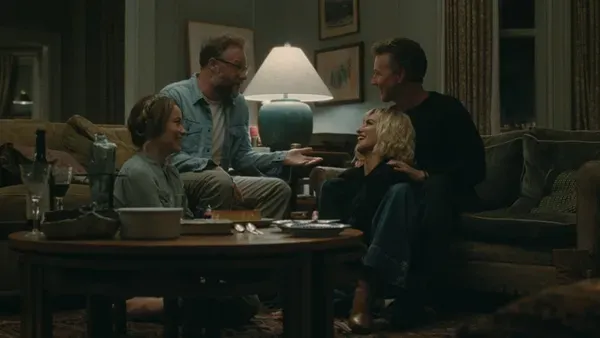 |
| Olivia Wilde on shooting on film: 'It let the actors depart from reality' Photo: A24 |
For Wilde, film stock offered much more than visual texture. It fundamentally changed the atmosphere on set.
"When the film rolled through the camera, you'd feel this spell," she said. "It let the actors depart from reality." The limitations of shooting on film, she argued, encouraged greater concentration rather than restricting spontaneity, creating an environment where improvisation carried even greater weight.
Although The Invite openly discusses sex, Wilde sees the film as being primarily about communication and personal responsibility within long-term relationships. Working with renowned relationship therapist Esther Perel proved particularly influential.
"We were trying to embrace the idea that a relationship could contain several relationships," Wilde explained. "Maybe every relationship is destined to end at some point, but you may start a new relationship with that same person."
The experience changed her own perspective. She said: "This film could – and this is a lofty goal – end up making more people less cynical about relationships, and maybe even repair some relationships that are on the brink. We&'ll see. But I love that people want to share the film with their partner, and the whole experience has made me less cynical."
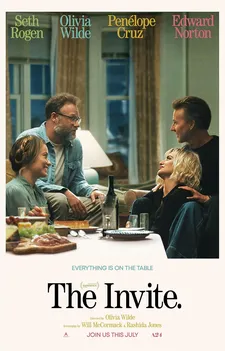 |
| The Invite poster |
"This movie is trying to urge people to ask themselves: what choices have I made? Am I satisfied with them?" she said. "You get one life – is this how you choose to live it?"
Looking back across Booksmart, Don't Worry Darling and now The Invite, Wilde recognised a recurring fascination she had only noticed in retrospect: characters reaching a point where they question themselvs.
She added: "I think about Wong Kar-wai talking about In The Mood for Love, and how you don't really know what your movie is until your actors tell you — they're the ones peeling their hearts off into the characters, and only then can you understand the relationship you're trying to portray. That's certainly been true of each of my films, and looking forward, I can already see it's the through line. It's funny to realise, in thinking about what comes next, that it's also about people reaching a moment of wondering whether the life they're living is the one they want to continue. So maybe that'll end up being my specialty."