 |
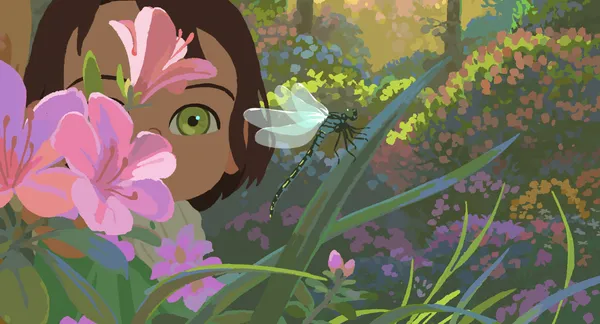
| Amélie embarks on a series of adventures and discoveries in 1960s Japan - based on the best-seller by Amélie Nothomb Photo: UniFrance |
In the event they need not have worried. Nothomb basically gave them carte-blanche to recreate her childhood years spent Japan in the Kobe region, alongside her best friend Nishio-San. The novel is part-autobiographical with Amélie (voiced by Loïse Charpentier), the youngest child of a Belgian diplomat living in Japan in the 1960s, embarking on a series of adventures and discoveries until, on her third birthday, a single event changes everything …
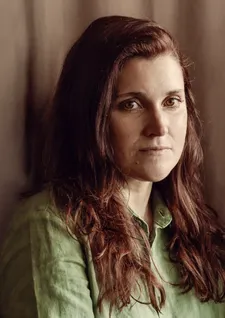 |
| Maïlys Vallade has been drawing and inventing stories since she was a child Photo: UniFrance |
Han concurs, suggesting that: “We wanted Amélie’s emotions to evolve with the seasons. If you remember, Amélie first ‘awakens’ in early spring, when her grandmother visits from Belgium and gives her a bar of white chocolate. This marks the peak of her happiness with Nishio-san (Victoria Grobois provides the voice). It is springtime: cherry blossom time. But things gradually deteriorate culminating on her third birthday, when her world falls apart.”
Vallade who talks in a torrent of words, recalls that she was always drawing and inventing stories for characters and puppets she built with a little help from her father. Her credits, in various animation roles, inlcude the features Adama, Ernestine And Celestine, Mark Osborne’s The Little Prince, Rémi Chayé’s Long Way North and Calamity but Little Amélie marks her fully-fledged first feature.
Han, who is much quieter and measured in his responses, gained experience on a Lucky Luke adventure Go West, Sylvain Chomet’s The Illusionist and Rémi Bezançon and Jean-Christophe Lie’s Zarafa as well as The Little Prince and Long Way North. In between times he devotes himself to commercials for Sun Creature Studio.
Han has Chinese heritage which helped with cultural sensibilities in Little Amélie. The film meditates on how the little girl's family is implicated in the country’s post-war background, all in the shadow of Hiroshima and the atomic bomb.
 |
| Liane-Cho Han, whose Chinese heritage helped with cultural sensibilities Photo: UniFrance |
The pair hope the film will appeal equally to adults and children. Vallade says: “Everyone has an opinion about what kids can understand but I believe children can understand a lot more than we think so we make no concessions. The writing process took a long time and initially the storyboard was rather rough whereas the emotions were very precise. The writing was really the most important aspect of the film but once we were in production it proceeded very fast. That was only because we knew each other so well as storyboarders and also we were working with people we had previously engaged.”
The film has been drumming up an awards season beat with an Oscar nomination for best animated film; best animated film and best children’s & family film by the EE BAFTA Film Awards, and it was a contender for best animated feature at the Golden Globes and European Film Awards. On the festival circuit, Little Amélie won the audience award at Annecy Festival, the grand jury prize at Animation Is Film; best feature at Manchester Animation Festival, and best animation from the Los Angeles Film Critics’ Association Awards.
Vallade and Han believe public perceptions about animation being “mainly for kids” is changing. “These are universal stories and because we grew up with Japanese animation we believe we can treat a lot more mature themes. We just need to discover the right angles,” concludes Vallade. Han nods energetically in agreement.
Richard Mowe interviewed Maïlys Vallade and Liane-Cho Han at the UniFrance Rendez-vous with French Cinema in Paris. Little Amélie is released in the UK and Ireland on 13 February.
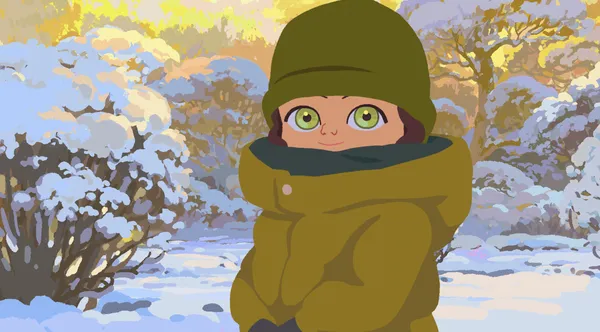 |
| Liane-Cho Han: 'We wanted Amélie’s emotions to evolve with the seasons' Photo: UniFrance |