 |
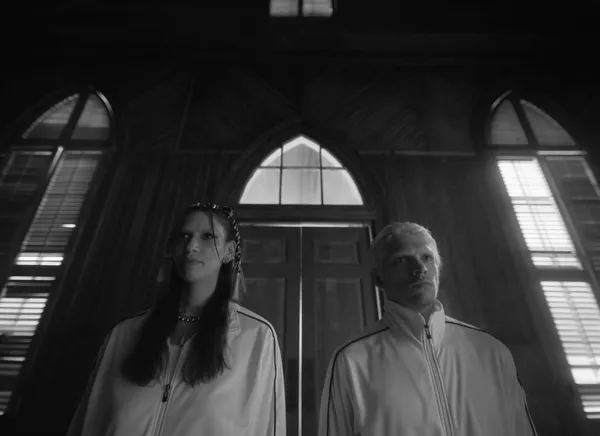
| Godhead Photo: Fantasia International Film Festival |
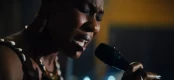
A young boy living with a priest who secludes him from the world, telling him it’s dangerous to go outside. A pair of twins who tell the priest that one of them is holy and the other must die. A troubled man struggling to find the right path. With its insular domestic spaces, incest and religion, I suggest to Mark H Rapaport, his new film, Godhead, which is shortly to screen at Fantasia, feels very much in line with his previous work. Likewise with Cornucopia, which he has coming up. Is this an ongoing theme which he expects to be sticking with?
“Yeah, it's fun,” he says, laughing. “I think that after making Godhead, I realised that I do have a bit of a theme to my work. Not just stylistically, I guess, with these two being black and white, but also these topics that just fascinate me. Existential things with gods, and also incest makes its way into that, I think, because of what you picked up on there, which is the insular nature of it all. Something about that really resonates with me. I love families or people interacting in tight spaces, and I find that it's like a little play and you can explore that world. I guess it’s exciting to me to have those sort of constraints and not have an open world.”
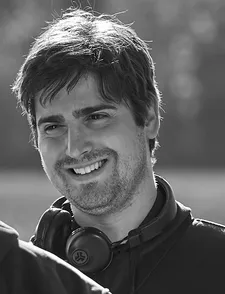 |
| Mark H Rapaport |
The last shot of this, where we just see a church from the outside, suggests to me a very small community in the middle of nowhere, a sort of extended smallness.
“Yeah, it's true. I guess that's the most I've ever broken out into the world of all of my films so far, which is a shot of a church from the outside. I think maybe in this. In this movie, even more so than Hippo, I am interested at least a little bit in letting the audience think about how their world connects to this. Whereas I almost didn't want you to leave Hippo's world.”
Right at the start, it feels as though we’re observing a very ordinary domestic situation in a lot of ways. And then that scene suddenly pivots on one line, and we realise that something is very wrong.
“Yeah, yeah. I like to take the audience's hand when possible and make you think it's normal, and maybe like an onion, you know, slowly peel away. I think I did that a lot actually in Andronicus, my short from Fantasia, my first thing I ever directed, so in a way I was calling back to that style of slow thriller. Giving the audience information as they need it and as the characters get it, like we get it live with them. I don't like top load anything because I like that filmmaking technique, I guess.”
So what was it that drew him to this particular story?
“I grew up in like a pretty religious community, as many people do, and I always struggled with those questions of like, you know, why are the rules..? The rules weren't always moral. There was not always a congruity between morality and dogma. And I find that, and found that, incredibly irritating, because like there's nothing worse in my heart than a hypocrite.
“I find things that are cruel or you know, just dogmatic for the sake of some God or whatever it may be, not the way that you should live your life. You know, I think there's a way to have rules for children and there's a way to have rules for society that keeps us in order but is also kind. And I do think that is something that's always stuck with me. So of course, growing up in a religious community, that's one way. But in a way the movie is about anyone in any situation that feels like they're being manipulated.
“That's why those two boys, one very young, are the ones who are the stand in for how I felt. We go on a journey with them and Father and Firstborn, but I would say very much the empathy of the film is with them. That's very intentional. Me looking at myself and finding myself in those two boys was a very powerful experience. So yeah, it kind of came from that. And then as I do, I built a world that's a bit of a mask and not a one to one with my life. Not because I don't think my life's interesting, it's just that's how I like to make movies. And maybe I am a little scared of making a one to one and so, like Hippo, deeply personal.”
The relationship between the younger boy and father is obviously a very problematic situation in lots of ways, but it does feel like there's love there as well. It feels like there are layers to that relationship and the boy doesn't seem particularly unhappy, even if he's ready to leave the situation should he find something else.
“That's a really good observation. I think the tricky thing about dogma and rules is that one can be complacent and even seemingly thriving within them. I would like to think the place they could end up – I acknowledge the ending is purposely slightly vague – at least the promise of where he could go is better than where he is. But yes, it's still a good point. And I think that's the trick with manipulation and propaganda. Whether it's religion, whether it's a family member, whether it's a boss, you can have your golden handcuff or your emotional blanket that's not really good, but it's working.
“I think what the boy is experiencing and what Secondborn is experiencing is working, like they can live the rest of their lives and be fine in their bizarre cages – but as a filmmaker, I want something better for them, the same way I want something better for everybody who's struggling with the manipulation of their innocence. It's not only children. I think, you know, that's why Secondborn is such a powerful character for me. You can have innocence as a young adult and people can be taking advantage of you in many ways, whether it's a telemarketer or a cult leader, I mean, a million ways. And yeah, I just start to see that as I grow up and, you know, I'm soon to become a father actually. God willing.”
He smiles with unaccustomed shyness and he face lights up a little. I give him my congratulations.
“Thank you,” he says. “In October. You know, I'm hyper aware of these things and the worlds that we build for our children, and not taking anyone for granted, letting everyone live their truth.”
With Secondborn in particular, I suggest, it feels like part of it is that he doesn't desire more because he doesn't know there is more. Is that something Mark also wanted to address – that withholding of information from people in such a way that they're unconsciously aware that there's a bigger world, but they don't think about it because they've never had it put to them that they could be part of it.
“Yeah, I think Second Born is like in some ways even more tragic than the young boy. He's gone much longer in life, but doesn't know really anything. That's definitely an element to it. If something's hidden from you a little, unless you're like geographically isolated, it's because someone is hiding it from you. Someone is not telling you the truth. You know, again, whether it's a parent, a teacher, a priest, a rabbi, an imam, whatever. It is like the whole spectrum of powerful people. It's not anything specific. Obviously I used a priest, but, you know, it could apply to any head of any religion or extremist. I think the message about innocence is the most important thing for me, but there's also definitely, I acknowledge, a commentary on religious extremism and how that can particularly isolate somebody, you know, in the case of twins.”
I put it to him that the narrative seems to move from a space in which it's all about control - and the people doing the controlling are also trapped in a way – to a space in which they're able to maybe imagine something bigger or a more open way of existing that's more positive for everybody.
“I definitely want people to be able to relate to it and take away their own journey through it,” he says. “I think what was always powerful to me as a kid was, I'd always love to watch movies that when I walk out of them, I feel like I've not learned something, but I've been inspired to feel something in some way, that's probably always been there, but it's like the movie sparked you to enter. I hope that's an experience people have. That's how I feel watching again, without giving spoilers. That's how I see the ending feeling for me, and feeling touched by their journey, so it'd be a huge success if other people feel that way too.
“I think my movies might be weird and horrific or bizarre or whatever, however people phrase them when they review them. Not necessarily you specifically, but you get the deep message. You always get it. I think what’s exciting to me is that it's not just a genre film. It's not just a horror movie. The same with Hippo. I wasn't just making a dark comedy there, and I'm not just making a Hitchcockian horror movie here. I'm trying to say something.
“I always want it to surprise people, and again, I’m just using the genre as a mask to get to that more beautiful place that life can offer. Because I'm just an inherent optimist and lover of life and humanity, and so that's always what I try to get to. It'll be up to the audience and reviewers if I succeed, obviously. But that's what drives me, is always to end up with a positive message in some way.”
We’re running out of time, so I ask him where he found the young boy. He's really good, and the innocence that he manages to put across is a powerful element in the film.
“Thank you,” he says. “I really appreciate that. He's incredible, Luke Speakman. We found him on open casting in the South. We shot in South Carolina, so we sent out a casting call for anyone who can work In South Carolina. So it's mostly Atlanta, Texas, Florida, people around there. And he submitted. And you know, it's funny: I've never auditioned like a child before like that. I actually think in my first review of the submissions, I just like put him aside. I wasn't giving him the attention that I should have.
“I made the character blind in the first draft, and so I think that threw off a lot of my auditions, and then I realised I didn't need that. We auditioned a few people and auditioned him and I realised anything that I didn't see in that first tape was because I was making him be blind, which is so unnatural to do. And then once we were just reading with him, his emotional maturity for his age and for the age he looks like – I think he was eleven or something – that just blew me away.
“His mom was also super sweet. Obviously she came to set. She's like, ‘Oh, we just wrapped this horror movie in like Atlanta.’ In my mind, I'm just thinking like, ‘Yeah, sounds like some fun indie horror movie. Good for you. Mine's probably going to be more fun.’ In my mind, with the filmmaker competitiveness, I'm like, ‘Well, this is going to be even bigger.’ Of course. I learned the movie he just played in Atlanta or wherever he was, was Weapons. And so then I'm thinking, ‘Holy shit, no wonder the kid is such a pro!’”