 |
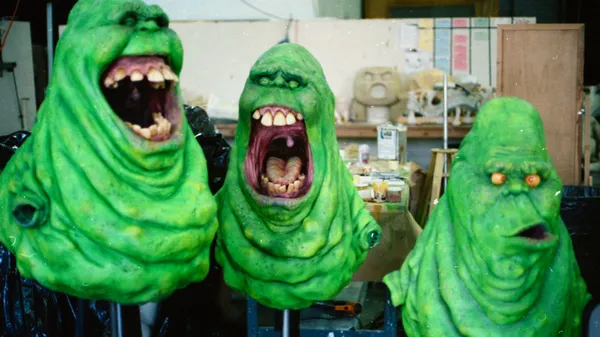
| Rubberhead: The Life & Monsters Of Steve Johnson Photo: Fantasia International Film Festival |
One of the great things about the Fantasia International Film Festival is its dedication to supporting the craft of filmmaking, and in a genre context, what’s more intriguing than special effects? Especially practical effects of the kind used before there was CI, let alone AI. In those days it took real creative genius to create the illusions that thrilled us on the big screen, and even today, with a bit of CGI polishing, they generally look better than anything created solely within a computer. One of the great wizards of the effects world was Steve Johnson, and Nick Taylor’s documentary, Rubberhead: The Life & Monsters Of Steve Johnson, celebrates his achievements. It also tells the story of a roller coaster personal journey lived at a pace that would put many of his monsters to shame.
Just ahead of the festival, I met Nick and asked him how, in light of the huge number of films that Steve worked on, he managed to whittle down the titles he wanted to cover and get the documentary to a workable length.
“That was one of the main challenges we had with approaching the edit and the narrative of the movie,” he acknowledges. “Because I'm a huge effects fan, I'm a huge horror fan, I'm a huge Steve fan. So, I mean, if it was up to me, this movie would have been six hours long. But luckily the editor who worked on this, Joe Krings, was very objective and he's not necessarily a horror fan. I mean, he saw American Werewolf In London and The Howling for the first time to prep for this movie. So the balance of me being a super fan and Joe being more cinematically objective was really helpful.
“The approach we took was we wanted every movie we covered to tell a part of Steve's overall story, whether it's part of his personal journey narrative, or if he learned something on that movie that later served his own professionalism or his own overall story. So every movie we covered had to actually tell its own story and be part of Steve's story. I mean, there were so many movies that we wanted to talk about with so many amazing effects, but they didn't necessarily move the story forward or they didn't meaningfully contribute to telling the story about how Steve became the artist that he was. So, yeah, that was definitely a challenge.”
Did Nick know what he wanted to at the outset, or did the documentary take shape along the way?
“It was definitely a combination of both with this story. Luckily, there were some mythical stories, some story archetypes present in Steve's life that are undeniable and that are almost too cliché. There's a hero's journey. He's a young kid in Nowheresville, Texas, who loves monster movies and he's kind of a misfit, and then he teaches himself how to make effects. And then, through a chance meeting with his Obi Wan Kenobi, that being Rick Baker, he learned the ways of the force. Rick takes him under his wing, and then he moves to Hollywood, and then he goes through a series of trials, one being working with James Cameron, another one being on the failed Predator movie.
“So he goes through the trials and then he finally ascends and becomes a hero. And then later on, it becomes a tale of Icarus, where he flies too close to the sun and comes crashing down. So that gave us a little bit of a narrative spine, and then were able to figure out what were the movies and stories that we wanted to cover around that. But we also wanted to tell the story about him as an artist. How did he become the artist that he became? What were the lessons he learned that contributed to him being so good at what he does? Also his sensibility, his artistic integrity, and all of that. So we had some mythical archetypes, but we also wanted to tell the story of the artist.”
The film really rattles along. Steve's life often seemed to be out of control, given how big things became before he had a chance to learn how to handle them. I ask Nick if he tried to match the pacing of the film to that.
“Absolutely. We wanted the movie to have a gonzo energy that mirrors Steve's own gonzo energy because he's kind of a Hunter S Thompson sort of character, where he's going 90 miles an hour at all times. So we did want the overall tone and trajectory and pacing of the movie to mirror his actual personality and the insanity of his life. Things were going so fast in so many different directions all the time, so we wanted the pacing to actually have that sort of rhythm to it, so that the audience could somatically feel what it was like to go through what he went through. I did one want them to feel what it was like to be him, as much as possible.”
Did the documentary team have access to all of the things that they wanted in terms of his creative life?
“There was a lot of archival material that Steve had saved over decades and decades, so we had access to all of that, which was amazing. There was a wonderful archivist who was working on it, Chris Dodson. Even before I jumped on the project, he was digitising and going through a lot of Steve's archives. So luckily, the archives were there, and they were an incredible asset. That was definitely one of the biggest assets of the movie: just decades worth of Steve on Ghostbusters, Steve on Big Trouble In Little China, Steve on Fright Night, Steve on Freaks, you know. It was all there, and the sketches, different phases and the effects that didn't happen. The movies that he got fired off.
“We saw what he was trying to do with Lost Boys, where originally the vampires were supposed to be sexy and Steve tried to make them scary and he got fired off of it because they just were sexy enough. So getting to see what the vampires and Lost Boys almost look like, it was so much cool stuff in the archives, which made it really difficult to edit because I'm a huge fan and not always that objective.”
There's a lot of archive about Steve’s own life as well. There's a lot of very personal stuff in there and stuff about his marriage to Linnea Quigley. How did Nick approach telling the story whilst affording him some privacy, and address the worst disasters without being too disrespectful?
“It was definitely a balance,” he says. “I don't think you can tell this just freewheeling drug-fuelled story without showing the consequences of it. You know, he's drinking or smoking in almost every shot of the movie, in every interview. We have to pay that off negatively. Crime doesn't pay. I guess I'm saying we just really had to be honest, and I didn't want to glamorise what he was doing. I mean, it's fun, but you know, the second half of the movie is Wolf Of Wall Street, basically, in the Eighties, and Wolf Of Wall street doesn't end well. So I mean, these things just naturally do happen, but we wanted to be very honest.
“One of the things that I did notice is that Steve's own personal demons and his sensibility got channelled into his work. I mean, his work had a level of insanity and electricity to it that I think was very much channelled by his own emotional state. His gonzo energy, his wonderful insanity and all of that, it all goes into the work. We just wanted to show the integration of his emotional state, and how that actually dictated his aesthetic and the creatures. Luckily Steve was very self effacing and very honest about things. It was great that he was able to open up and be vulnerable.”
Finally, with time running short, I ask Nick if there were any big surprises for him when he was making the film.
He thinks about it for a moment. “This wasn't that big of a surprise, but it was a wonderful thing to hear when we interviewed Bill Corso – Bill has done a lot of incredible work, including Deadpool – and he basically said that his time at Steve's studio had contributed to everything about him as an artist. In other words, he attributed his career to everything he learned about from Steve. I'm not terribly surprised about this because Steve is a genius, but to see that he inspired so many other people who then went on to do incredible things, to see the impact of him, is really wonderful.”