 |
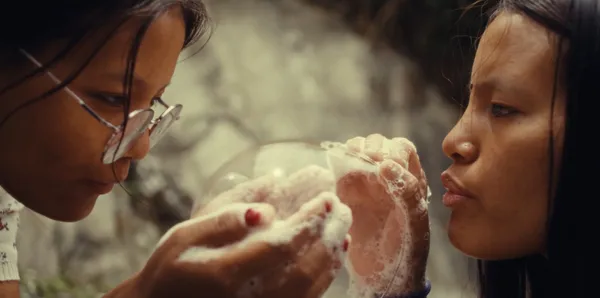
| Jamuna and Amuna in Goodbye Sisters. Alexander Murphy: 'It wasn't just me coming in and saying, “Oh, this is kind of interesting, cool, let’s shoot” – it was years in the making' |
French-Irish documentarian Alexander Murphy follows a pair of siblings on their long journey home from Kathmandu to the Nepalese village of Maikot in Goodbye Sisters, a trip that is loaded with emotion. Jamuna and Anmuna are going to help their family harvest a strange and highly valued fungus used in medicine but the elder sister, Jamuna, is also going to tell her parents that she is leaving the country in hopes of a better life in Japan. An intimate and visually rich film, it touches on socioeconomic issues facing Nepal while keeping its focus on the family. The film premiered at Tallinn Black Nights Film Festival and we caught up with Murphy shortly afterwards to talk about it.
How did you first come across the yarsagumba, was it because you were travelling in the region?
Yes, it was. I was travelling in that region and I knew Nepal a little bit and years ago this journalist and filmmaker, Éric Valli made a documentary about the yarsagumba and I thought it was incredible, but what fascinated me at the beginning was the images of all these tents up in the mountains. I felt the environment would be quite incredible to make a film in if I could find a character.
How did you first meet the sisters and at what point did you decide to make a film about them?
It all started with that fascination with the environment at the beginning – hundreds of tents up high in the mountains, people collecting this magic mushroom called yarsagumba – there was something very extraordinary about this. But I didn't want to make a film about harvesting a mushroom, it wasn't really my cup of tea, so I said to myself if I could find a character that had a story linked to yarsagumba profound enough maybe then there might be a film.
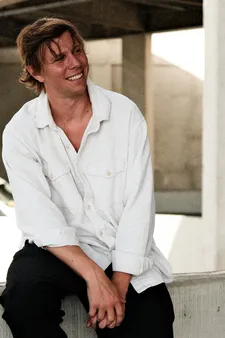 |
| Alexander Murphy |
So I went in search of that character in 2019 and I ended up in a village called Maikot and I met this young girl with round glasses and her name was Jamuna. When I met her there was immediately a connection, she spoke English, she was from Kathmandu and she was there visiting your parents. You need a connection and so I met her parents and the chief of the village and I stayed a couple of days with them.
I thought she was an extraordinary character in the sense that, first of all, she was only 16 years of age and she was already working double shifts in Kathmandu to pay rent, to help the other sister and to send money to her parents, at 16 living in this crazy city called Kathmandu.
Then I got to know a little bit more when I realised that she didn't really have a childhood. She was sent at seven years of age to Kathmandu to study. She ended up in his orphanage with her little sister Anmuna, who was five years old. It ended up being like a fake orphanage and it was really hard times for them and they were able to run away from it.
But from a very very young age, they were by themselves in the city, where there's not a lot of space for girls like her or opportunities. So I thought she was incredible, but she was still a little bit young. I came back to Paris and I started writing with a co-writer Jean-Baptiste Plard. It was a fictionalised piece inspired by Jamuna’s story but very quickly, I felt quite uncomfortable doing so. I said to myself, if I do something it will be a documentary and it will be about Jamuna, so let's wait it out and see when is the right moment.
In 2023, Jamuna called me and said: “Alex, I’m leaving.” I said: “What do you mean, you’re leaving?” She said: “I’m getting a flat, I’m going to Japan and I’m going to try to live this dream of me and I’m going to say goodbye for the last time to my parents, while harvesting the yarsagumba and maybe that can help me a little bit with the money.”
That was the time where I realised, well now there is the story that I was looking for. That's the topic of the film really, it’s this intimate glimpse into what immigration really means and all the consequences and the sacrifices behind it. Usually, we see what happens after but rarely the before and that's what I wanted to show in this film – understanding what it means to go without a return ticket. And saying goodbye to your family, your home, your loved ones without knowing if you’re going to see them again. That's what the film is about. The higher we got up in the mountains, the more intense and emotional it got. You could feel that tension.
There’s a lot of trust between you and the family. How did you build that and make it work on the shoot?
Well, you have to imagine that it wasn't just me coming in and saying, “Oh, this is kind of interesting, cool, let’s shoot” – it was years in the making. First of all, the first connection I had with the family was incredible. I spent maybe four or five days with them and they were so welcoming. We don't speak the same language and I think that's where you actually connect in the best way because it's just about the feeling, looking at each other observing and the smile. All of these little things that are this universal way of communicating.
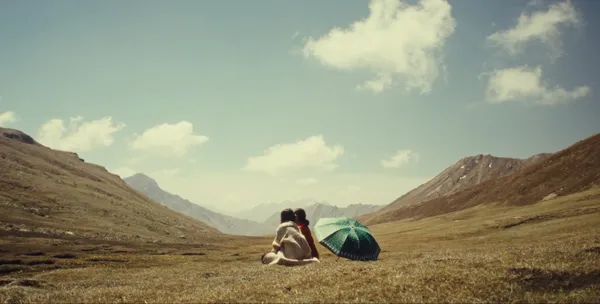 |
| Jamuna and Anmuna in the Himalayas. Alexander Murpy: 'I felt the environment would be quite incredible to make a film in if I could find a character' |
I think that's the most natural and pure way to communicate, and there was something there, very simple, but very real. And, for years then, I was in contact with Jamuna and I did the film as well because she wanted to make it. It was a back and forth conversation, it wasn’t just me doing my thing, because I wanted her to be involved as much as possible in the story. She was involved in the writing as well and I was like, “Okay, what topic should we talk about? What do you want out of the film?” We kept challenging each other.
I think it’s a universal topic but I didn’t want it to be said by me. I wanted it to be said by Jamuna and her sisters. They were really keen on making this film, for them it was important as well.
Before we shot the film, I was kind of sceptical about how the camera would behave in that environment? The position of the camera… I didn’t want it to exist but I wanted to be really close to them. On the first day, I realised the camera would never be an issue. They got used to it immediately and it was quite surprising, to be honest. Then when we went up and saw the parents with the camera, for them, it was just like an exotic kind of tool. They don't have the same relationship with the camera we do, they were extremely natural very quickly. We used a camera with a really wide lens as close as possible to them. So we’re with them but we have a lot of information about the environment, which is a character in the film as well.
Speaking of the environment, there must have been quite a lot of challenges shooting up in such a remote spot, especially once they go to do the harvest?
You have to imagine that the environment of the mountains is one of the main characters of the film as well and it's like working with a character that's completely bipolar. It can be extremely gentle and welcoming and warm and suddenly it can change in a second, and the cold hits you and that's the most difficult thing. I always thought the altitude would be the most difficult thing but you get used to it. But it gets so cold your whole body is shaking. Combine that with the altitude and making sure your brain is functioning and you’re getting what you need for the film, it’s quite exhausting.
Did you stay up there with them for quite a while when they were harvesting?
Yes, we spent a couple of days in Kathmandu and then the rest of the time we went to Maikot. It takes a long time, but not as much of it used to because back in 2019 was a two-day drive and then may be a five-day walk. Today, you can go from Maikot to Kathmandu in maybe 48 hours. But the roads aren’t really roads, they’re like paths and that’s extremely dangerous. So half way we walked. We spent a couple of days in the village then we went up to where they harvest the yarsagumba and we had two weeks or so there. It is, after a while, extremely difficult but we had a great team around us. I wanted us to be as small a team as possible because I didn’t want us to have an impact on what was going on, but at the same time it’s a question of how to bring up the generator, we have to have petrol, we have to eat, so we have to have a cook, we need a sherpa, we need people to carry the gear and equipment etc. So we ended up being a team of maybe 20. But the crew were part of the village, so it was okay, they would have been going up there anyway to harvest the yarsagumba. It didn’t affect the authenticity of the film.
The film gets quite emotional for the family, were you surprised that these intimate conversations happened when you were present?
I wasn’t surprised because we had this incredible relationship where we trusted each other. I always said to them: “I’ll do everything to be loyal to your story.” There was always a back and forth conversation so we trusted each other.
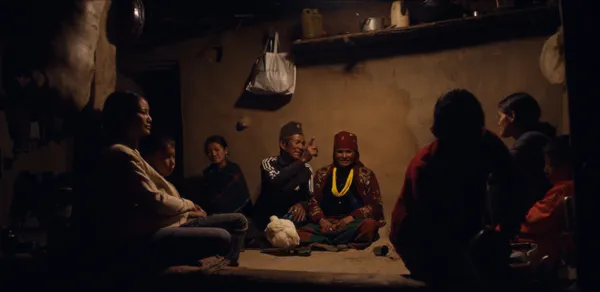 |
| Alexander Murphy: 'They don't have the same relationship with the camera we do, they were extremely natural very quickly' |
How is it going for them now?
Anmuna is now living by herself in Kathmandu. She’s doing well. She was working in a hotel but I think she wants to get back and study a little bit more now. She’s taken on Jamuna’s responsibilities so she’s growing up and I think it’s a good thing. Jamuna is in Japan now and it was a little bit difficult in the beginning but I feel like she’s got into a routine and she’s starting her studies soon. She’s living her dream and sometimes it’s a struggle but she’s on the path she really wanted to be on. I admire her for her courage and determination. Everybody’s healthy and it’s going quite well.
You avoid any direct political commentary, is that something that’s important to you, letting people tell their own story without you putting a layer on top of that?
For me, it’s extremely important not to bring that extra layer. I made this film because I wanted to tell Jamuna’s story, not my way of seeing her story. I always try to have those conversations so it’s not just me projecting something.
I see you already have two more films in the pipeline, what can you tell me about those?.
There’s A Road Less Travelled – that’s not the final title – it’s in Ireland about a family with 10 children who are living at the side of a road in a tiny little caravan without any wheels. They’re excluded from society and from the travelling community. It’s quite a beautiful story, it’s not about travellers, it’s about the family and what it really means to be living in that kind of environment. It’s about a family trying to get by in a world that doesn’t quite fit with their way of life. More than anything, it’s about love, fighting for each other and protecting the people you care about. I’ve been working for the family for five years and it’s nearly finished.
Born Free is a brand new project. I’ve made a couple of films in the townships of South Africa about different photographers and the impact of photography so this is kind of a continuation of that. It follows a photographer who is searching for a missing sibling in the township of Johannesburg. So his camera becomes a tool to help him uncover the truth. It’s going to be more of a thriller documentary and it’s quite exciting.