




 |
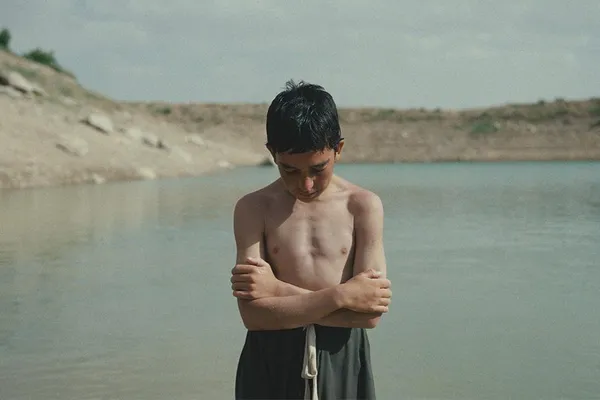
| Rafi in Kabul: Between Prayers. Aboozar Amini: 'When we portrait them, I don’t call it interviews because it’s beyond interviews' Photo: Silk Road Film Salon/Ali Agha Otkay Khan |
Kabul, Between Prayers is an intimate documentary that takes us into the lives of 23-year-old Samim, who is both a farmer and a part-time Taliban soldier, and his 14-year-old brother Rafi. The film by Dutch-Afghan director Aboozar Amini, who is currently based in the Netherlands, is the second in an anticipated trilogy of films about Afghanistan, which began with Kabul, City In The Wind.
His latest documentary opens a window into both Samim and Rafi’s world, which while retaining empathy for them, also shows the indoctrination at work in their lives along with offering a snapshot of the post-Taliban takeover landscape of Kabul.
Kabul, Between Prayers premiered at Venice Film Festival and we caught up with Amini shortly afterwards on Zoom to talk about the challenges of earning the trust of Samim and Rafi and of making the film remotely with the help of his cinematographer Ali Agha (also known as Oktay Khan).
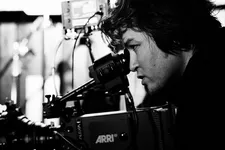 |
| Director Aboozar Amini: 'I always say working with your protagonist in a documentary film is like dancing. It’s like one move from you and then wait for the other move, wait for the reflection.' Photo: Silk Road Film Salon |
Amini says it is like Afghan carpets, which have been a tradition in the country for thousands of years. While traditional elements have included nature themes, including trees and birds, more recent designs have begun to be influenced by the last four or five decades of war. He says now motifs can include military aircraft, bombings and weapons.
He says: “Destruction infiltrated into the aesthetic of artists as well. And that poem by the Taliban was the same. It was full of a willingness to destroy rather than build. So I was very curious to dive into the mindset of somebody who has strong ideologies, but has also some part of him that is sensitive and sensible towards the world. With this idea, me and my cameraman were on a mission to find a poet who is also a Taliban soldier. We couldn’t find one because there are not many of them but, coincidentally, Samim came to us on the street and as he always chit-chats with people very openly, he did that to me to my cameraman as well. And that was the starting point. He was very open, really willing to be filmed.”
Nevertheless, the pair did have to gain his trust and Samim made them go through the Taliban authorities in order to get the right permissions to film him, which they achieved.
“When you ask permission to film a Taliban soldier,” says Amini, “it’s already 50% okay because, ‘You’re filming us’”
With that said, he adds: “There’s very little freedom that you’re given by the authorities to film. We were watched. So as long as the camera is on themselves, they are okay, but when we switch the camera towards the [ordinary] people, they get nervous. So we shoot them from on the bridge with a very long lens. They didn’t know how close we could get to the people, but for me those shots are so dear to me because those are the people that I belong to, the majority, the grey scale. I’m not looking at them from God’s angle, from off the bridge. It’s a melancholic shot, they are smiling and the wind suddenly hits them. It’s, from my point of view, suggesting that I’m one of you as a filmmaker.”
It took them about a year and a half to build the trust with Samim.
Amini adds: “I always say working with your protagonist in a documentary film is like dancing. It’s like one move from you and then wait for the other move, wait for the reflection. You lead it into what becomes ‘our space’. Right from the beginning Samim’s unconscious presence was very interesting for us, very human under the umbrella of the authority of being a soldier. It's in the hand of the director to get more out of his human side, or his Taliban soldier side and the balance in between. That is an organic relationship between the director and the protagonist.”
One of the trickiest elements of making the film was the fact that Amini couldn’t be on the ground in Afghanistan, which meant putting in a lot of work to gain the footage that he wanted from his cinematographer.
 |
| Samim, right, in Kabul: Between Prayers. Aboozar Amini: 'Right from the beginning Samim’s unconscious presence was very interesting for us, very human under the umbrella of the authority of being a soldier' Photo: Silk Road Film Salon/Ali Agha Otkay Khan |
Amini adds that work between him and his cameraman was intense and, occasionally, involved “tearing his hair out”, but that it was “about finding the harmony and the tune between us”. While acknowledging that was “very difficult” to begin with, he says: “Towards the end of the process, we got it, we created that match that we understood each other immediately. Even the camera movement. Every person has a different mechanical movement and to reach what you are looking for requires trial and error – ‘Don’t stop recording, keep recording’. I gave him [the cinematographer] the rule, ‘Don’t cut before the fifth minute. No matter what you’re filming, give yourself the first five minutes’. And that works. When you do it and do it and do it then it triggers another way of observation for you, you become more patient.”
One of the things that documentarians frequently talk about is the fact that the subjects of their films often don’t understand how long the film will take to shoot.
Amini recalls: “The first day we shot him I remember it made me laugh so much because in the evening he called us and said, ‘Is our film finished? Is it ready to watch?’.
In fact, the film took considerably longer than that. First conceived after in August 2021 after the collapse of President Ashraf Ghani’s government, they shot the film over the course of about four years. In order to allay Samim’s doubts, the director says he explained the art of documentary filmmaking to him in detail.
In addition to Samim, a large part of Kabul: Beyond Prayers also focuses on his younger brother Rafi, who still has the sweetness of childhood even as his mindset is being groomed towards Taliban thinking. So does that require a different sort of dance?
“Yes. Most of my work is with children including Kabul: City In The Wind and my short films. There is something with kids that I really appreciate and admire in cinema because their universe and their world is so free and pure and that can be a very rich reflection towards the world that we live in. But at the same time it's quite difficult. It's a different trust.
“I like gaming with them. Games are so interesting for them, they reflect their characters, their attitudes.”
One of the distinctive elements of Amini’s film is that Rafi speaks directly to the camera, responding to a series of questions he is being asked.
The director says: “When we portrait them, I don’t call it interviews because it’s beyond interviews. It’s a concept that I have developed, also in my previous film, I can say we are allowed to enter their universe and they trust us to follow what they dream and what they feel and they share their emotions. It’s not a question and answer because that’s too dry and mechanical.
“They trust us, they take their time and they think with us and share their fears and their emotions. Even those portraits require some sort of game. I did the order of questions in a way that could be vivid to them, not boring. If you ask four questions about religion, the kids will get bored, you know, so I add one in the middle about something really interesting to keep the spirit.”
Among the questions that surprise Rafi, for example, is being asked if he has a crush. Amini also says that you don’t get the result you want the first time you ask and that repeating the process is necessary. He explains: “Repeating it on different days. different periods of times. One in the morning and, maybe two days later, late in the afternoon, so he has a different vibe and I and I studied all his wives and his moods at different periods of time.
 |
| Rafi in Kabul: Between Prayers. Aboozar Amini: “The best moment, in my observation, was right when he woke up because he's still in his own dream world, he's so pure and he can be so open' Photo: Silk Road Film Salon/Ali Agha Otkay Khan |
One of the things that Rafi’s interviews indicate is the level of indoctrination of children, given that after he recites his “favourite” part of the Qur’an he then can’t explain what it means.
“It’s not only the kids,” says Amini, “I think, even the grown-ups don't really understand the meaning of it. They don't feel the need to even get the translation of those Arabic Qur’anic verbs. Even if they do get it, still, it's very difficult to apply it and understand what it means.
“I will not give too much comment on the interpretation of the Qur’an, that’s not my speciality, but the fact that many many people do not really understand it and they consider every word holy as it is, is interesting to me.”
The idea of wanting people to just do what they are told when they are told to do it without interrogating things too much is something that Amini says “applies to every oppressive regime be it Islamic, Christian, Jewish or even atheist”.
He adds: “We live in a world that oppressive authorities are ruling, even in the West. I hope this film could raise the question for audiences to ask themselves, ‘How far am I brainwashed?’, ‘How far do I blindly follow the policies that are created for me and given to me by the authorities?’, ‘To what degree do I have the freedom to protest?’, ‘What is my country’s contribution to the ongoing violence in the world?’ I really don’t see any differences between them and those radical politicians in our countries. They may wear suits and ties but if you open their brains it’s not much different than all those fundamentalists.”
Regarding the other encounters that happen in the film, Amini describes a woman in the back of a taxi who is questioned by the Taliban as “the most important character in this film”.
He adds: “She’s so mysterious. She has decided not to explain. She gets accused of being intoxicated, of being on drugs and alcohol, but who knows? She is tired of being surrounded by so many men and questioned. [She says] ‘Wherever I go, it’s my business. Who are you to stop me here and question me?’ That is, for me, a better representation of women’s voices in Afghanistan. It’s closer to reality than trying to formulate [an argument] intellectually about women’s rights. I show in this format that in the middle of the night, a woman alone in a taxi will get stopped and questioned and that is the reality.”
Samim hasn’t seen the film yet. Aminis says: “He called me the other day and said, ‘Send me the film, I want to watch it… or create a screening in Kabul’. I told him, ‘Is there any cinema open?’ So he must think about what I said because, on the one hand, he really wishes to see himself on the big screen in a cinema with other people, on the other hand, they closed all the cinemas.
“He is a constant paradox for me, as a representative of so many others. On the one hand, he’s so Afghan – what I mean by that is that Afghan people are, by nature, keen for life and having a moment of fun and hospitable and seeking unconsciously for peace and life. On the other hand he’s heavily influenced by the radical ideology that oppresses him – and the clash between these two things.”
Looking to the future, Amini is working on the third documentary in the trilogy called Kabul: Year Zero.
“We are quite on with filming,” he says. “That one does not only stay in Afghanistan, we expanded our territory in Iraq, Ukraine and, partly in the Netherlands. The entire film is from the perspective of children affected by war. They are the victims of war, which is not theirs and they're still trying to survive. And I hope next year that one will be finished.”
Amini has also been working on a fiction feature Tahmina for six years.
He explains: “It deals with mothers who lost their children during the war. The misery is endless when war happens and, for me as an artist, there’s always the question of how you want to narrate that story in a universal language. In a careful way, not to invite superpowers for another war in your region but stay closer with the people and closer to the human soul. This film has a little bit of a ‘fantastic’ style, inspired by Mary Shelley’s Frankenstein. It’s about a mother who lost her son and tries to resurrect him. Soon we will enter pre-production.”