 |
| Elisabeth Rasmussen and Jon Larsen. Rasmussen: 'I knew that I wanted to make a film about him and I called him, and here we are' Photo: Jan Braly Kihle |
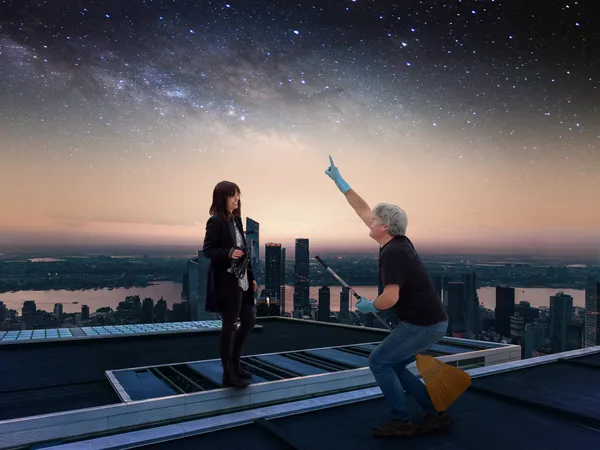
“I had just moved back from London to Tromso and then I heard a radio interview about a man finding stardust on roofs,” she said. “I’ve always felt a connection with the stars since I was a child. As you see in the movie, there’s a myth that life came from this reindeer that wandered down a ray of sun – I’d forgotten about that whole thing, I just had this longing – and then when I heard about this man finding stardust on the rooftops, I wanted right away to call him. I knew that I wanted to make a film about him and I called him, and here we are.”
The film is unusual in that it has a strong artistic side as well as delivering plenty of scientific information about how the micrometeorites are formed and end up on Earth in the first place. The decision to broaden wasn’t there at first, although Rasmussen had previously talked about her successful against-the-odds fight against cancer in her short film Phoenix – an experience she says that left her feeling she owes it to those who helped her fundraise for treatment “to be the best version of myself that I can be, without fear”. During the course of her treatment, she received a note from Larsen and Braly Kihle which has gone on to be a part of this film. .Recalling the evolution of the project, she adds: “From the beginning, other producers that I started with said, ‘Focus on the science, just on the science’. I thought it would be nice – a science documentary is nice – but I always wanted it to be character-driven but with him as the main character. I am not a mathematical person, it doesn’t come easy to me to understand science if it is explained in a technical way. But when Jon explained it, I understood. So I thought we need him to give to the audience what he’s giving to me – the enthusiasm and the natural connection.
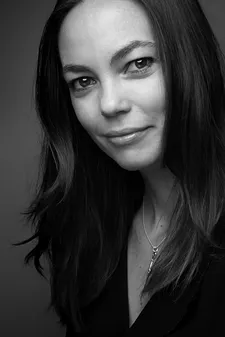 |
| Elisabeth Rasmussen: 'I’ve always felt a connection with the stars since I was a child' Photo: Lars Myhren Holand |
“Then after nine years of collecting material, we did this rough-cut lab dok.incubator and we did a session with Christine Le Goff, one of the most esteemed documentary creators in Europe and she also has a science background. So you sit and she asks questions to get to the core of who you are as a filmmaker and why you are making the film. It got really deep and she asked, ‘How did you continue when you were in New York?’ and I told her about the email from Jon and Jan. And she said, ‘We should make that journey part of the film’.
“I said, ‘Yes’. It is a long story and life and death and science and art, it’s all interconnected and that’s how it happened.”
Among the artistic elements of the film is detailed VFX work, showing everything from the evolution of life on Earth to a micrometeorite falling onto Larsen’s breakfast table. Rasmussen says that good visuals were crucial to helping people follow the science.
“That was very important to me,” she says. “I want everyone who sees the film to at least walk away with an understanding of what stardust is and that people are made of regenerated stardust and the macro and micro perspective. So I really wanted to create very visually stunning, interesting animations. The challenge is that, for example, with microscope photography, they are really so small, about 0.03mm, so how do you make something that small move and be scientifically correct?
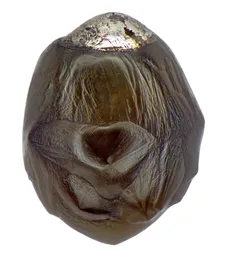 |
| A micrometeorite |
“So Colin Byrne at Little Shadow would make something and we would send it to the scientists. For example, when Matt Genge, at Imperial College, was explaining how clouds rotate, the scientists we sent it to were, like, ‘Oh great but it’s rotating in the wrong direction, it’s counter-clockwise’. We just wanted everything to be scientifically correct but entertaining and visually interesting. We did spend a lot of time getting it right.”
Now, she hopes to be able to tour the film around schools, prisons and hospitals and to make it as accessible as possible.
She says: “In Norway we have this programme called the Cultural Schoolbag and I have this dream that we will go on tour in Norway to schools in the districts and Jon will teach everyone how to look for stardust and then they can see the film and get inspiration and learn as part of their science education. We speak to some of the world’s top scientists and I think one of the things I learned is that you should never underestimate the audience. If they have it explained properly, they do get it. With the way Jon and the other scientists explain things in the film, I have high hopes more people can get interested not just in citizen science but also to go for a science degree. We need more people to go and study science.”
Looking to the future, she isn’t quite done with stardust yet.
“I have at least two other films up my sleeve. Some are in development but my dream is also to do a series with Jon – we had so much footage. So to have a science series but with him as a guide, an amicable approach.”
- Read what Jon Larsen told us about stardust hunting