




 |
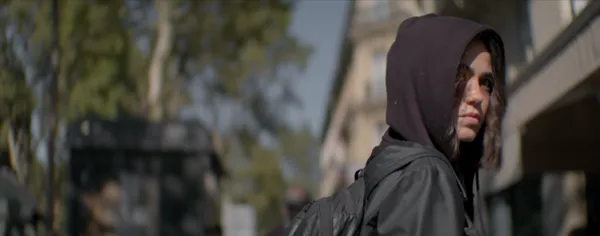
| Influencers Photo: Fantasia International Film Festival |
Director and producer Kurtis David Harder's Influencers, the sequel to 2022's Influencer, arrives with more buzz than its predecessor, which was shunned by festivals. The story of Influencer and its sequel is one of resilience — refusing to become lost in a mass of content, Influencer instead became a sleeper hit, paving the way for Influencers.
The enigmatic and deadly femme fatale CW (Cassandra Naud) is back, but this time she has seemingly settled down into a committed relationship with Diane (Lisa Delamar). When the pair take a romantic getaway to celebrate their one-year anniversary, CW's deadly instincts are triggered when they cross paths with influencer Charlotte (Georgina Campbell), shattering CW's new life.
Harder's directorial credits include his feature début Cody Fitz, the sci-fi thriller In Control and the horror Spiral. He has also produced Michael Peterson's thriller Knuckleball, Colin Minihan's psychological horror What Keeps You Alive and Rob Grant's horror comedy Harpoon, among others.
Ahead of Influencers closing the 2025 edition of London Frightfest, Harder and I sat down in a quiet corner of Leicester Square to discuss his decision to tussle with the movie sequel. Harder is his usual calm self, and while he will describe making films as a "nightmare" where challenges and problems pile up, it's hard to imagine anything being able to threaten the chilled and confident but affable vibe he carries himself with.
During our conversation, Harder discussed the importance of having a reason to make the sequel, challenging the nature of first impressions, who is influencing who in today's world, and Influencers' ambitious origins.
Paul Risker: How would you describe your relationship to cinema?
Kurtis David Harder: Cinema has been ingrained in me since before I can remember. I think I watched Jurassic Park as a toddler, and something just connected. I don't remember choosing to want to make movies; I just always have, and I knew that it was part of me.
In middle school and high school, I'd go to the local DVD shop every lunchtime and buy a movie, and I also worked at Blockbuster. So, it feels like it found me more than I found it.
PR: Everyone's journey is different, but regardless of how it unfolds, it is a lifelong and significant one.
KDH: Well, it's just a way of exploring life and connections. I always loved telling stories, which was probably me processing and trying to figure things out. One way you can do that is through a character's eyes. And cinema being a visual narrative, I was always writing stories as a kid, imagining them becoming movies one day. So, to me, it's the marrying of all the different arts together that's so attractive.
PR: Making a sequel comes with inherent challenges. What was the thought process behind returning to the world of Influencer and CW?
KDH: The first one was this exploration of our trust in foreign places. It was about the idea that we travel all the way around the world and if you find something familiar, then you're immediately going to trust it, even though you probably wouldn't trust the same thing back home.
Coming to the second one, we wanted to expand the world. With a sequel, you don't want to retread the same old idea. So, there are a lot of new things that we're exploring about relationships as well as another side of CW, and new facets of being online.
When we made the first movie, ChatGPT hadn't come out. It was obviously in development, and by the time Influencer was released, a lot of the technology was pretty old. So, this time around, it was looking around the corner to think about what were some of the interesting things that could happen? And for us, it's about exploring the manosphere, red pill culture or some of the new uses of AI in terms of building personas.
And from a story perspective, seeing the different ways that CW uses violence, it was fun to expand on what she did with the identity product. We had a slightly bigger canvas for this one, so it was fun to take all the things that we wanted to do in the first film that we were now able to actually accomplish and let CW do her thing in some of the film's set pieces. It allowed us to come back and turn everything up to eleven [laughs].
PR: It's interesting to think about how technology is shaping these two films, by appropriating science fiction elements for a traditionally non-science-fiction story. This is a reflection of how technology is taking a more dominant hold over our culture.
KDH: You're right, and it definitely crafts culture, which crafts film. So, you have this feedback loop of tech becoming ubiquitous. But there are a lot of filmmakers that refuse to make movies with phones. But I like to dive into what's going on right now. For me, it's more of a human approach to how that affects the emotional core when you're looking at how CW uses technology to hijack these people, but then, there's also technology for her personal use.
PR: Returning to the earlier point of needing a reason to do a sequel, what was Cassandra's initial reaction when you approached her?
KDH: It was exciting for both of us to dig a little deeper. In the first movie, we saw how she operates, but in this one we wanted to look into what a real relationship looks like for her, where she comes from, and what are some of the things that make her tick. It was fun to expand on what we'd already set up and teased a little in the first one.
PR: CW is an interesting character because she flirts with having a normal life, and while we might want her to find that peace, we all know it's impossible. Her fate is tangled with the structure of both films, which are full of manipulation, twists and turns that resemble a spider's web.
KDH: She can't help herself and that was fun. She's trying hard to hold this life together, but there's just that itch inside of her.
The first movie hinged on a lot of those character switches. Modern audiences are so smart, and they've seen everything, and so, to genuinely surprise an audience is a very difficult task. In the first first film, we were really playing with structure and these personality switches. And in this one, we wanted to expand on that idea, and how can we take that to the next level while still having fun with it — how can we surprise you again? We're going into this story of her living in France, but obviously, there's more going on than meets the eye.
PR: Cinema offers us a safe space to explore our shadow side, but in so doing, we are forced to reckon with the film's violent and toxic characters.
KDH: An important thing in both films is that first impression and the way we judge people, which is fun to explore on paper. A lot of the characters in these movies are reprehensible. But I love taking that as a starting point to then pull the strings back and dive into the story and ask the audience, "Did you judge too soon? Is there more to these characters than their toxic first impressions suggest?"
CW is fulfilling the fantasies of a lot of people who are frustrated with these different kinds of movements online, where it's like: Oh, just take them out.
The first movie was a test of how far we could push it with the audience being on board with her, because she's continually doing worse and worse things. We wanted to do that in a more extreme way in this one.
But it's funny because the cast are such sweethearts in real life — Cassandra is the opposite of her character. And so, it's fun diving into a character who's a little tweaked and psycho but is also doing stuff that you can get behind if you loosen up.
PR: CW is a violent character, but is her relationship to or reliance on violence more layered and nuanced than we might think?
KDH: Well, we get to see CW a little bit more unleashed in this new one. In both films, you see that she always tries to solve the problem without killing and is able to manipulate and force characters into their own demise. And so, physical violence is always a last resort. But in this one, we definitely let her loose.
PR: An important theme in Influencers is the exploration of external validation and how no amount of attention can ever be enough. Jacob and his girlfriend are chasing new viral heights for his stream to satisfy their insatiable hunger for attention and influence.
KDH: I spoke a lot with Johnathan Whitesell, who plays Jacob, about audience capture and the idea that these voices online end up being influenced by their audience, and that feedback loop of positive affirmation. How dangerous can that become when you're pushing a narrative or your perspective that gets warped by the fact that the audience is either reacting positively or negatively to what you're saying? So, these influencers on both sides of the political divide, do they truly believe what they're saying, or is it their audience that are actually creating them? Are they the influence or are they a product of the culture? There are some interesting dynamics at play.
PR: Talking to producers, they describe how difficult the job is, but you add on top of that the challenges that come with directing.
KDH: Logistically, these movies are an absolute nightmare because you're shooting all the way around the world. The first movie, we were in Thailand for a couple of months, but this one, because we were in so many places, the shoot length ended up being closer to five months. It's one of the longest independent shoots that I've done, and just because of the nature of the fact that you're traveling, and you have to scout these locations and find all these different places, we were literally all around the globe. So, I think I found a lot of people that were dumb enough to go on the journey with me.
For the first movie, it was not only choosing the cast and crew who were the best on the job, but also people that were going to be up for it, because it's an intense adventure. It would seem easy to shoot on a beach, but it's actually extremely difficult.
I definitely wrote the second one without thinking about what it would actually take to pull it off. And so, I sent it to the guys, and they were like, "Oh, we got to do this."
PR: Watching your films, your growth as a filmmaker in the way you craft the film and tell the story shows. How do you feel about your own maturation as a filmmaker?
KDH: There are a lot of filmmakers that wait to make their first feature until much later in life, and with me, you can see the bumps and warts and all from my very first movie when I was a teenager to now. On every film you learn so much. Ultimately, it's just character and story and every film gets a little bit clearer — you learn so many lessons going through hell.
PR: Is part of that process learning to give up control and compromise where necessary?
KDH: You're just trying to tell a story with the limitations you have. And limitations are often helpful. We shot Influencer with such a small crew. We only had 11 people with us in Thailand, and I didn't want to change that even though we had more resources on this one. Instead, we still kept that ethos and shot it with a tiny crew over a long period of time.
PR: Filmmakers tend to be dramatic when discussing the filmmaking process, and will use metaphors of war, trauma and childbirth. Do you agree with these comparisons?
KDH: Making films is a nightmare, but it's a wonderful nightmare. I can't imagine myself doing anything else, but it's also extremely difficult. You're always up against insane challenges and everything's going wrong all the time, and you just have to figure a way to get off the battlefield. So, you need that core team to all be on the same page because you're fighting the battle together; you're not fighting each other.
PR: Did producing other people's films teach you a lot?
KDH: Coming to producing and directing, I have done almost every single job on a film set, and so, I'm able to understand what every role is and what they go through. As a producer, you're getting the director what they want and finding creative solutions. When I'm then in the director's seat, and I'm talking to my producers, I've been in their shoes, and so, I'm able to have that empathy.
Directing has always been the reason I got into film. Producing just allowed me to work with a lot of filmmakers that I admire and help them to fulfil their vision of making movies that I might not make, but I'd want to watch. So, being a part of that has been cool, but it has ultimately been a slow shift away from producing into directing, which is the ultimate goal.
Influencers screened at the 2025 Fantasia International Film Festival and was selected as the closing night film of London FrightFest.