 |
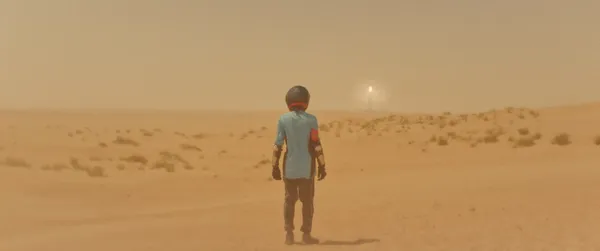
| Jacqueline Zünd on delivery driver Francis: H'e stands for everybody. His story is just like this one of one of a lot of stories, his situation is like one of thousands' Photo: Taskovski Films |
Zünd recalls: “I was just at the beginning of my process of writing the screenplay for Don't Let The Sun and I realised that there are so many interesting aspects of the subject of heat that didn't find a place in the fiction. I felt like that was an invitation to make a documentary at the same time because I still have the beating heart of a documentary filmmaker in me. It was really nice during the working process as one influenced and inspired the other.”
The two films fit like hand in glove since both come at the idea of societal dystopia from slightly different angles. Don’t Let The Sun is set in a near future where the climate has become so overheated that humanity has been forced to become nocturnal, conducting all activities during the night hours. The story revolves around Jonah (Levan Gelbakhiani), who is employed to pretend to be other people’s loved ones for a variety of reasons. He is, in a way, a human mirage, and mirages are also key to Heat, with Zünd using their hazy heat as a way of immersing us from the start in ideas around our slowly boiling planet. We see, in Heat, how the rich end of society in the Gulf states spends millions on creating oases of cold, while those at the other end of the economic spectrum struggle with cash and the climate.
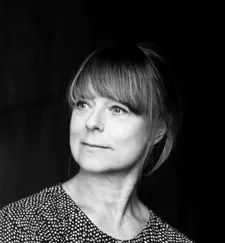 |
| Jacqueline Zünd: 'I really wanted to focus on how society divides into two parts from a certain point of heat' Photo: Taskovski Films |
She says the mirage was a metaphor, with human stories popping up and disappearing. She adds: “For me, it was very important to capture it on a sensory level, physically.”
For Heat, Zünd took inspiration from American video artist Bill Viola, who worked with ideas of mirage. She adds: “I really wanted to film a real mirage, which was difficult to find. It's a real one in the film but a lot of people think, ‘Wow, this is a cool effect’ but, no, there is no video effect. It's a real mirage.”
Heat follows a number of people who are up against the climate – Kuwaiti meteorologist Essa Ramadan; Kenyan migrant worker Sophy Njeri Jagnath, who paradoxically has to wear winter gear to work in an ice bar; Ugandan Francis Nansera, who spends his days in the sweltering heat as a delivery driver; and UAE estate agent Carina Bouali, who hefts slabs of ice into wasteland at night to help the area’s stray cats.
While both films are concerned with heat, there’s also a shared thread concerning corrosive capitalism, particularly in Heat, where we see huge malls filled with glass, water features and running tracks, while those like Francis risk their lives in the heat. Zünd says the documentary gave her the opportunity to explore that idea more.
“I focused more on the emotional level for the fiction, but for the documentary, it was super clear for me that I had to tell this tale of social disparities. It's a kind of capitalistic nightmare. I really wanted to focus on how society divides into two parts from a certain point of heat. You have the outside and the inside, you have the rich and the poor, the ones who can keep away from heat or they flee also – flying away for three months and coming back when the extreme heat is over.
“It's like a magnifying glass. It reminded me a lot of the times of Covid that also was dividing society into rich and poor. I started writing both films exactly at the moment of Covid, so it was striking to see a lot of stuff going on outside my window while I was writing something completely different, but quite similar.”
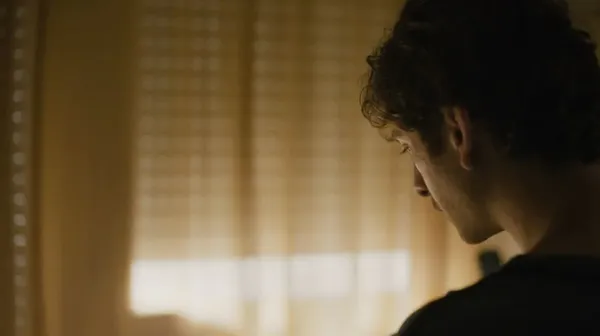 |
| Levan Gelbakhiani as Jonah in Don't Let The Sun. Jacqueline Zünd on the relationship between that and Heat: 'It was quite striking to see that in one I was kind of inventing a small dystopia and in the other one, I was finding the dystopian details in reality' Photo: Lomotion |
Ice, in fact, proved to be a key object in making the film.
Zünd explains: “We were very lucky because at the beginning, for my research, I went together with my DoP Nikolai von Graevenitz to this ice factory because I had the idea that this element, which is so important in this hot region, could be interesting. So, we hung around in this ice factory for a while and talked to the very nice manager. Ice is interesting because they need ice to build the concrete – there’s a lot of places where ice is needed.”
It was through talking to the manager that the pair found out about Carina, who collects her ice there, and Sophy, whose company uses the ice for her workplace.
The trickiest person to find for the documentary was the delivery driver, the director says it “took her years” to find one who would talk to her. Understandably, after you’ve seen the conditions the drivers are up against in the film, the companies she contacted in the region either didn’t reply at all or “ghosted” her at a certain point. There was also the need to protect the identity of those involved. In the end, while we hear Francis’ testimony about the brutal working conditions, we never see the face of the driver who is captured working in them – actually a different person, we learn late in the film, as Francis returned to his homeland. This mystery employee becomes a sort of everyman, representing the thousands of workers who find themselves in the same predicament.
“I was very lucky to find Francis and he could think about the time he spent there very intensely.”
Speaking about the person we see in the film, she adds: “With his helmet, he stands for everybody. His story is just like this one of one of a lot of stories, his situation is like one of thousands. These guys are really working in hard circumstances because it’s not only the temperature outside. It's also being in the traffic with all the other cars, with their air-conditioning heating things up even more. It’s inhuman actually. It was difficult for me to tell the story so that it stayed within the subject [of heat] because it’s also a very tough human rights story.
“It’s a kind of modern slavery. sometimes they have to give away their passport to the employer, who then has a lot of power over them – like they can‘t just travel back home or change the job. some of them are even building debts while working."
The film could scarcely be more timely given the current volatility in the region caused by the US conflict with Iran. It makes Essa’s reflection on the human catastrophe that could happen if there was a mass power failure feel all the more acute. Zünd says that his comment was in and out of the film as she worked with her editor Gion-Reto Killias just as the conflict was beginning.
“At the end we put it in again because of the war, because it makes these countries super-vulnerable regarding heat because the way they construct and build their cities means they're relying on electricity otherwise they’ll just cook like in an oven if they don't have electricity any more.
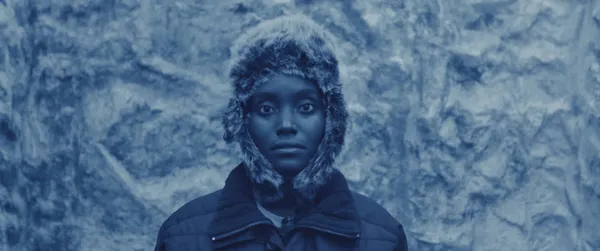 |
| Sophy in Heat. Jacqueline Zünd: 'Now she's back in Kenya, she went back to her child' Photo: Taskovski Films |
When it comes to the differences between working in fiction or documentary, Zünd says she had held off tackling fiction before because “I was always a bit afraid of actors”.
Once she started, however, she found it was an enjoyable process, not least because there was less responsibility to them personally, whereas with a documentary she notes you feel responsibility towards those involved. “You have to protect them,” she adds. “You have to take care of them, even if the film is finished. It's like a family always growing and growing and growing, which also puts kind of a pressure on you because, of course, I'm still in contact with Sophy and others.
“You just can't end your work when the film is finished. I feel responsible because they gave me their stories, so I give back my gratitude just by being there as a friend, also sometimes to help them. With the actors, I mean, I'm still in contact with them too but I'm not responsible for their real lives.”
One film seems to still be leading to another for Zünd, who is keen to do more fiction. “I’m interested in maybe telling a fictional story about a life like Sophy’s life. Now she's back in Kenya, she went back to her child. I pushed her quite a lot. It's hard to go back but at least she's with her kid so I’m happy I could change something in her mind. I don’t know if I’ll follow this idea [for a fiction film] but it inspired me to tell a story of a young woman fighting for survival with a kid. There are a lot of them in Africa.”
Zünd says she’s also interested in making a hybrid film. “It’s funny,” she says, “When I make documentaries people often say it looks like fiction and then I did my first fiction and a lot of critics said it feels like a documentary, so that amused me. But I think it’s good, this line between these two skills. I’m really attracted by the border and would love to explore that more.”
For more information about Heat, visit Taskovski Films