




Producer Jeremy Thomas
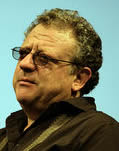
The first thing one notices about Jeremy Thomas is his tremendous sense of ease and confidence. Amid the frantic surroundings of the festival, he is a little island of calm - he's been doing this sort of thing for a long time. He also took his time over developing Fast Food Nation, based on Eric Schlosser's best-selling examination of the fast food industry.
"I read the book; didn't really think of it as a film at first," Thomas admits. "But then Malcolm McLaren, whom I was involved with on The Great Rock n' Roll Swindle, many years ago, said 'Wow, that would make a wonderful dramatic film'... Eric had been approached by Michael Moore and various people to make a film about the book, but we wanted to make something as naive as this, as naively political." This he explains, is why he chose to develop his film as fiction, following the interrelated experiences of a number of different people caught up in the industry. Executives struggle to determine what's happening within their own organisation; disaffected youths protest at the maltreatment of animals; and illegal immigrants are forced to work in dangerous, disgusting factories just to scrape a living. These are all familiar issues in the US, but does he think the film will have global appeal?
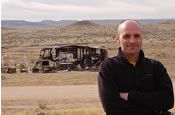 |
| Fast Food Nation author Eric Schlosser on the set of the film. |
So, did he face much opposition from the fast food industry during the making of the film?
"We were pariahs," he said. "The film was cobbled together in bits and pieces and shot underhand... They were so bruised by McLibel and Super Size Me that there was a campaign against us even when we were shooting the movie, but when the film came out they were quite clever." He was disappointed, he explains, that they didn't help to publicise it by kicking up a fuss in public. "We were hoping for a big debate."
Nevertheless, he and his team had to tread cautiously around legal issues. "Some names have been digitally erased from the movie; our lawyers advised us that the names should be changed to protect the guilty," he acknowledges. And there were also issues when it came to distribution. "Multiplexes have got fast food outlets attached to them, so there was a sort of conflict there, a conflict of interests."
So what were his ambitions for the film? Does he think that it will make a difference? It's a small contribution, he says, like that made by the young people in the story who are trying to take action, but every small contribution is important.
"We wanted to make this political teen movie... Their politics is simple, their ideas are quite simple, but their hearts are in the right place and there is this hope that they will go on to do bigger things."
So has it changed his own eating habits?
"I'm a carnivore," he says. "I didn't intend this film to be against meat. But I'm quite careful about the meat that I eat because I want to know where it comes from. I don't like to eat processed food."