|
| Karla as a little girl with her dad: 'Determining what was in the film was a very careful process. I was constantly thinking of my siblings and my other family members and my kids, and what they would think of the film in 10 years' Photo: Courtesy of Greene Fort Productions |
The Gas Station attendant, which premiered at last year’s Sheffield DocFest is now opening in US cinemas on June 12. We caught up with Murthy to talk about making the film and how her relationship with it has changed during the year she has spent on the road taking it to a wide range of international audiences.
 |
| Karla Murthy: 'I just have been blown away by just how many people have been able to find themselves in this film that felt so specific to me' Photo: Karla Murthy |
Karla Murthy: I'm sure that's true. You kind of just mimic what your parents do to some respect. So yes, maybe because we always had a camera around, it was something that didn't seem like a foreign object. But also I think the role I had in my family has always been to be the person documenting what's happening around me too.
It’s an incredibly personal project. How hard was it to choose what you want to use when you’re this close to the material and when you have such a lot of material, including an archive from your own childhood and the cassette tape conversations you had recorded?
KM: It was a lot and in the beginning, I actually did try to work with an editor. But it was so fragmented and it really felt like someone was, you know, rifling through my personal things. Because I wanted to protect what was going to be in the film and what wasn't, it was just a really hard experience to have all of this stuff just out for us all to discuss – like pulling things out from the back of the drawer. That was a hard process for me, although I think it was also very valuable. I think it's made me a better filmmaker moving forward, when I tell someone else's story. I know what it feels like to have your life shoved into a three-act structure.
For me, determining what was in the film was a very careful process. I was constantly thinking of my siblings and my other family members and my kids, and what they would think of the film in 10 years, and there's a lot that's not in the film.
People see films and they tend to think, ‘Oh, this is the definitive story of someone's life’, even though we're made up of infinite conflicting truths. That really weighed on me in this filmmaking process and to make it feel like it was capturing one moment in time about how I was feeling about my dad's life, like a journal entry, I meant to have it be this very fluid kind of feeling so that I wouldn't feel so stuck in this factual type of framework.
It must have cost quite a lot of emotional energy as well.
KM: Yes, it was exhausting to be in that state for so long. Editing so much of it by myself too and just being in that kind of headspace. I actually got a therapist just for making this film and she happened to work in documentary film in a prior life so it was perfect. She understood the ebbs and flows of what making a film does to your life – all the different hats that you have to wear. It was just so helpful to be able to have her to kind of listen and just to bounce ideas off.
As you're moving from space to space, as editor, director, then trying to get your film out into the world. It can be really challenging and even just how I communicated with my family. She was so helpful with that process.
Did you feel as though your relationship to this material was evolving a bit even as you were wrangling it.
KM: It was very much a discovery process for me. I know people say this but it really was made in the edit room just because most of the material that I had was archival. It was a way for me to really understand my dad in a new way. I was reading back your review and how you called out the line, ‘It is a time travelling gift to see your parents in the places that made them’, and that's what this film really was for me. It was a way to understand my parents and, in particular, my dad in this new way by looking back through this footage and understanding and kind of coming to peace with why he was the way he was, which I didn’t really understand growing up and was often a source of frustration for me – him going from job to job for instance. But then in the making of the film, and really trying to imagine and recreate the life he had in India, living as a kid on the streets, I understood, oh that running was a source of survival. It started to make sense.
It's interesting that you talk about the running because I was thinking how appropriate that that actually is as an image and I wondered how you settled on that dream sequence footage because it’s a crucial element?
KM: The running footage actually began when I was first conceptualising the film. I had made these collages. This is not in the film, but my dad used to tell me, ‘If you want to understand what my life was like in India, go and watch Salaam Bombay! because that also is about a boy who's living on the streets, who was around the same age. I think that child was 11 years old and my dad was ten. At the very end of that film, he's running through the streets – I think it's in Calcutta – and it's this beautiful shot of him running and he takes off his shirt. I love that shot. So, I used to use that shot in this collage of my dad running.
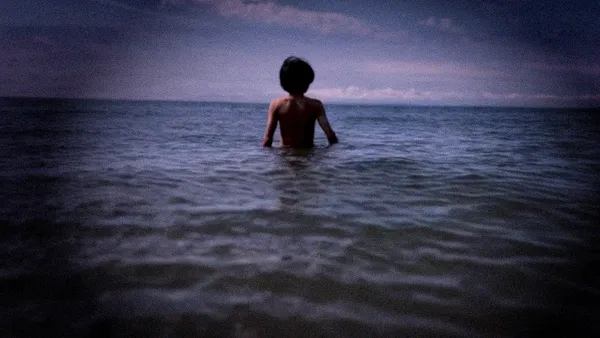 |
| Karla Murthy on the style of The Gas Station Attendant: 'I meant to have it be this very fluid kind of feeling so that I wouldn't feel so stuck in this factual type of framework' Photo: Courtesy of Greene Fort Productions |
I was struck by the fact that it’s a very personal story but it’s also a migration story, something that is more universal because many people have parents who have migrated one way or another, across countries even if not across continents. How important was it for you to bring that universal element into it so that it wasn’t simply a personal document?.
KM: In the beginning, I was worried about that. My story feels so specific – I mean, how many Filipino Indians do you know that grew up in Texas? But as I was making it people kept saying – and it's something that people say about personal films – the more specific you get, the more universal it becomes, which I didn't really believe until the end. But going to film festivals and seeing all kinds of people of different ages, backgrounds seeing themselves in my film and sharing their stories, I just have been blown away by just how many people have been able to find themselves in this film that felt so specific to me.
I feel like, especially in the US right now, migration has become such a hot button issue, it seems to be never out of the news even though so many people live migrated lives. How do you feel about that as a first generation American?
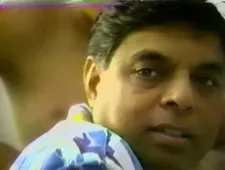 |
| Shantha in home video. Karla: 'It was a way to understand my parents and, in particular, my dad in this new way by looking back through this footage and understanding and kind of coming to peace with why he was the way he was' Photo: Courtesy of Greene Fort Productions |
Now your film is being released in the US and it’s a year on since it had its world premiere at Sheffield DocFest, so I wondered if your relationship with the film has changed at all in that time? Do you feel differently about it now?
KM: Definitely. It’s sort of an outer body experience to see it out in the world. And you know, it's funny I was at a different film festival and I happened to sit next to Alan Berliner of the filmmaker at this Lake brunch and we were talking about our films and how he likes to edit his own films and I'm feeling like that's what I like to do.
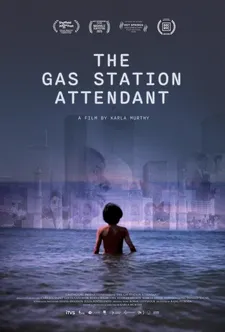 |
| The Gas Station Attendant poster |
Can you tell me about anything else you’re working on now?
KM: I am in the middle of finishing a short about a terrestrial ecologist – who shows us how nature can teach us to be better humans. I’m also just finishing a three-minute short around the word "free" and how its meaning changes depending on what/who it's adjacent to. I'm working to get that out into the world at the moment."
Read more about The Gas Station attendant, including US screening information at thegasstationattendant.com