 |
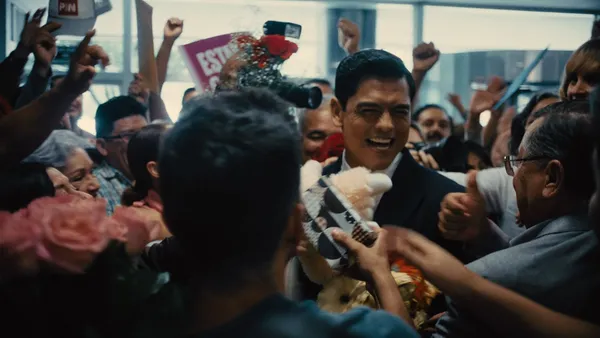
| Chema (Cuauhtli Jiménez) in Versalles. Director Andrés Clariond: 'I wanted Chema to carry a wound that felt real, and a racial wound was the most honest one' Photo: Courtesy of POFF |
Cinema is full of politicians in intrigue mode; Versalles asks what happens after the intrigue ends. In the film, Chema (Cuauhtli Jiménez), a self-made governor, is passed over for the presidency in favor of a lighter skinned candidate. He retreats to a countryside hacienda with his Spanish wife Carmina (Maggie Civantos), begins to reinvent himself as a king, and drags his staff into a baroque game of courts, costumes and ritualised humiliation.
Clariond, who also writes political editorials for a major Mexican newspaper, Reforma, is less interested in plot mechanics than in what he calls the psychological “freefall” after power. Ahead of the film’s world premiere at Tallinn Black Nights Film Festival, I spoke to him over Zoom about racism and class in Mexican politics, colonial ghosts and why Chema ends up waving “Maximilian’s flag” on Independence Day.
Edin Custo: What was the first spark for Versalles?
Andrés Clariond: I’ve spent about ten years analysing politicians. I write editorials for a major Mexican newspaper and I realised cinema usually shows them in intrigue mode, not in psychological freefall. I was curious about the moment after they lose power: when the motor of their life disappears, when they don’t have bodyguards any more, when nobody is telling them they’re great.
At one point I even co-wrote a documentary, interviewing governors as research, trying to get them to open up. It was almost impossible. They never dropped the mask. That convinced me I needed fiction to explore what they’d never admit on camera.
EC: The party choosing a lighter skinned candidate over Chema felt very literal to me as a non-Mexican viewer. How directly were you thinking about racism and colourism?
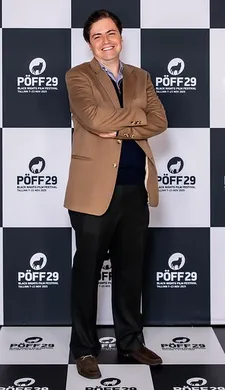 |
| Andrés Clariond on the black carpet in Tallinn: 'I like to make films that sit in the middle, not completely commercial and not completely auteur' Photo: Courtesy of POFF/Erlend Staub |
AC: Unfortunately, racism and classism are everywhere in Mexico, not just in politics. Skin colour still marks you very strongly. It’s something I dealt with in my first film, Hilda, which is about a rich white woman and her darker skinned maid. For Versalles I wanted Chema to carry a wound that felt real, and a racial wound was the most honest one. So yes, it’s very direct.
And of course, he reproduces that prejudice. Even if he’s suffered racism, he has internalised the idea that whiteness is better. That’s why he’s with Carmina: she’s white, blonde, green-eyed, an embodiment of “Western beauty”. There’s a double standard there I wanted to expose.
EC: Carmina’s photography of the locals makes that European gaze very concrete. She even rearranges kids to make them look poorer. What did you want to do with that?
AC: We Mexicans still carry the wound of having been a Spanish colony, so I wanted to poke that a bit, but also the way Europeans and, honestly, the global North in general, sometimes see Latin America as this exotic, colourful, “authentically poor” place. Poverty becomes aestheticized.
Carmina is an image-maker, so she literally manipulates reality to fit that view. That scene where she makes the kids look poorer is a small example, but it says a lot: she’s creating the misery she wants to capture.
EC: On Independence Day, Carmina gives Chema “Maximilian’s flag” and wants him to wave it from the balcony. For Mexican viewers that’s a loaded symbol. What were you doing with that moment?
AC: I saw it as ironic rather than offensive. She promises him a patriotic party, but the flag she chooses represents the only time in our history we were a monarchy, a foreign-imposed empire backed by Mexican elites. For many Mexicans that still feels like a betrayal.
So, on the day we celebrate independence, he’s waving a symbol of submission to Europe. It shows how historically wrong and tasteless their fantasy is. They think they’re reclaiming dignity, but they’re clinging to the worst parts of our past.
EC: When we were talking about your time in the United States and at Columbia University, you mentioned a short you made while studying there, that the university festival refused to screen because they found it too controversial. What did that experience teach you about provocation and controversy?
AC: It was a tiny film about a group of Mexican immigrants crossing the US Border, and a boy who gets kidnapped by a white racist family that ends up “adopting” him almost as a pet. For the university that was too controversial, so they wouldn’t show it in their festival.
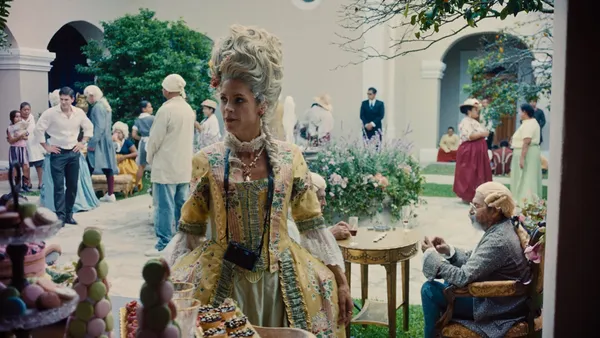 |
| Andrés Clariond on the characters in Versalles: 'They think they’re reclaiming dignity, but they’re clinging to the worst parts of our past' Photo: Courtesy of POFF |
In a way I loved that, because it showed me how powerful a film can be when it touches a nerve. At the same time, living and studying in the US opened a lot of doors for me. My first feature, Hilda, came from a French play I saw in New York and bought the rights to. So, I’ve had both: censorship and great opportunities. I think Versalles keeps that spirit. I’m not afraid of something being uncomfortable if it feels honest.
EC: The score mixes original music with Vivaldi, Bach, Tchaikovsky, Handel. How did that combination come about?
AC: By mistake. My original idea was a much more atmospheric, modern score. In the edit my editor dropped in a Vivaldi piece as temp music for one scene and I immediately thought, “This is perfect.” From there we leaned into it.
I brought in a musician who really knows classical music, and he wrote around those pieces. I was afraid it might tip the film into parody, but instead it added layers, playing with the baroque fantasy in their heads while also undercutting it.
EC: What would “success” look like for Versalles?
AC: For me, success would be a wide release; that many people see the film. I like to make films that sit in the middle, not completely commercial and not completely auteur: accessible, but still intelligent and making people think. And I like when my films produce discussion, when people go to dinner and keep talking about them, and when they show up not only in the entertainment section but also in the political or social pages of the newspaper. That, for me, is success.