 |
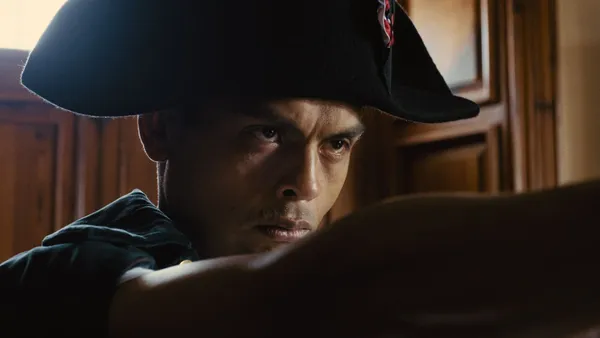
| Cuautli Jiménez: 'Some scenes only made sense once we were doing them, like the Napoleon hat moment. I couldn’t fully understand it on the page, so I leaned into frustration, about losing the presidency, losing a finger, losing control' Photo: Courtesy of POFF |
Mexican director Andrés Clariond’s Versalles follows Chema (Cuauhtli Jiménez), a self-made state governor whose path to the presidency is blocked when his party picks a lighter-skinned candidate. Retreating to a countryside hacienda with his Spanish wife Carmina (Maggie Civantos), he restages himself as a monarch. The staff become his “court”; Carmina, obsessed with European art, photographs locals into picturesque stereotypes; and a story of political disappointment slides into ritualised humiliation.
Ahead of the film’s world premiere at Tallinn Black Nights Film Festival, I spoke over Zoom with Jiménez, Civantos and José Manuel Rincón (Román, Chema’s right-hand man) about playing power and humiliation, victimhood turning into violence, and how far they were prepared to go in some of the film’s most difficult scenes.
Edin Custo: The film lives in this uneasy space between dark comedy and genuine cruelty. How did you find that tone?
Maggie Civantos: I decided not to play comedy at all. For Carmina everything is tragedy, losing status, losing ego. The scenes that look ridiculous to us are deadly serious to her. My job was to play the drama honestly and trust Andrés to find the “acid” tone in how he shoots and cuts. That’s where the black comedy comes from, not from me wink-wink playing it funny.
Cuauhtli Jiménez: Some scenes only made sense once we were doing them, like the Napoleon hat moment. I couldn’t fully understand it on the page, so I leaned into frustration, about losing the presidency, losing a finger, losing control. We rehearsed a lot and talked about how far we could go. For Chema the key is his need to stay relevant. He’s furious with everyone because he feels history owes him something.
EC: Chema is sidelined because of his background and then turns that same violence on people who look like him. How did you approach that arc?
CJ: In the first section we wanted him very close to the workers, someone who comes from where they come from. He is of the people. Then he loses everything. In a country like Mexico, your skin color and how “European” or “Indigenous” you look still define opportunities. Chema is painfully aware of that. He’s a self-made man who managed to climb anyway and suddenly realises it wasn’t enough.
My way into him was this inner voice: “This is not fair. I should be there.” And that grievance becomes a justification. I read a colleague saying we’re in a moment where everybody wants to be seen as a victim, and from there you feel allowed to do anything. Chema ends up in that place, so trapped in his own pain that he stops seeing anyone else’s. By the end I don’t think he’s conscious of the damage he’s doing.
EC: Maggie, Carmina is Spanish, light-skinned, obsessed with European art, and she photographs locals in very objectifying ways. As a Spanish actress playing that, what were you most concerned about?
MC: I’m aware of what Spain represents in Mexican history, but it didn’t feel like my place to make speeches about that in character. Carmina isn’t someone who reflects on colonialism; she just embodies it. What worried me more was gender: I didn’t want her to become the cliché “woman who pushes the man into madness,” the one responsible for everything.
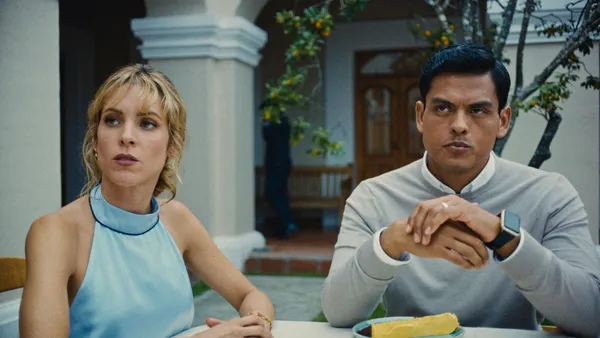 |
| Carmina (Maggie Civantos) and Chema (Cuauhtli Jiménez. Civantos: 'Carmina isn’t someone who reflects on colonialism; she just embodies it' Photo: Courtesy of POFF |
EC: José, Román stands somewhere between the rulers and the ruled. How did you understand his position?
José Manuel Rincón: For me he’s always negotiating with himself. At the start it’s easy to justify staying. If Chema becomes president, Román has a career. When that dream collapses, he knows he should leave, but he has no plan B. So, he tells himself, “I’ll stay a bit longer, help him a bit more.”
As Chema gets more absurd and dangerous, Román sees very clearly that it’s wrong, but he also knows that in politics you often have to close your eyes if you want to advance. He’s not innocent, but he’s not a pure villain either. He’s someone who thinks he can ride it out for a while and then step back, which is a very common illusion around power.
EC: What was the hardest scene for you to shoot?
MC: The sequence with the baby. Chema has the groundskeeper and his wife locked in a makeshift cell, while Carmina keeps their child upstairs in the bedroom and tries to nurse it. Me with a baby… that was very difficult for me. It really became a lesson, as an actress, about my boundaries. I struggled with that decision, so I hope it looks amazing in the film, because it was tough.
CJ: The Napoleon hat scene, because it was the one I could never fully pin down in my head. I went into it carrying all of Chema’s losses and let myself be confused and frustrated as Cuauhtli. That uncertainty is part of the character’s state, so in the end it helped.
JMR: I had less to suffer. I didn’t have wigs or dresses or heavy make-up like them. I enjoyed the hacienda and the landscapes. For me it was a joy to watch them go to those extremes.