 |
| Belén |
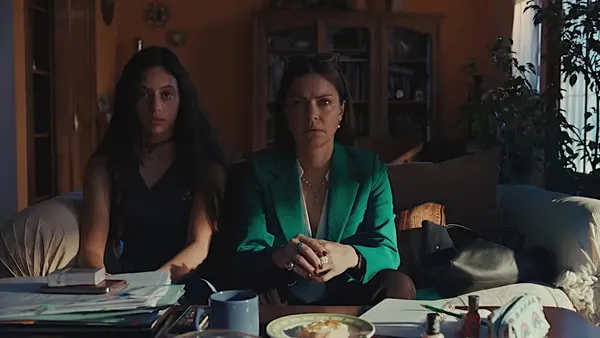
Winner of the Silver Seashell at the San Sebastian International Film Festival earlier this year, Belén tells the story of a pivotal case in Argentinean legal history. The young woman at the centre of it, who used the alias Belén – her real identity a secret to this day – went into hospital with abdominal pain, not realising that she was having a miscarriage, and then found herself arrested and incarcerated for two years without trial after being accused of having an abortion. She’s played in the film by Camila Plaate, whilst director Dolores Fonzi herself takes on the role of the lawyer, Soledad Deza, who heard aboutthe case and became determined to help the imprisoned woman.
With the film now in cinemas in the UK, I attended a press conference where Fonzi explained how she became involved first with the historic events themselves and then with the film.
“I listened to the case in a moment of desperation because the movement was already in action, and I heard that this girl was in jail for two years already,” she says. “And it was for a miscarriage. For me, it was unbelievable in a way. And of course I didn't know what to do. They called me because I was in contact with the militant persons that were helping other women in other places. So when I heard about Belén’s case, it was very desperate feeling because what do you do to help?”
Attention from the international press helped to pressure the government into releasing Belén, she recalls. Ana Correa’s book, Somos Belén, came out in 2019, that same year that Dolores released her first film as a director, Blondi. It was then that she was offered the chance to direct this, and to capture the real activism that she had been involved with in a film.
“I met Belén when Ana Correa's book went out. I am in a chapter because of the sign that I showed in the ceremony. It was a chapter with the famous actresses that did something for the case, and I was there in the presentation, reading some parts of the book. After the presentation of the book, Soledad Deza and Belén came from the back to say thanks to me. That was in 2019. I never imagined that I would be a director in 2022 and then that I would end up shooting this case. It was very like magic in a way, how the pieces of the chain have connected to each other to make me now be the director, writer and actress of the movie.
“I met Belén in 2019, and then of course, during all the process of the movie, we were in touch. We talked in WhatsApp. I saw her two weeks ago, because it was her birthday. She's very inside all the moments of the movie. I sent pictures of the editing and everything. She saw the movie before the opening, and of course it's very moving for her, but she's happy.”
For Belén, she explains, the film provides a kind of closure, a chance to say goodbye to that tragic episode in her life. Despite its focus on telling a true story and recapturing events as Dolores and Belén remember them, the film does have its own stylistic flair. I ask Dolores about her use of the colour red, which is minimised in most scenes and always has significance when we see it.
“I think there is a line, a red line that communicates with the movie,” she says. “At the beginning you have Belén's nightmare going up in pressure. And at the peak of the movie you have Soledad’s nightmare of the pressure of getting her out. So this is symbiotic thing between the two characters. At the peak of the pressure that Soledad Deza feels, Belén is there to say ‘I trust you can get me out’. So this red thing is like a red thread that communicates the inner feeling of pressure that Belén felt in the lock-up.
“Soledad Deza, when she promised to get her out and it's not happening, she started to feel it, and the pressure on the society when she went on TV, and how when you are in the public eye, you feel exposed. So this red thread is like this, how to communicate both. And of course, that blood and what she remembered when she looked down.
“The thing is that every obstetric emergency is criminalised, you know? And everything that happened to a woman down from the waist to the floor, it could be make you ashamed or guilty of crime, this situation that nobody understands because it's impossible to empathise because it's absurd. The red thing also is like the blood that symbolises a lot: life, death and everything.”