 |
| Deadly Vows |
It’s a rare actor who keeps working almost continually, on the big screen and the small screen, for 40 years. Billy Zane has packed a huge amount into his career, including films like Back To The Future, Dead Calm, Orlando, Titanic and Zoolander; and cult TV series including Crime Story and Twin Peaks. Right now, he can be seen on the big screen in Jared Cohn and Bella Bahar Danesh’s Deadly Vows, and he took a little time out to talk about it.
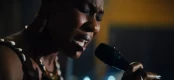
“It is based on a true story, a psychological thriller about a woman who survived the Iran-Iraq War, came to Los Angeles and got into a very manipulative relationship with a man who ultimately tried to have her murdered,” he explains. “And her survival of that particular event and her subsequent forgiveness of the perpetrator as the true means of her survival, which is what really drew me to it. You know, the ability to overcome not only the physical but the psychological trauma of that experience was really the heroic move in this story. I found that really quite thrilling and very important as far as the story to be told.
“There's plenty of vengeance played out there. That is not really a form of victory in my mind. Simply being able to free yourself from the burden of that trauma through rising above it is what I found just incredibly inspiring, especially since it was true and an important message to tell cinematically. “
He has met Darya, he says – but did he actually meet the man his character was based on?
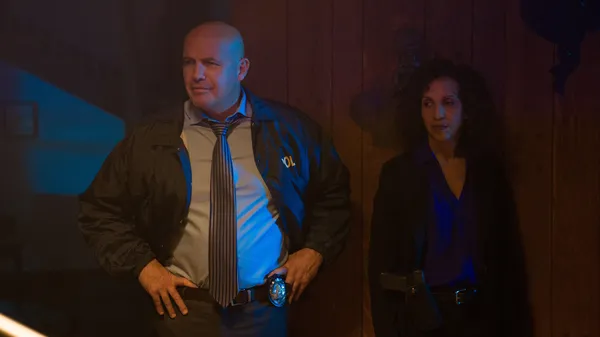
“I didn’t. I play an investigating officer, a detective who's basically helping Darya survive and then navigate the subsequent legal challenges. I don't know how many protector-detective supporting roles I've played, but this – if that theme wasn't in it, I wouldn't have taken this on. I'm not the driving force in this movie. I'm by all means a member of the supporting cast. It's our leads, Shiva [Negar] and Peter [Facinelli]. They're the driving force in it. I'm just here grabbing an oar and rowing to the same beach. But I just wanted to throw in because I believed in the noble tenets of the film and the protagonist's journey.
“How do I make this distinctive? I don't really worry about that. I just try to bring truth to the task at hand and I guess as much of myself to it, unless it's a unique departure and requires immersive character behaviour.”
How does he choose and prioritise the roles that are going to work for him, with such a consistently busy schedule?
“In a way they choose you. I don't approach the selection in a – I don't want to say a traditional way. It is logical and linear and there's a series of checkpoints, triggers or red flags that are cautionary that I avoid.
“I find through maybe laws of attraction, things find you that resonate with an ethos that maybe you speak to, perhaps more subtly behind the work, perhaps more literally in interviews, and then they appear. So it's as much a mystery to me, but a pleasant one.”
“It's a miracle any film gets made, and it's a continuous and constant pleasure to retain relevance over a 30 plus year career. I feel blessed to at least have an audience that seems interested. And it's very convenient to be in the Nineties nostalgia club. We have a hot minute right now as Nineties kids, musically and in cinema. There seems to be a real love of those Nineties, early 2000s, kind of a retro adoration. So it's kind of fun to have forged a path as a young man in some legacy pictures during that time. You know, most of the directors I work with now grew up watching The Phantom, Sniper, Tombstone or Back To The Future, whatever. They love Titanic.” He laughs. “I kind of forget how old I am.
“I love that I get approached about a lot of the independent films that were passion projects, or ones that you wouldn't expect. I'm on my way to go do a comic convention, which I found I really enjoyed doing because one, you meet other artists you admire in a casual setting and go to dinner with. Two, you engage with the fans in a way that you don't typically, which is, you know, a series of stories about them and what your films mean to them, which is really interesting. You learn that you were privy to – through proxy, I guess – a milestone in their lives.
“Proposals, first dates, critical moments with their parents before they passed where they saw their father cry for the first time or, you know, learned moral compass. Perhaps the movies were a means with which to articulate what a parent wanted to, but could not without. And that's the reason we make movies. It's the reason movies exist. I think it's where we go to learn how to be.
“I did as well, fortunately having great stewardship with my parents. They loved movies. They didn't knowingly lean on classic cinema, they just loved it. The combination really shaped character. I think that if you're fortunate enough to have worked with a lot of people in the process and you can bring that breadth of experience to another project, you carry it with you, and I hope it's resonating with the directors I'm working with. It seems to be okay.”