 |
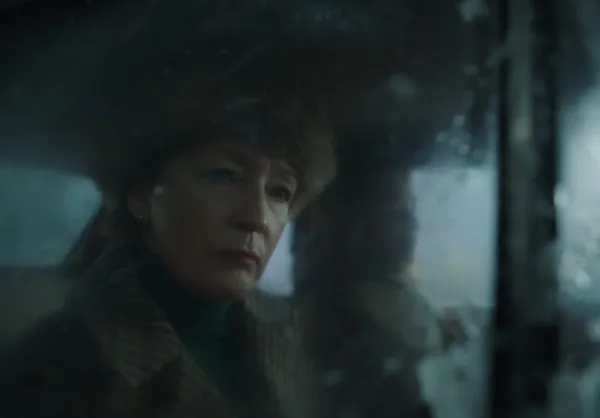
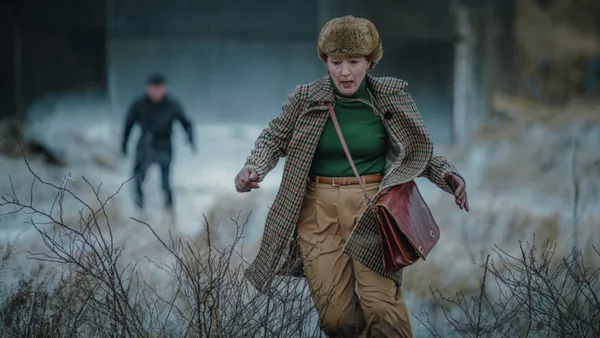
| Lesley Manville in Winter Of The Crow. Kasia Adamik: 'I thought especially in the time of 1981, when this kind of imperialistic Britain was embodied by Margaret Thatcher, having this kind of Margaret Thatcher-y figure of this cold bitch out there was a cool image. Photo: Courtesy of San Sebastian Film Festival |
Catching up with Adamik in Warsaw she says that in the case of more ambitious projects and, especially, co-productions, “it takes forever and you have to do TV in the meantime”.
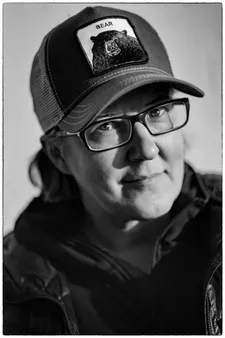 |
| Kasia Adamik says the mood of the film reflects her childhood memories: 'I had dreams about being lost in this satellite town, in this concrete labyrinth and they were very vivid' Photo: Courtesy of San Sebastian Film Festival |
“The short story was not enough to make a feature film,” says Adamik “There was not enough plot, but we tried to keep the soul of it – all the little scenes and the reaction to Poland.
Adamik credits German screenwriter Buchta with the idea of adapting it. She explains: “I loved the collection of short stories, when I read it the first time many years ago, it was released in a collection Playing On A Multitude of Drums. It’s very short but I just loved it so much because it felt like she's in my head, somehow describing my nightmarish childhood memories of this moment in Poland’s history. I was there. I was living in a satellite town like that and I emigrated to France with my mum. I had dreams about being lost in this satellite town, in this concrete labyrinth and they were very vivid.
“When you're a kid you remember everything a little bit bigger and a little bit more exacerbated, right? So I thought I’d love to adapt that one day but I didn't have any precise idea.”
Things changed when Adamik was working with her mum, Holland, on Spoor, which was based on Tokarczuk’s Drive Your Plough Over the Bones of the Dead.
Adamik explains: “We kind of became friendly with Olga, you know? And I asked her about the novel and if she would maybe give me the rights to it and she said: ‘Oh my God, I would love to but I already gave them to a young German writer [Sandra Buchta] who came to me a few months ago’. But she said, ‘She’s a writer, not a director so I don't know if he's doing that for somebody but I’ll put you guys in touch and maybe there will be a spark or something?’ We met and she had cool ideas about how to build this kind of spy thriller – an anti-spy thriller – and we really got along. Then at a later stage, you know, we invited Lucinda Coxon to collaborate and work on the British language and to clean up some things for us and she's brilliant.”
One of the advantages of adapting such a slim piece of source material is that it is open to being expanded, rather than longer novels which frequently need to be cut back in order to fit inside a film.
“I’m really bad at cutting things out,” admits Adamik, “So that was perfect for me.”
One thing that is a departure from the story Professor Andrews Goes To Warsaw is the sex of the central protagonist, which is shifted from a man to a woman. It brings a freshness to the story but Adamik says, in some ways, it was a surprisingly successful experiment.
“We wrote the original script with a guy and I was in talks with a brilliant British actor to play him. We couldn’t finance the film – not because of him – but it took forever and one of the producers had the idea to flip the gender. At first, I was like, ‘No, fuck, this is a stupid idea’. But then I thought about it. And I thought, first of all it brings a twist to this classical film noir, where you have the femme fatale, but you never have the main protagonist as a woman. And then I thought that her whole journey and physical ordeal is just more poignant. She's more frail, there's a risk involved. I thought especially in the time of 1981, when this kind of imperialistic Britain was embodied by Margaret Thatcher, having this kind of Margaret Thatcher-y figure of this cold bitch out there was a cool image.”
She adds: “It was a very interesting stylistic experiment, because we didn't rewrite the script. We just changed her name. We didn't change any of the other characters or storyline and suddenly it clicked and became deeper in a way. You had this under layer of lesbian energy and being where she is has demanded much more from her – strength and perseverance to be where she is as a woman in that time.”
 |
| Kasia Adamik on the switch from a male to female protagonist: 'It was a very interesting stylistic experiment, because we didn't rewrite the script. We just changed her name' Photo: Courtesy of Warsaw Film Festival |
“It's a controversial film but I loved Queer,” says Adamik, “It was one of my favourites at the Venice Film Festival last year. She’s amazing in it.”
Adamik says that Manville was on her ‘dream list’ of cast members but when they first approached her she was too busy to do it. Fortunately, as it turned out, they had to wait for financing and so “by the time we got to it, she was free”. The director also heaps praise on Tom Burke, who plays a slippery ambassador towards the end of the film.
“It’s funny, because he can be anybody,” she says. “He can come in as this kind of strong, charismatic figure or he can come like a funny guy – he’s so versatile. Leslie and Tom really had fun, you could tell they were clicking off each other.”
The film was shot across 31 days, split across Luxembourg, where it was co-produced, and Poland.
“Obviously, we couldn't shoot exteriors in Luxembourg because even if we did a lot of work, Luxembourg doesn’t look like Warsaw, so we shot interiors there. We actually had very little time to shoot the exteriors and a very comfortable amount of time to shoot the interiors, so it was a little bit unbalanced I think.”
There was a Christmas break between the two halves of the shoot, which helped Adamik, as she was able to prepare separately for Warsaw and even edit a little so she knew how things would fit together.
“Purely technically, the funny experiment was to shoot the car chase,” says Adamik. “We shot the interior of the car in the studio and then we shot the exterior. So when we shot the interior, I didn’t have the locations yet so I had to imagine. So I did a very precise storyboard and then we went around Poland trying to find a place that matches what I had imagined in my head. So that was a bit weird – but it was fun.”
The car chase also brings home the dominant feeling of the film, which is claustrophobia, with the camera sticking close to Manville’s professor rather than shooting from a distance.
“I wanted the film to be extremely subjective,” says Adamik. “To really stick to Lesley’s character and to really experience this through her. Also, as an anti-Cold War thriller, it’s like an ‘anti-car chase’ – it’s old cars and it’s in the snow and it’s very slippery. I imagined those cars at the time being very awkward, you couldn’t go very fast. So that adds to the absurdity of the whole universe.”
In terms of that universe, another distinctive element of the film is its highly stylised look. The exteriors have a hyper-real quality, with the smudgy coldness of winter, while interiors are marked by condensation and damp. Part of the decision stemmed from working with cinematographer Tomasz Naumiuk – who also shot Holland’s Kafka biopic Franz this year.
As there wasn’t so much snow in Poland the year the film was shot, the filmmaker and her crew focused on how to make it feel cold without that.
“So we decided, it’s more like falling snow, it’s mist. It’s the kind of air – the cold are has a different feel to it, a different visual than warm air. So we talked to the DP about how to achieve that aura. It was on onset, but was also a lot in post-production when we talked with our colourist about how to make the grain and how to make the light and the lamps suck in light instead of giving light.
“This is also a memory from my childhood. When I came back to Poland for the first time after six or seven years of emigration. It was Christmas, so it was winter, and the lamps didn't give any light – I don't know how to explain it – There was a bulb in the street that was lit but it didn’t impact any of the environment. So that was actually hard, because in the cinema you’re supposed to see stuff. We worked on a specific type of grain with the DP and the colourist. I thought it should be like you want to scratch the surface. He invented something like a normal grain but he also made another layer of grain and one is static, not moving. So there was a lot of thought that went into it.”
Adamik is already at work on future projects, although she says they are at the script stage right now, so likely to be next year. One is with a producer that she worked with on French TV show Kabul
“They’re really smart guys and they have offered me a film, which is a medieval thriller. I've been waiting my whole life to do a medieval film so I’m really really excited about it. It also happens in the dead of winter, so it’s going to be cold. And I have a Second World War project also. For me, the most fun part about making a film is to create a reality and you can create even more when it’s period. You can build more.”