 |
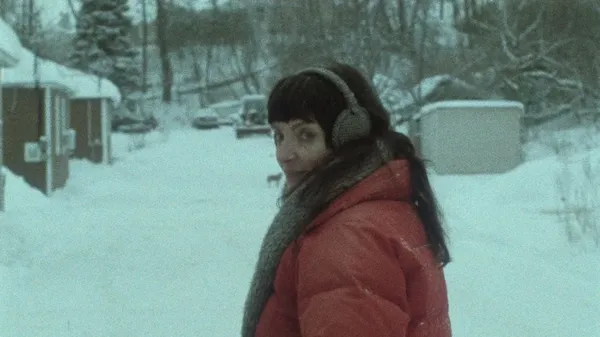
| Larissa Corriveau on Nobody's Violence: 'This character is one of the most difficult I’ve had to play' Photo: Courtesy of Locarno Film Festival |
I was reminded of 2008 film All That She Wants (Elle Veut Le Chaos), which also has a female protagonist who wants a fresh start and Côté notes there are also parts “that can remind you of curling”, citing shots which used in both films, including the main characters in front of a motel. “I could put them together,” he says. “It’s bizarre”.
He adds: “There's this cliche that we always make the same film. We are one person and we have these artistic or psychological cycles going in circles, and then you discover that you remember that you already made this film before but you cannot fight it. You cannot reinvent yourself with every film. It’s not a clear-cut desire, of course. You don’t want to go back in time or regress.”
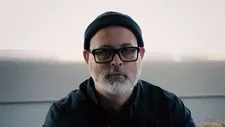 |
| Denis Côté: 'She’s in this liminal world, which was my life, with zero energy' Photo: Courtesy of Locarno Film Festival |
Côté says that the ongoing working relationship he has with Corriveau does make the process easier but she says: “I would not say easier. I would say, maybe less words. Less time to explain things. But Denis, each time he does a movie, it’s kind of a reaction to the previous one, so he tries not to do the same thing and tries to find a new path. So, even if it's my fifth collaboration with him, each time I feel that I have to surprise him in a way, and in a way which I don't know yet before we start shooting because we don’t rehearse. We speak before but we don’t speak about psychology or the past of the character. So I feel that each new project is a new kingdom to go into and to understand.
“Each character that he wrote for me is pretty different and I know that he doesn’t want me to do what he’s waiting for. If I do what he is waiting for, it’s probably not good, not the right thing.”
Côté jumps in: “For me, hearing that is a little surprising because I'm still the same artist from film to film, so I expect to meet her in a natural collaboration. Then she’s answering you that she never knows. So for me, I guess we're gonna find ourselves in the middle somewhere. I feel like it’s going to be completely natural, and she’s telling you that it’s a challenge! We tell jokes, we’re like an old couple, we know the middle meeting point.”
Nobody’s Violence has specific challenges due to the nature of its large ensemble cast, with many of the actors playing those who want help to end their lives, only appearing in a single scene and being on set for just a single day of the shoot. Côté notes that Corriveau was aware of the trickiness that presented to the supporting cast. He says she reminded him, “These characters are coming to die.” He adds: “Then I would take a step back and give them time to properly meet.”
“I told him it’s probably the most difficult thing to do,” says Corriveau. “You get just one day of shooting so you don’t know the rhythm of the team, and to play the action of dying, nobody knows how to do that. It hasn’t happened to anybody [who is acting it], so you have to do your own version of what you think it is like to die and you want the director to be happy. So I was very careful with these actors because it’s a nightmare.”
It was no cake walk for Corriveau either, as her character has minimal dialogue but she needed to bounce off each supporting actor’s very different energy.
“This character is one of the most difficult I’ve had to play,” she says. “Not because of a very extensive emotional field, it's like she's stuck in herself. This is the way I felt her when I started to shoot and because there was very, very little information about her, and I didn't want to invent, a previous life for her, because I know it's not a good way to enter into one of Denis’ films, so the the key that I found to try to be in the right place was to really, really connect with what the person who was dying gave me.”
Corriveau says it’s the careful construction of the scenes that helps her to find the right feeling for the role. “Even if I play a theatre monologue of 30 pages, I just try to get this quality of presence,” she adds. “And after that, the words come.”
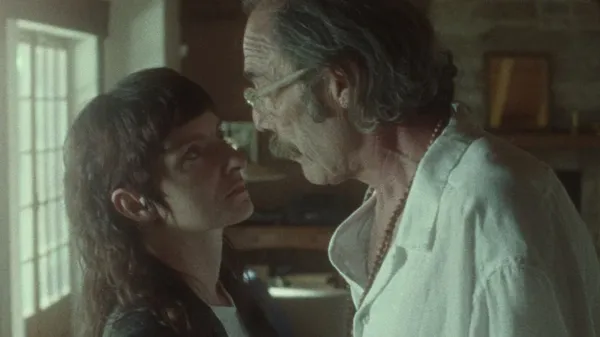 |
| Larissa Corriveau and Philippe Rebbot in Nobody's Violence. Denis Côté: 'Mira is in this huge ‘in between’ space.. she needs to defeat something to get to the next chapter of her book' Photo: Courtesy of Locarno Film Festival |
It’s a film that is full of liminal spaces, something that has been a recurrent theme in the director’s work,
“For this project, I don't want to sound too spiritual, but the genesis of it was me writing the script in the last year of my kidney insufficiency disease, so I didn’t know what was on the other side, ‘You need a transplant.’ From who? When? How is this going to affect me in my next life – is there a next life? You don’t know. It is a liminal space. Then I got the transplant, so I saw what it was and I shot the film but I kept the old script, this uncertain universe in which I was writing. So I became Mira. Mira is in this huge ‘in between’ space. We’re not too sure what was before, and now she’s in this ‘in between’ and she needs an ‘after’. For me, in the script, she needs to defeat something to get to the next chapter of her book.
“She’s in this liminal world, which was my life, with zero energy. People are drinking, dancing. I had to step back, I had to go to bed at 9pm or whatever. Very liminal – I love the word!”
“I really like the idea of a ‘misfit’,” says Corrieveau. “I really like this word because there's no perfect translation in French. You know you've got marginality, but it's not exactly the same in the misfitting is more you are somewhere, and it's not a good environment for you. It’s a theme that often comes in Denis’ films.”
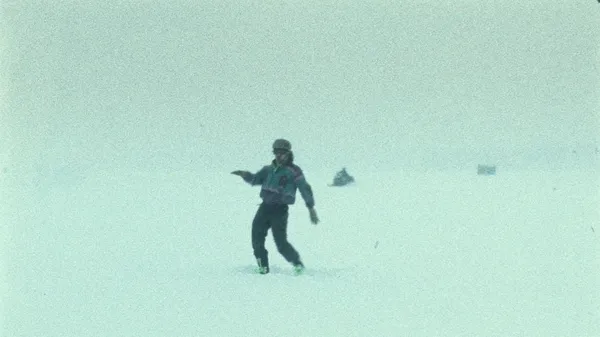 |
| Xavier Bergeron in Nobody's Violence. Denis Côté says mixing genres was like 'walking on a tightrope' Photo: Courtesy of Locarno Film Festival |
He says mixing genres is “like walking on a tightrope”. “It’s a bit funny, it’s a bit scary, it’s a thriller, that’s why I’m quite proud of what we did on this film.
Beyond the film’s themes, it also has a distinctive look, as it was shot on 16mm, which gives it a grainy, textured feeling, with many of the imperfections left in, but other things like lens flare have been removed. Asked why he decided on that, Côté says: I’m going to give you a very flashy answer to that. When you’re in the last moment of your kidney’s deficiency, and you have 10% kidney function, you live with a sort of veil in front of you all the time because you have toxins in your brain. So I told [cinematographer] Vincent Biron at some point, ‘I think our aesthetic is matching somehow, the way I was seeing the world at that time, and I love the fact that it's not clean’. He was a bit scared of the proposition. And I remember, I said, ‘Can you give the film a sort of low res, grainy, McCabe and Mrs Miller from Altman look, or Picnic At Hanging Rock overexposed melancholic look. Don't clean anything if we make a mistake. Keep it’. So this whole cocktail seems to match what I was going through and it’s somehow matching what she’s going through.”
He adds: “I like creating these dark propositions, but I'm looking for glimpses of light. I'm looking for life in the proposition, not death.”
Nobody's Violence plays at TIFF on September 11, 13 and 19.